Daikin vs Mitsubishi Aircon: Which Fits Best?
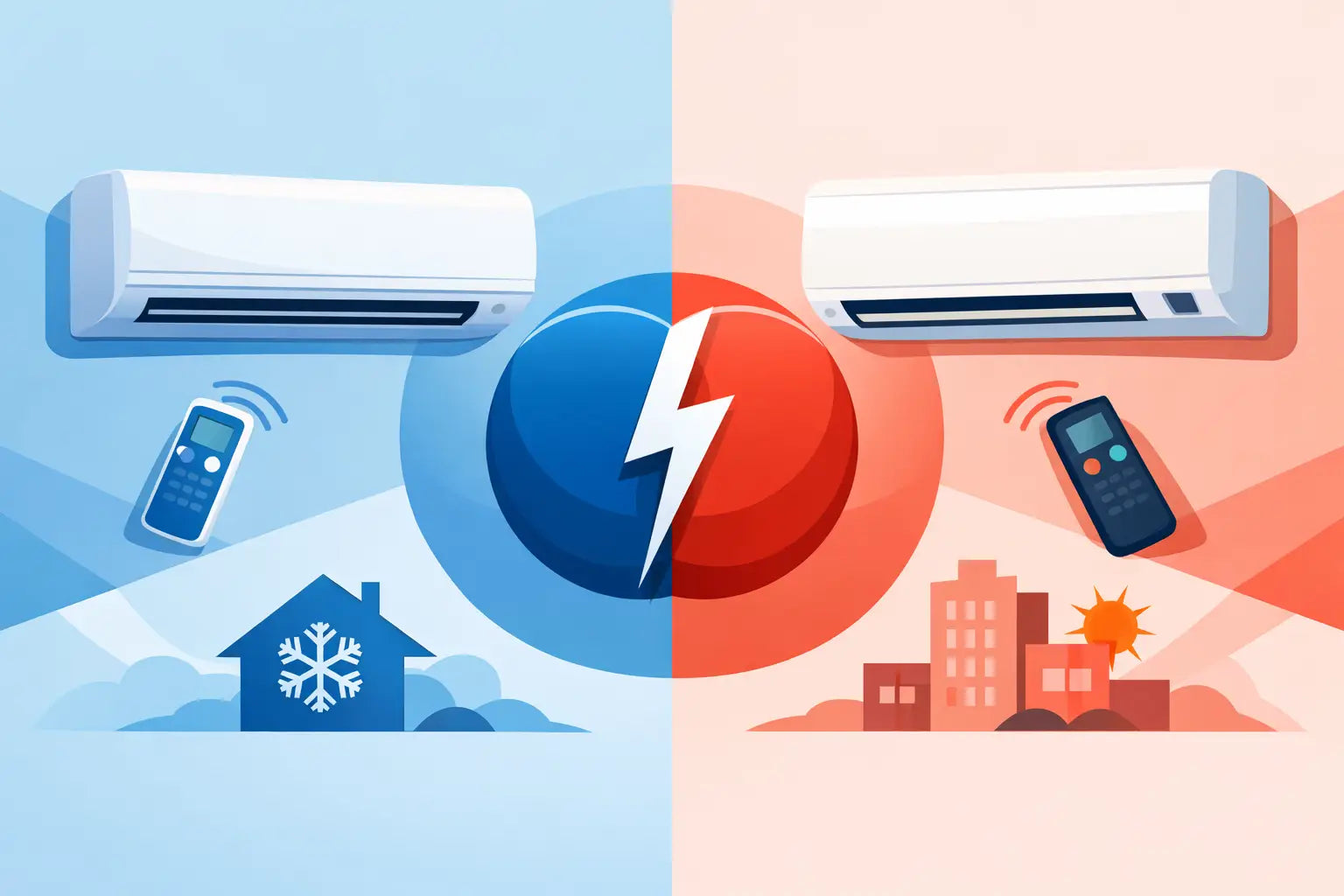
Choosing between two established aircon brands usually gets difficult when both are good and both are common in real homes. That is exactly why the Daikin vs Mitsubishi aircon comparison matters. For homeowners and business buyers, the better choice often comes down to your room layout, usage habits, installation quality, and how much you value quiet operation, energy savings, and long-term support.
Daikin vs Mitsubishi aircon - why this comparison is so common
Daikin and Mitsubishi are both trusted names in the split aircon market. They are widely selected for apartments, landed homes, offices, and retail spaces because both brands have built a reputation around dependable cooling and solid energy performance.
That said, they are not identical. On paper, the differences can look small. In actual use, they can feel more noticeable. Some buyers care most about cold air and price. Others care more about low noise, easy servicing, or how the system performs after years of daily use. A proper comparison should go beyond brochures and focus on where each brand tends to suit different needs.
Cooling performance and everyday comfort
If your priority is fast, stable cooling, both brands generally perform well. Daikin is often chosen by buyers who want strong, consistent cooling for everyday family use. It has a broad range of residential systems and is widely seen as a safe, familiar option for bedrooms, living rooms, and standard apartment layouts.
Mitsubishi, especially the residential models many homeowners recognize, is often praised for smooth temperature control and quiet comfort. In bedrooms and study rooms, that can make a real difference. The room may not just feel cool, but more evenly cooled without the system constantly drawing attention to itself.
In practical terms, there is no universal winner here. If the room is properly sized and the installation is done correctly, both can cool very effectively. Problems often come from poor sizing, weak piping materials, bad drainage planning, or careless commissioning rather than the brand alone.
Energy efficiency and running cost
For many buyers, the Daikin vs Mitsubishi aircon decision comes down to utility bills. Both brands offer inverter systems designed to reduce power consumption after the room reaches the set temperature. That makes them suitable for homes that run aircon overnight or businesses that need cooling through working hours.
Mitsubishi models are often associated with strong efficiency and low-noise operation, which is why they are popular for bedrooms and spaces with longer usage hours. Daikin also performs well in the efficiency category and has a wide product spread, which gives buyers more room to match a system to their budget and room size.
The bigger point is this: the published efficiency rating only tells part of the story. Running cost is also shaped by insulation in the room, sun exposure, thermostat settings, servicing frequency, and installation standards. An efficient unit installed with poor-quality copper pipe insulation or sloppy refrigerant work can lose much of its advantage.
Noise levels and sleep comfort
This is one area where buyer preferences become very clear. If you are sensitive to sound, Mitsubishi often gets the edge in conversation because many users find it exceptionally quiet indoors. That makes it attractive for light sleepers, nurseries, home offices, and spaces where background noise matters.
Daikin units are not noisy by default, and many users are perfectly happy with their sound levels. Still, when someone specifically asks for a very quiet room experience, Mitsubishi is often the brand that comes up first.
Of course, noise is not only about the indoor fan. Installation also matters. Poor mounting, loose trunking, vibration transfer, or uneven placement can create extra sound even with a premium unit. A good aircon system should be judged as a complete installation, not just a box on the wall.
Reliability, servicing, and parts support
Reliability is where both brands hold strong positions. Daikin has long been seen as a dependable choice with broad market familiarity. Mitsubishi also has a strong reputation for durability when properly maintained. For most buyers, either brand can be a sound long-term investment.
What matters more is how easy the system is to maintain and whether support is available when needed. In a market where these brands are common, technicians are usually familiar with both. That helps with routine servicing, troubleshooting, and parts replacement over the years.
For homeowners, this means less risk of owning a niche system that becomes troublesome later. For business operators, it means less downtime and better continuity. But again, reliability is heavily affected by the quality of installation and maintenance. Even a premium brand can suffer from water leaks, gas issues, or weak cooling if the workmanship is poor.
Pricing and value for money
Price comparisons between Daikin and Mitsubishi are rarely as simple as one brand being cheaper across the board. Actual package pricing depends on system size, number of indoor units, condenser capacity, installation scope, pipe routing complexity, and the materials included.
In some cases, Daikin may look more attractive on initial package pricing. In others, Mitsubishi may justify a slightly higher spend for buyers who prioritize quietness or specific model preferences. The better question is not which brand is cheaper, but which package gives better long-term value.
This is where many buyers make the wrong comparison. They compare model names and BTU figures, but overlook the installation specification. Better insulation, thicker copper piping, proper drainage work, quality cabling, and neat finishing all affect how the system performs and how long it lasts. A lower package price can become expensive if it leads to leaks, poor cooling, or early repair work.
Which brand suits different types of buyers?
If you want a familiar, widely accepted option with broad model availability, Daikin makes sense. It suits buyers looking for reliable cooling, solid efficiency, and flexible package choices across different home sizes.
If your priority is quiet operation and refined comfort, Mitsubishi may feel like the better fit. It is especially attractive for bedrooms, homes with young children, and people who keep the system running for long stretches.
For commercial users, the decision depends even more on operating pattern. An office may value stable all-day performance and easy maintenance planning. A retail or F&B space may care more about cooling response under heavier heat load. That is why the right choice should be based on actual usage conditions rather than brand popularity alone.
The real deciding factor is often installation quality
This is the part many comparison articles miss. Between Daikin and Mitsubishi, the performance gap is often smaller than the gap between a proper installation and a poor one.
A well-installed system uses the right pipe thickness, dependable insulation, careful brazing or flare work where needed, proper vacuuming, correct drainage slope, secure mounting, and tidy trunking layout. These details are not minor extras. They directly affect cooling performance, noise, efficiency, and long-term reliability.
That is why experienced buyers do not just ask which brand is better. They ask who is installing it, what materials are included, whether the team is in-house, and what after-sales support looks like. A premium aircon paired with weak workmanship is still a weak purchase.
So, should you choose Daikin or Mitsubishi?
If you want the safest broad-market choice, Daikin is a strong pick. If you care most about quieter everyday comfort, Mitsubishi often has the advantage. Both can be excellent when matched correctly to the space.
For most homes and businesses, the smartest decision is to compare the full proposal, not just the brand badge. Look at room sizing, usage pattern, installation materials, warranty clarity, and the team standing behind the job. That is how you avoid paying twice for the same aircon.
At Commercestar Engineering, that is exactly how we approach brand comparisons - not as a race between logos, but as a practical decision shaped by property type, system design, and workmanship standards. When the recommendation is honest and the installation is done right, either brand can serve you well for years.
The best aircon is not simply the one with the louder reputation. It is the one that fits your space, your expectations, and the quality of the installation behind it.