Aircon Leaking Water Causes Explained
A puddle under the indoor unit usually starts as a small nuisance, then turns into stained walls, damaged ceilings, or a worried call from a tenant, family member, or office staff. When people search for aircon leaking water causes, they are usually not looking for theory - they want to know whether the fix is simple, whether the unit is still safe to use, and whether the problem points to poor maintenance or poor installation.
The short answer is this: water leaks happen when condensation is no longer draining out the way the system was designed to. That can be caused by dirt buildup, blocked drainage, frozen coils, damaged insulation, poor unit leveling, or installation defects. In some cases, the issue is minor and can be corrected with cleaning. In other cases, the leak is a symptom of a deeper workmanship or system condition problem.
The most common aircon leaking water causes
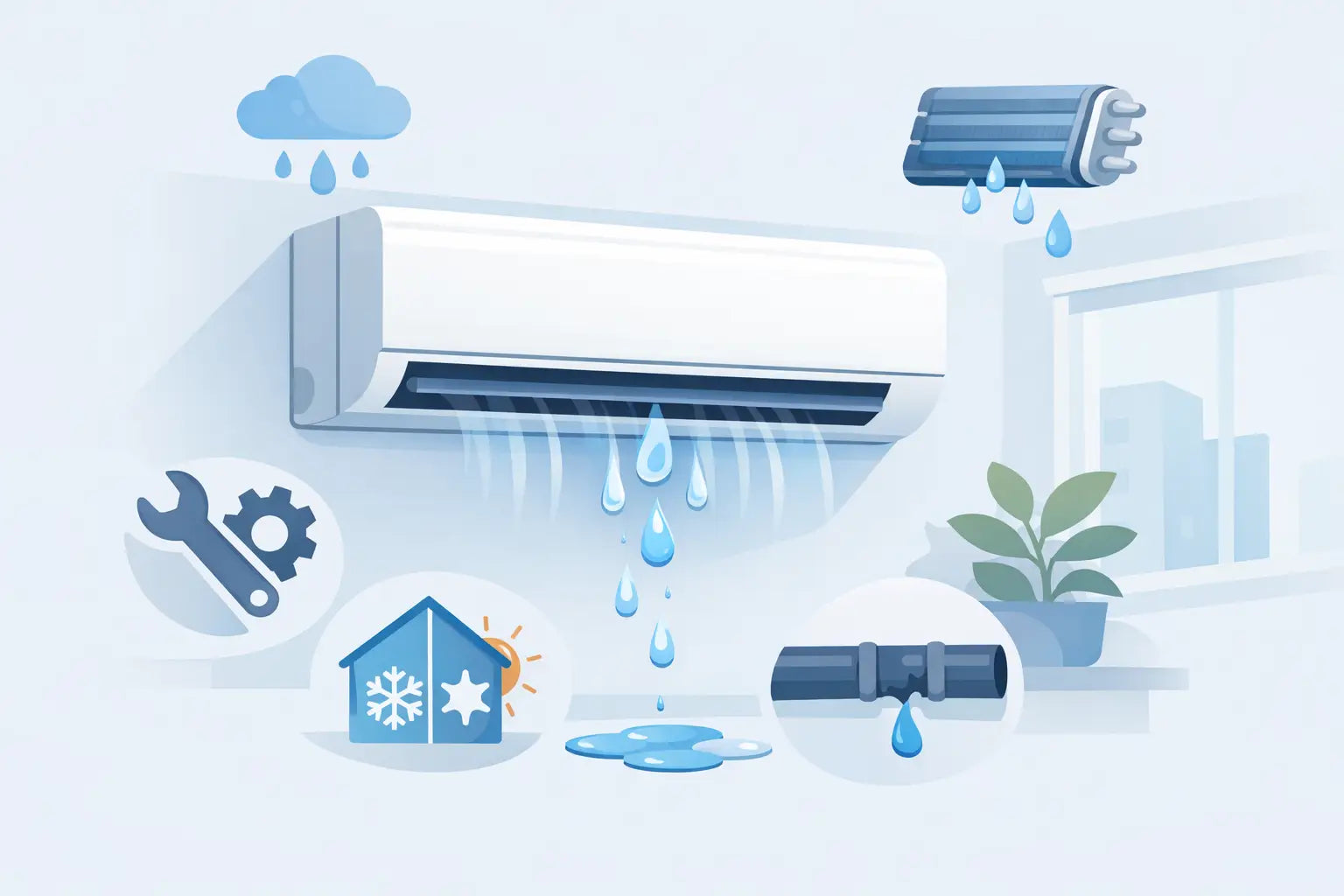
In normal operation, an air conditioner pulls humidity from the air. That moisture condenses on the evaporator coil and flows into the drain pan, then out through the drain line. If any part of that process is interrupted, the water ends up dripping from the unit instead.
The most common cause is a clogged drain line. Dust, sludge, algae, and general debris can build up in the drainage path over time, especially when servicing is delayed or done too lightly. Once the line is restricted, the water backs up and spills from the drain pan.
A dirty air filter is another frequent culprit. When airflow is reduced, the evaporator coil can get too cold and begin to freeze. When the ice melts, the amount of water released can overwhelm the drain system and cause leaking. This is why a leak sometimes appears after the unit has been running for a long stretch, rather than immediately after startup.
Low refrigerant can create a similar chain reaction. With insufficient refrigerant, coil temperatures may drop below normal, ice forms, and melting water appears later. In that case, wiping up the leak does nothing to solve the root issue. The system needs proper diagnosis, not guesswork.
A cracked or rusted drain pan can also be the problem, especially in older systems. Even if the drain line is clear, a damaged pan cannot channel water properly. The result is random dripping that can look like a drainage issue at first glance.
Why installation quality matters more than many owners realize
Not every leak is caused by poor maintenance. Some aircon leaking water causes point directly to installation quality.
If the indoor unit is not leveled correctly, condensation may not flow naturally toward the drain outlet. Instead, it collects at one side of the tray and spills over. The same thing can happen when the drain pipe lacks proper slope, has sharp bends, or was routed in a way that traps water.
Insulation also matters. When refrigerant pipes are insulated poorly, too thinly, or with gaps at key joints, condensation can form on the exterior of the piping rather than inside the intended drainage path. To a homeowner, it looks like the aircon is leaking. Technically, it is sweating due to subpar insulation or finishing.
This is one reason experienced contractors pay close attention to piping layout, material grade, and neat execution instead of focusing only on getting the unit on the wall and running. Good installation is not cosmetic. It directly affects drainage performance, condensation control, and long-term reliability.
Signs that help narrow down the cause
The pattern of the leak often tells you a lot.
If water drips only after several hours of operation, a frozen coil caused by airflow restriction or refrigerant issues becomes more likely. If the leak starts almost right away, blocked drainage or poor unit alignment may be the stronger suspect.
If you see water marks near the piping trunking or along insulated copper lines, damaged insulation may be contributing. If the leak is concentrated under the front edge of the indoor unit, the drain pan or drain line is a more likely place to inspect.
A musty smell, weaker airflow, and water leakage together often point to overdue cleaning. On the other hand, repeated leaking soon after a recent installation or relocation job raises a workmanship concern. It depends on the age of the system, service history, and where the water is actually appearing.
What you can check before calling for repair
There are a few practical checks that make sense before scheduling a technician, as long as you do not open sealed components or attempt refrigerant work.
Start with the air filter. If it is heavily clogged, clean it, let it dry fully, and test the system again. A dirty filter is simple to fix, and restoring airflow may prevent further icing.
Next, look for obvious signs of blocked drainage. If water is pooled in or around the indoor unit casing, the drain line may be backed up. Some owners also notice gurgling sounds before visible leakage starts.
Check whether the unit is set to an extremely low temperature for long periods. That setting alone may not cause a leak, but combined with poor airflow or low refrigerant, it can encourage coil icing.
What you should not do is keep running a leaking unit for days while hoping it clears on its own. Water damage is often more expensive than the aircon repair, especially around cabinetry, false ceilings, painted walls, flooring, or office equipment.
When the problem is maintenance-related
A large share of leaks comes down to maintenance intervals that are too far apart. In homes, this often happens when the system still feels cold enough, so servicing gets postponed. In offices, shops, and restaurants, the unit may be working harder and accumulating dirt faster than the maintenance schedule accounts for.
Routine servicing helps because it removes dirt from filters, fan components, and drainage areas before buildup turns into blockage. More thorough cleaning becomes important when performance has already dropped, the unit smells off, or leaking has happened more than once.
Still, maintenance is not a cure-all. If the drain pipe was poorly routed from day one or the unit was installed with weak alignment, repeated cleaning may reduce the symptom without solving the actual cause.
When the problem points to repair or rework
If the leak keeps returning, if cooling has become inconsistent, or if ice forms on the coil or refrigerant pipe, professional diagnosis is the right next step. The technician should not just mop the water and move on. The root cause needs to be traced properly.
That may involve clearing the drain line, checking blower and coil condition, testing refrigerant pressure, inspecting the drain pan, reviewing unit leveling, and assessing insulation around the piping. A reliable contractor will explain which issue is maintenance-related and which issue is installation-related.
This distinction matters because it affects what you should pay for and what result you should expect. A customer should not be sold repeated cleanings if the actual problem is pipe slope or poor insulation. In the same way, a well-installed system still needs regular upkeep to keep drainage clear.
How to reduce the risk of future leaks
The best prevention is a combination of proper installation and consistent servicing. Good materials help, but material quality only works when the installation team uses them correctly and finishes the drainage layout with care.
For homeowners, that means choosing a contractor that treats piping, insulation, alignment, and drainage routing as part of the engineering, not as afterthoughts. For commercial users, it means building a maintenance plan around actual usage conditions instead of generic timelines.
If your aircon leaks once, it may be a small issue. If it leaks repeatedly, there is usually a reason. Better to fix that reason early than to keep paying for patchwork solutions. That is exactly why many customers prefer specialists such as Commercestar Engineering - not just for cooling performance, but for workmanship that reduces preventable problems over the long run.
A leaking aircon rarely starts as a major failure. More often, it is an early warning that something in the airflow, drainage, or installation is no longer working as it should. Catch it early, fix it properly, and your system is far more likely to stay clean, efficient, and trouble-free.