Industrial Aircon Installation Done Right
A warehouse that runs hot by 10 a.m., a production floor with uneven cooling, or a back-of-house area that never quite reaches set temperature - these are rarely equipment problems alone. In many cases, the issue starts much earlier, during industrial aircon installation. The system might be oversized, undersized, poorly routed, or installed with materials that look acceptable on day one but create trouble months later.
For industrial spaces, air-conditioning is not just about comfort. It supports equipment performance, protects stock, helps staff work safely, and keeps operations predictable. That is why installation quality matters as much as the brand on the nameplate. A good system begins with correct planning, careful material selection, and a team that treats workmanship as part of the product, not an afterthought.
Why industrial aircon installation needs a different approach
Industrial properties are rarely simple. A small office suite may need straightforward zoning, but a factory, workshop, storage area, or mixed-use facility often has changing heat loads, long operating hours, and very different conditions from one room to the next. A one-size-fits-all recommendation can create expensive inefficiencies.
Heat in industrial spaces comes from more than outdoor weather. Machinery, lighting, server racks, cooking equipment, loading activity, and the number of people on site all affect cooling demand. Ceiling height matters too. So does insulation. Even door opening frequency can shift performance more than some buyers expect.
This is where many projects go off track. Some contractors quote quickly based on floor size alone. That may be enough for a rough estimate, but not for a system that needs to perform consistently. Proper planning should account for layout, usage patterns, operating hours, and whether the goal is comfort cooling, process stability, or both.
What a proper installation process should include
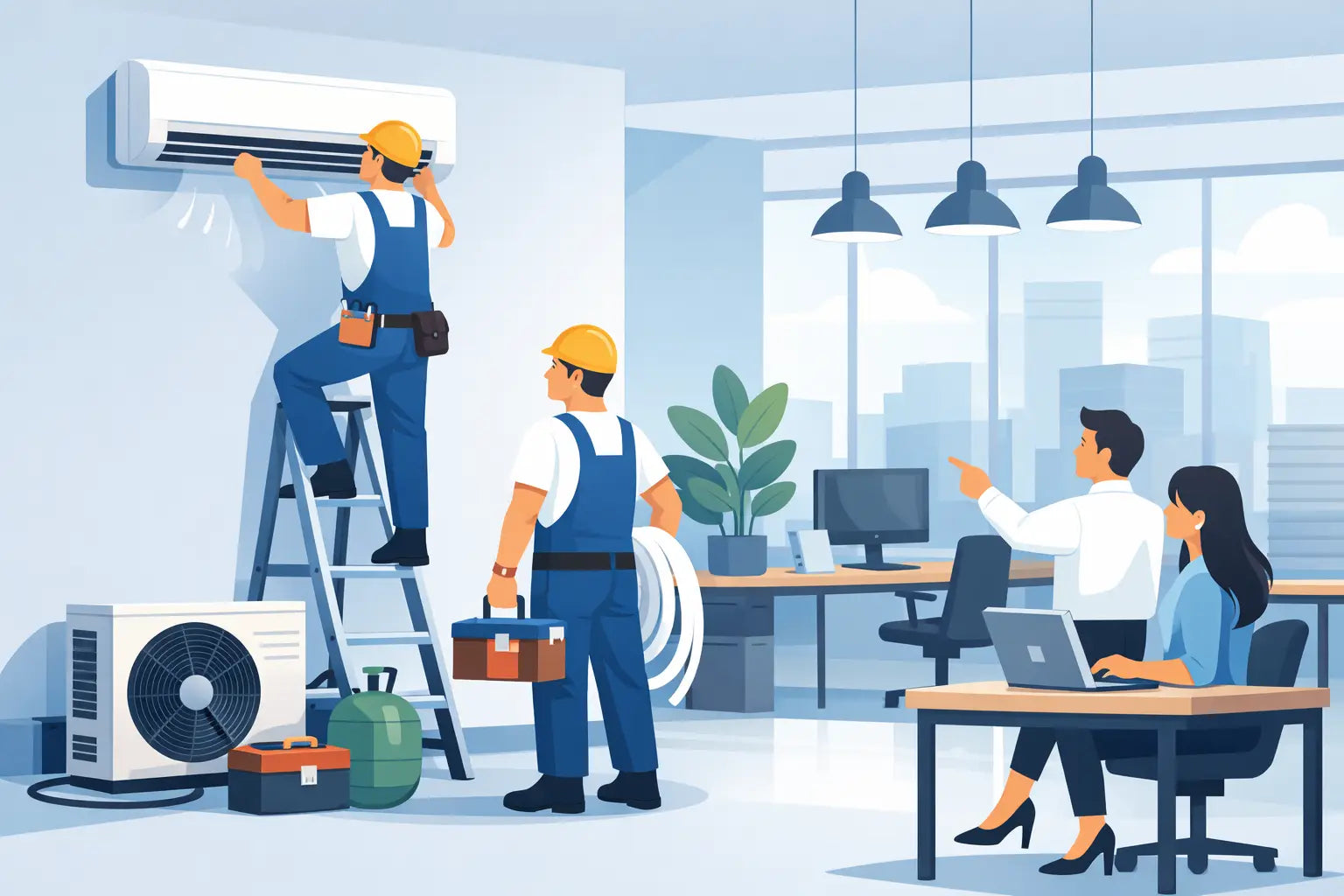
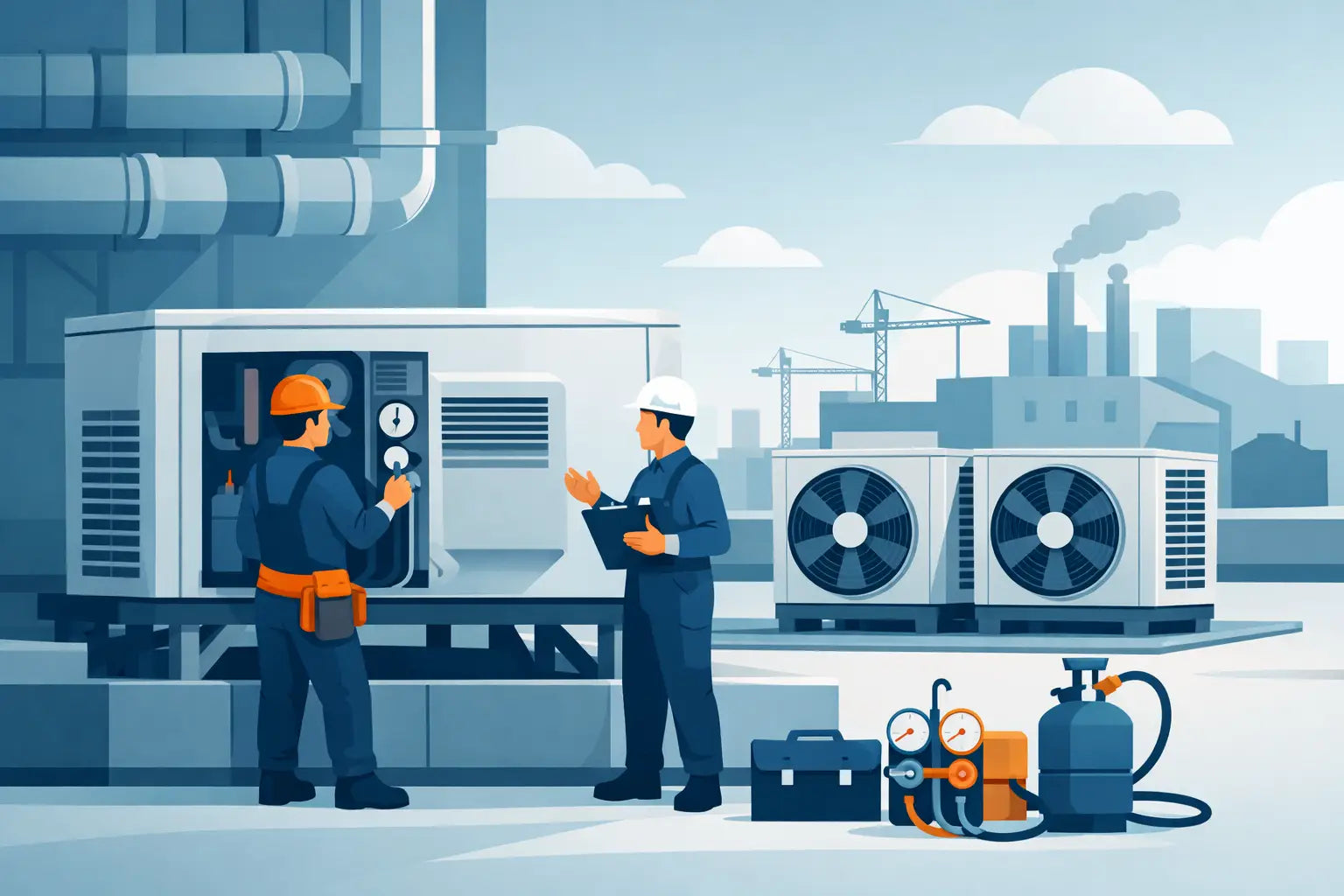
A strong industrial aircon installation process starts before any piping is run. Site assessment comes first. The installer should review room dimensions, ceiling conditions, electrical readiness, drainage options, outdoor unit placement, and maintenance access. If future expansion is likely, that should be discussed early, not after the system is already locked in.
System selection follows from real conditions, not assumptions. Depending on the space, that could mean split units, cassette systems, ducted setups, or a multi-zone arrangement. The right answer depends on how the site is used. An open-plan workshop has different priorities from a temperature-sensitive storage zone or an office built inside a larger industrial shell.
After design comes installation execution, and this is where hidden quality differences start to show. Copper pipe thickness, insulation grade, cable quality, drainage slope, trunking neatness, and bracket support all affect durability. These details do not usually stand out in a sales brochure, but they show up later in the form of leaks, poor cooling, sweating pipes, water stains, or hard-to-trace faults.
Materials matter more than many buyers realize
In industrial environments, lower-grade materials usually cost more over time. Cheap insulation can break down faster under heat stress. Thin copper piping may be more vulnerable during installation or under long-term operating pressure. Weak drainage planning can lead to repeated service calls and disruption to daily operations.
That is why serious installers talk about materials in specific terms. Better insulation helps reduce energy loss and condensation risk. Thicker copper piping improves long-term reliability. Good cable quality supports electrical safety and stable system performance. None of this is glamorous, but all of it affects whether the installation stays trouble-free.
For buyers comparing proposals, this is where transparency matters. Two quotes may look similar on total price while being very different in actual installation standard. If one contractor cannot clearly explain the materials being used, or avoids technical detail altogether, that is usually a sign to ask more questions.
The biggest mistakes in industrial aircon installation
The most common issue is poor sizing. An undersized system struggles to maintain temperature and runs longer, which can drive up wear and energy use. An oversized system is not automatically better. It may short cycle, cool unevenly, and create humidity control problems in enclosed areas.
The second mistake is weak piping and drainage planning. Long pipe runs, poor routing, or rushed finishing can affect system efficiency and future serviceability. In industrial spaces, access matters. If maintenance becomes difficult because the installation was squeezed into the wrong location, small issues can turn into long downtime.
The third mistake is choosing based on equipment price alone. Buyers sometimes focus heavily on the unit brand but pay too little attention to who is installing it and how. Even a strong brand can underperform if installation standards are poor. On the other hand, a well-installed system with the right configuration tends to deliver much better long-term value.
How to compare industrial aircon proposals properly
A useful proposal should do more than list model numbers and total cost. It should explain scope clearly. That includes the installation method, material specifications, piping length assumptions, electrical work if applicable, drainage details, testing, commissioning, and any finishing items.
It should also be honest about limits. If extra structural work may be required, that should be flagged. If there are site conditions that could affect lead time or routing, those should be discussed upfront. Clear expectations reduce disputes and help the project move faster.
This is also where after-sales support deserves attention. Industrial users do not just need installation. They need confidence that if a fault appears, someone will respond quickly and take ownership. A contractor with an organized in-house team generally offers more consistent accountability than one that relies heavily on loosely managed subcontract arrangements.
Workmanship affects operating cost, not just appearance
Neat workmanship is not only about visual presentation, although that matters too. In an industrial setting, tidy routing, secure supports, proper insulation joints, and clean finishing usually reflect disciplined installation habits. Those habits reduce the likelihood of vibration issues, condensation problems, drainage failures, and avoidable service callbacks.
Good workmanship also supports efficiency. Refrigerant lines installed correctly, with proper insulation and sound routing, help the system perform closer to its intended capacity. Drain lines with proper fall reduce water issues. Accessible unit placement makes maintenance easier, which helps preserve performance over time.
That is one reason experienced buyers often look beyond the cheapest quote. They understand that installation quality shows up later in electricity bills, service frequency, and equipment lifespan. Saving upfront can make sense in some situations, but only if the scope and standards are still adequate for the site.
Choosing an installer for industrial aircon installation
The right installer should be comfortable discussing both technical detail and practical site constraints. They should ask how the space is used, what temperatures need to be maintained, when peak loads happen, and what level of disruption is acceptable during works. If those questions never come up, the recommendation may be too generic.
It also helps to work with a company that can explain why its installation standard is different. Premium materials, careful planning, proper testing, and organized after-sales support are not marketing extras. They are part of a lower-risk project outcome. For businesses, that matters because cooling failures affect more than comfort. They can affect productivity, staff morale, stock condition, and customer experience.
Companies such as Commercestar Engineering position installation quality as a core part of the service, and that approach makes sense in industrial work. When the team is focused on workmanship, transparent scope, and long-term support, clients get a clearer picture of what they are paying for and why it holds value beyond day one.
When the lowest quote is not the lowest cost
Every buyer has a budget, and that is fair. But industrial cooling is one of those categories where cheap mistakes tend to stay expensive. Rework, downtime, patch repairs, ceiling damage from drainage faults, and repeated performance complaints can easily outweigh an initial savings.
A better approach is to balance price against installation standard, system suitability, and support structure. Sometimes a premium proposal is unnecessary. Sometimes it is exactly what the site requires. The point is not to buy the most expensive option. It is to choose the setup that fits the operation and is installed well enough to keep doing its job.
If you are planning industrial aircon installation, ask harder questions before the first pipe goes in. The right answers usually show up in the planning, the materials, and the discipline of the team doing the work. That is where long-term performance begins.