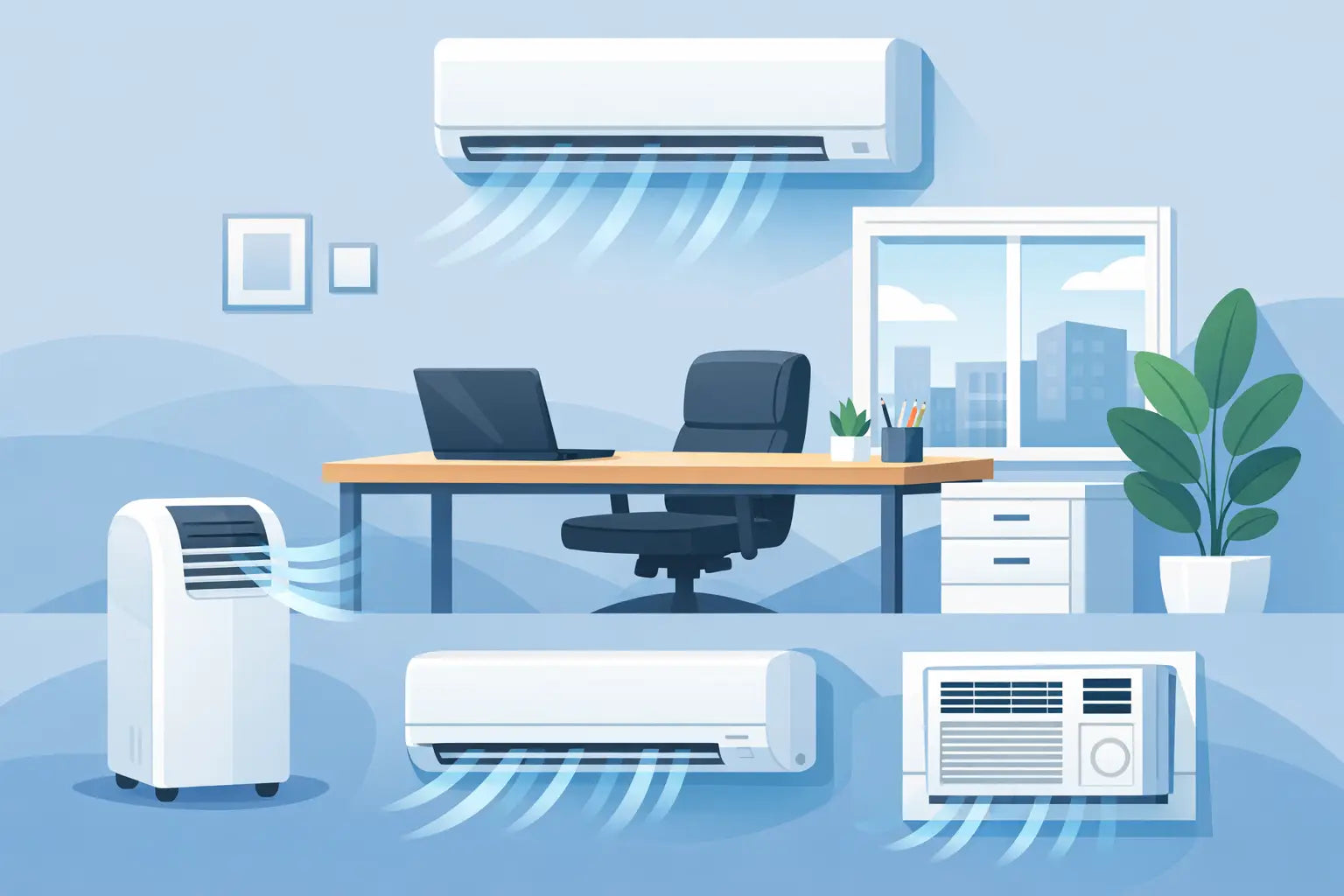
Best Aircon for Small Office: What to Buy
A small office gets uncomfortable fast when the air conditioning is wrong. One room runs cold, another stays stuffy, the unit hums all day, and energy bills start climbing for no good reason. If you are trying to choose the best aircon for small office use, the right answer is rarely the cheapest unit on the price list. It is the system that fits your layout, cooling load, operating hours, and installation quality.
For most small offices, a wall-mounted split system is the practical starting point. It is quiet, efficient, and well suited to meeting rooms, private offices, small retail back offices, and compact workspaces. But not every small office needs the same setup. A two-room office with glass frontage has different demands from a shared workspace with constant foot traffic. That is where proper planning matters.
What makes the best aircon for small office spaces?
The best setup keeps staff comfortable without overcooling the room, handles daily operating hours without struggling, and remains easy to service. In a business setting, downtime matters. You do not want a system that looks good on paper but becomes noisy, inefficient, or unreliable after a short period of heavy use.
Cooling capacity is the first checkpoint. Many buyers focus on brand before capacity, but sizing mistakes cause more problems than badge selection. An undersized unit runs constantly and still fails to cool the room properly. An oversized unit cools too quickly, cycles on and off too often, and may leave the space feeling clammy rather than comfortable.
Office heat load also tends to be underestimated. Computers, monitors, lighting, printers, and people all add heat. If your office has west-facing windows, direct afternoon sun can raise the load even further. A small office may look compact, yet still need a stronger system than a similarly sized bedroom.
Split unit, multi-split, or cassette?
For many small businesses, a single split unit is enough. If you have one enclosed office or one open-plan room, this option is often the most cost-effective. It gives you simple control, straightforward maintenance, and solid energy efficiency when matched correctly to the room.
A multi-split system makes more sense when you have two or more small rooms and want one outdoor unit serving multiple indoor units. This can be useful where exterior space is limited or where building restrictions make multiple condensers less practical. The trade-off is that design and installation become more important. Poor piping design or rushed workmanship can affect performance across the system.
A cassette unit is sometimes the better choice for offices with a suspended ceiling, more open floor area, or a need for more even air distribution. It gives a cleaner commercial look and can cool larger spaces more uniformly. Still, for a very small office, a cassette can be unnecessary if a properly selected wall-mounted system already does the job well.
The brands worth considering
When customers ask about the best aircon for small office environments, the brand conversation usually comes after system type and sizing. That said, reliable brands do matter because offices often run air conditioning for long hours.
Mitsubishi Electric is a strong choice for buyers who want dependable performance, quiet operation, and broad familiarity in the market. Daikin is also consistently favored for efficiency and commercial suitability. Panasonic appeals to buyers who want a balance of performance and user-friendly features. Mitsubishi Heavy Industries is well regarded for cooling strength and durability, especially where the system needs to work hard in a warm climate.
Other brands such as Fujitsu, LG, Samsung, Toshiba, Hitachi, and Midea may also fit depending on budget, room size, and feature needs. The better question is not simply which brand is best, but which model line within that brand suits your office usage pattern. Entry-level and premium models from the same manufacturer can behave very differently in noise control, sensor accuracy, and long-hour efficiency.
Features that matter more than marketing
In a small office, quiet operation has real value. Staff can tolerate a little background sound at home, but a noisy indoor unit becomes a daily irritation in a workspace. If the unit is installed in a meeting room or reception area, low noise should be a priority.
Energy efficiency matters too, especially if the office runs air conditioning through the full workday. Inverter systems are generally the better option because they adjust output instead of stopping and starting repeatedly. That smoother operation usually improves comfort and lowers energy use over time.
Air filtration can help, but it should not be treated as a replacement for fresh air planning or regular maintenance. Some buyers are drawn to advanced purification claims, yet the bigger wins often come from correct sizing, proper drainage, clean filters, and stable refrigerant performance.
Smart controls are useful if you want scheduling, remote access, or easier energy management across rooms. They are not essential for every office, but they can help prevent the common problem of systems being left on after hours.
Installation quality is where long-term value is decided
A good brand can still perform badly when installation standards are weak. This is one of the most overlooked parts of buying office air conditioning. Poor insulation, thin copper piping, weak drainage work, messy trunking routes, and rushed commissioning can shorten system life and create recurring service issues.
That is why professional workmanship should be part of the buying decision, not an afterthought. Better installation materials support better performance. Proper insulation reduces condensation risk. Correct copper pipe sizing supports system efficiency. Neat drainage planning helps prevent leaks into office interiors. A well-managed in-house installation team also tends to deliver more consistent results than loosely coordinated subcontract arrangements.
For office clients, this matters because the real cost of a bad job is not just repair bills. It is staff discomfort, business disruption, repeat call-backs, and the hassle of dealing with avoidable defects.
How to choose the right setup for your office
Start with the room layout, not the catalog. Measure the floor area, ceiling height, window exposure, and how many people normally use the space. Then factor in heat-generating equipment and operating hours. A director's room used occasionally needs different planning from an office that runs ten hours a day with multiple computers.
Next, think about zoning. If one room is used only part-time, separate control may save energy compared with cooling the entire office as one zone. If your office has a reception area plus two enclosed rooms, a multi-split setup may be more practical than forcing one system to cover everything unevenly.
Then look at serviceability. Can filters be accessed easily? Is there enough room for proper piping runs? Is the drain route sensible? A system that is difficult to maintain often ends up neglected, and neglected air conditioning rarely stays efficient for long.
Finally, compare proposals carefully. The lowest quote may exclude the very things that affect durability, such as insulation grade, copper thickness, wiring quality, drainage details, or finishing work. A clear proposal should explain what materials are included, what installation conditions are assumed, and what after-sales support looks like.
Common mistakes office buyers make
One common mistake is buying based on room size alone. Offices produce more internal heat than bedrooms, so a like-for-like capacity comparison can mislead you.
Another is over-prioritizing unit price while ignoring installation scope. A cheaper package can become expensive if it leads to water leakage, poor cooling, gas loss, or repeated servicing.
Some buyers also skip maintenance planning. Office air conditioning typically works harder than residential systems, which means cleaning and servicing schedules should be taken seriously. Regular maintenance protects cooling performance, indoor air quality, and equipment lifespan.
This is where a specialist contractor adds value. A company such as Commercestar Engineering approaches the job as a full system decision, not just a product sale, which is exactly how office cooling should be handled.
So what is the best aircon for small office buyers?
If your office is a single enclosed room, a properly sized inverter split unit from a proven brand is often the best choice. If you have multiple rooms and limited exterior space, a multi-split system may be the better fit. If you need cleaner ceiling aesthetics and broader air distribution, a cassette system can make more sense.
The best choice depends on layout, usage, and how well the system is installed. Brand matters. Efficiency matters. Noise matters. But in a working office, reliability comes from getting the full combination right.
A small office does not need an overcomplicated solution. It needs honest sizing, quality materials, clean installation, and support you can count on after the system is switched on.