Is Thicker Copper Piping Better for Air Conditioning?
A new air-conditioning system can look perfect on handover day and still create expensive trouble years later if the concealed piping was chosen poorly. So, is thicker copper piping better? For most residential and commercial air-conditioning installations, a thicker pipe wall is a meaningful upgrade because it offers greater resistance to damage, vibration, and long-term refrigerant leaks. But it is not a substitute for correct sizing, proper insulation, clean brazing, and careful installation.
The real goal is not simply to buy the thickest copper available. It is to install the right-grade refrigerant piping as part of a complete system that can cool efficiently, remain neat, and stay dependable after the walls, ceilings, or piping trunking have been closed up.
What “Thicker” Copper Piping Actually Means
When installers discuss thicker copper piping, they are usually referring to the thickness of the pipe wall, not the diameter of the pipe. These are two very different specifications.
Pipe diameter must match the air-conditioning manufacturer’s requirements. The liquid line and gas line are sized for the refrigerant flow, capacity, pipe-run length, and indoor-outdoor unit configuration. Choosing a larger or smaller diameter without engineering justification can affect oil return, cooling performance, and compressor reliability.
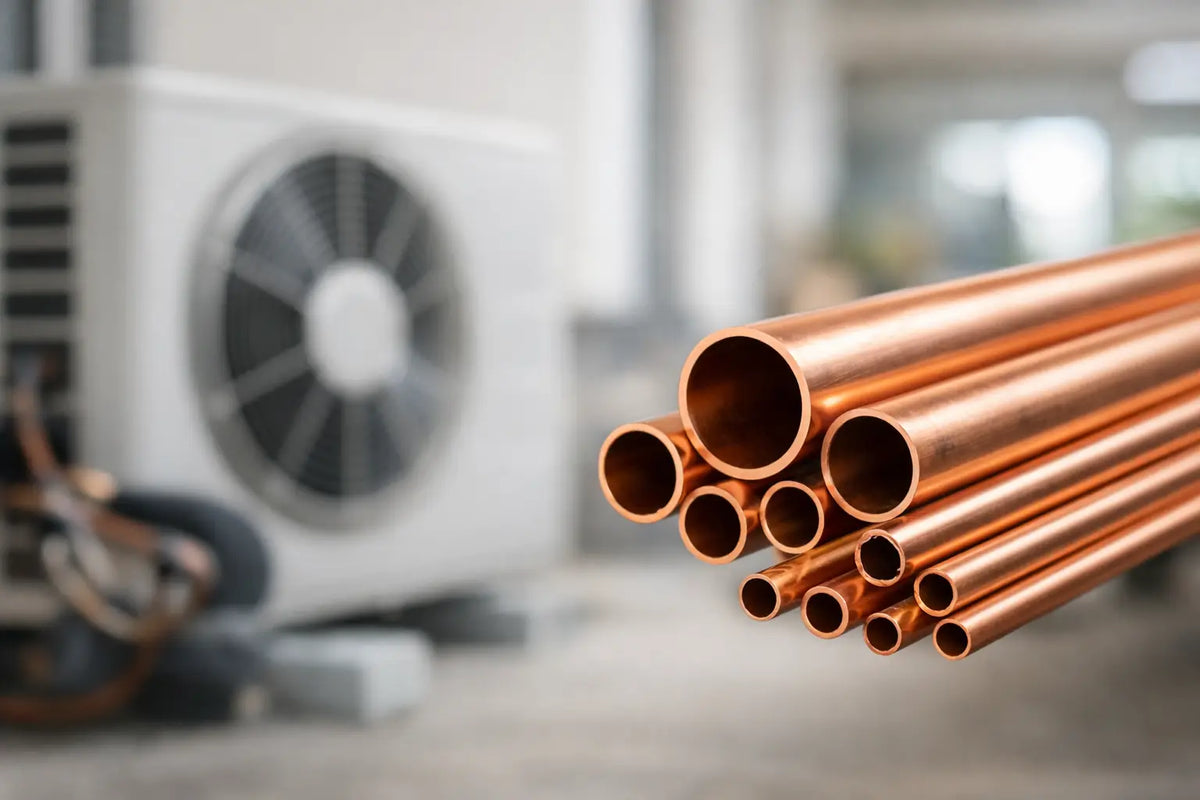
Wall thickness is the amount of copper material between the refrigerant and the outside environment. A thicker wall makes the tube less easy to dent, crush, or wear through. For example, 21 SWG copper tubing, commonly specified as an upgraded installation material, has a nominal wall thickness of about 0.8 mm. The exact comparison depends on the material standard and pipe size, so homeowners should not rely on a gauge number alone. Ask what pipe thickness, grade, and installation scope are included in the quotation.
Is Thicker Copper Piping Better? Usually, Yes
Refrigerant piping is pressurized and runs through areas that are not always easy to inspect later. It may be routed above a false ceiling, behind a box-up, along an exterior ledge, or through a tight service space. In those conditions, extra wall thickness provides a practical margin of protection.
A thicker copper pipe is generally more resistant to accidental dents during transport and installation. That matters because a deep dent can restrict refrigerant flow or create a weak point in the line. It also better tolerates vibration from normal system operation, especially where long pipe runs need proper support and clamping.
Over time, quality copper tubing with adequate wall thickness can reduce the risk of pinhole leaks caused by external damage or corrosion-related wear. A refrigerant leak is not merely an inconvenience. It can lead to weak cooling, higher energy use, repeated gas top-ups, water leakage concerns, and eventually compressor strain if left unresolved.
For homeowners replacing an old system, this is especially relevant. Once new piping is concealed behind finishing works, replacing it later can involve opening a box-up, ceiling, or wall. Spending modestly more on better piping during installation may help avoid a much larger repair bill later.
Thickness Alone Does Not Guarantee a Reliable Installation
There is a common misconception that premium copper automatically means premium workmanship. It does not. The best pipe can still fail if it is bent sharply, joined carelessly, left exposed, or paired with unsuitable insulation.
A reliable installation depends on several connected details:
- Correct pipe diameter and maximum run length for the selected air-conditioning system
- Refrigeration-grade copper that is clean, sealed, and appropriate for the refrigerant used
- Proper flaring or brazing techniques, with secure connections and pressure testing
- Sufficient pipe supports to prevent sagging, rubbing, and vibration
- High-quality closed-cell insulation that resists condensation and heat gain
- Thorough vacuuming before refrigerant is released into the system
This is why a detailed installation package is more useful than a vague promise of “free standard piping.” A clear proposal should state the piping grade, insulation type, wiring, drainage materials, trunking or box-up scope, testing process, and any charges that may apply for longer runs or difficult access.
Why Insulation Matters Just as Much in Hot, Humid Conditions
Copper carries refrigerant, but insulation protects the cooling process. In humid climates, poorly insulated gas piping can sweat heavily. That condensation may drip from a ceiling or trunking, stain finishes, encourage mold growth, and make a new installation feel like a failed one.
A thicker copper pipe will not prevent condensation if the insulation is thin, torn, poorly joined, or compressed at bends. Good closed-cell insulation helps limit heat gain and prevents humid air from reaching the cold pipe surface. Materials such as Class 0 elastomeric insulation are often selected for improved condensation control and fire-performance requirements.
Pay attention to the joints as well as the insulation brand. Every seam, elbow, and connection should be properly sealed. An otherwise high-quality pipe run can still develop sweating issues at one exposed or poorly taped section.
When Thicker Copper Piping Is Most Worthwhile
Thicker copper is a sensible choice for many standard home installations, but it becomes even more valuable where the pipe run faces added physical or operational stress.
Longer runs between indoor and outdoor units benefit from careful material selection and support because there are more bends, more attachment points, and more opportunities for vibration. Condominiums with routed piping above false ceilings or behind carpentry also deserve extra attention, since future access can be difficult and disruptive.
Commercial spaces often have longer operating hours and greater demand for dependable cooling. Offices, retail stores, restaurants, and server or equipment rooms may have little tolerance for downtime. In these cases, stronger piping, correct insulation, disciplined pressure testing, and documented workmanship should be treated as part of business continuity, not as cosmetic upgrades.
For a simple, short, accessible pipe route, standard compliant tubing installed by a skilled team may perform well for years. The decision should be based on the system design and the consequences of a future repair, not on marketing language alone.
Questions to Ask Before You Approve an Air-Conditioning Quote
The lowest quote is not always the lowest lifetime cost. Before selecting an installer, ask whether the quoted price includes a stated copper wall thickness and pipe grade, rather than just “copper piping.” Confirm whether the installer will pressure-test the lines, pull a proper vacuum, and test system operation before handover.
It is also worth asking how the piping will be routed and protected. Will it be concealed in existing trunking, installed in new casing, or placed behind a box-up? Are drainage pipes properly sloped? Will the team use in-house technicians or pass the work to subcontractors? Clear answers reveal far more about installation quality than a headline package price.
At Commercestar Engineering, upgraded 21 SWG copper piping is positioned as part of a premium installation approach, alongside quality insulation and careful finishing. That combination matters because materials only deliver their value when the team handling them follows a disciplined process from planning through testing.
The Better Choice Is a Complete, Well-Executed Pipe System
Thicker copper piping is generally better when it is correctly sized, properly insulated, and installed by technicians who do not cut corners. It gives the refrigerant line more protection against dents, vibration, and long-term wear - all issues that can become costly once piping is hidden.
Still, do not choose an air-conditioning contractor based on copper thickness alone. Look for transparent specifications, competent routing, neat finishing, pressure testing, vacuuming, and dependable after-sales support. A system that cools quietly and reliably years after installation is the real proof that the right materials and workmanship were chosen from the start.