What Causes Aircon Ice Buildup? 7 Common Reasons
A frozen indoor air-conditioning unit can turn a comfortably cool room into a warm, frustrating one fast. If you are asking what causes aircon ice buildup, the short answer is that the evaporator coil has become too cold for the moisture in the air around it. The longer answer matters because ice is usually a symptom, not the underlying fault.
Ignoring it can strain the compressor, reduce cooling performance, waste energy, and eventually lead to a more expensive repair. Whether you manage a home, office, retail space, or restaurant, identifying the cause early helps protect the system and avoid avoidable downtime.
What Causes Aircon Ice Buildup Inside a Unit?
Your air conditioner removes heat from indoor air through the evaporator coil. Under normal operating conditions, refrigerant flows through that coil while warm air passes over it. Humidity condenses into water and drains away, leaving the room cooler and less humid.
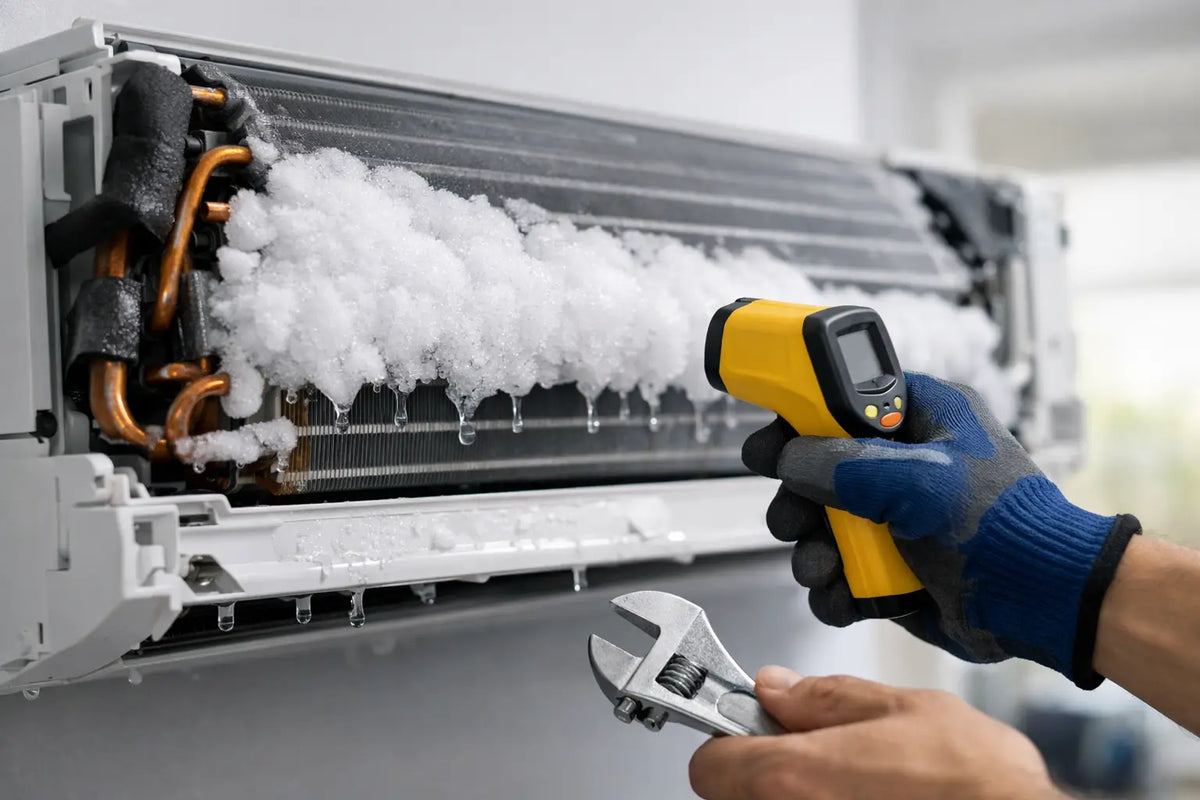
Ice forms when the coil temperature drops below freezing. Moisture that should become condensate instead freezes on the coil fins. As the ice thickens, it blocks airflow further, which makes the coil even colder. This cycle can quickly turn a minor maintenance issue into a complete cooling failure.
1. Restricted airflow from a dirty filter
A clogged air filter is one of the most common reasons for ice buildup. Filters collect dust, lint, pet hair, and other airborne particles. When they are overdue for cleaning or replacement, the unit cannot pull enough warm room air across the evaporator coil.
Without sufficient heat entering the coil, its surface temperature can fall below freezing. You may first notice weak airflow, a musty smell, or longer cooling cycles before visible ice appears. In ducted systems, blocked return grilles, crushed ducts, and closed supply vents can create the same airflow problem.
Cleaning a washable filter may resolve a minor case, but it will not correct a frozen coil immediately. The ice needs time to melt fully before the system is restarted.
2. A dirty evaporator coil
Even with a clean filter, the evaporator coil itself can accumulate a layer of dirt over time. This is especially common in properties near construction areas, busy roads, kitchens, or spaces with high occupancy. Dust on the coil acts as insulation, reducing the transfer of heat from the air into the refrigerant.
The system may still run, but it has to work harder to deliver less cooling. Eventually, the coil can freeze. Because the evaporator coil is located inside the indoor unit, cleaning it properly often requires partial disassembly and the right cleaning method. Aggressive brushing or unsuitable chemicals can damage delicate aluminum fins and reduce performance further.
3. Low refrigerant caused by a leak
Low refrigerant is a more serious answer to what causes aircon ice buildup. Refrigerant does not get used up during normal operation. If the charge is low, there is usually a leak in the system.
When refrigerant pressure falls, the evaporator coil can become excessively cold. Ice then forms on the coil and may spread along the insulated refrigerant line. Other warning signs include poorer cooling, hissing sounds, oily residue near connections, and a unit that runs for a long time without reaching the set temperature.
Simply adding refrigerant may restore cooling temporarily, but it is not a lasting repair. A qualified technician should locate and repair the leak, pressure-test the system, evacuate it correctly, and recharge it to the manufacturer’s specification. This protects efficiency and helps prevent repeat icing.
4. A weak blower motor or fan problem
Your indoor blower is responsible for moving room air across the evaporator coil. If the blower motor is weak, the fan wheel is dirty, the capacitor is failing, or the fan speed setting is incorrect, airflow may be too low even though the filter looks clean.
This fault can be easy to miss because the unit may still blow some cool air. However, reduced airflow gives the coil less heat to absorb, creating conditions for freezing. In commercial systems, a malfunctioning fan motor can also affect several rooms or zones at once.
A technician should check fan speed, electrical components, motor condition, and the cleanliness of the blower assembly. Fixing only the ice without correcting the airflow issue will lead to another freeze-up.
5. Incorrect thermostat settings or control faults
Running an air conditioner at an extremely low set temperature for long periods can contribute to icing, especially when indoor heat load is low. This can happen overnight in lightly occupied rooms, during cool weather, or in spaces where doors remain closed for extended periods.
A faulty thermostat, sensor, control board, or thermistor can create a similar issue. The system may fail to cycle off when the coil gets too cold, or it may receive inaccurate temperature readings. If the unit keeps cooling beyond what the room needs, frost can develop.
The right setting depends on the property and the equipment, but a moderate temperature with adequate fan airflow is generally easier on the system than constantly demanding maximum cooling. If ice returns despite sensible settings and clean filters, the controls need professional testing.
6. Cool outdoor conditions or unsuitable operating conditions
Air conditioners are designed around specific operating ranges. Using standard comfort-cooling equipment when outdoor temperatures are unusually low can reduce system pressure and cause the indoor coil to freeze. This is more common with systems used for server rooms, equipment rooms, or businesses that need cooling outside normal daytime conditions.
High humidity can make the ice more visible because there is more moisture available to freeze, but humidity alone is rarely the root cause. It normally exposes an existing issue with airflow, refrigerant pressure, or controls.
For spaces requiring year-round cooling, the system may need purpose-designed controls or equipment rather than a standard residential setup operated beyond its intended conditions.
7. Installation or system design issues
Poor installation can create icing problems long after the work is complete. Incorrect refrigerant piping size, poorly insulated pipe joints, improper drainage routing, insufficient electrical connections, or an inaccurate refrigerant charge can all affect system performance.
System sizing matters too. An oversized unit may cool a small room too quickly and cycle inefficiently. An undersized system can run continuously under heavy heat load, increasing wear and exposing weaknesses in airflow or refrigerant performance. For multi-zone systems, pipe lengths, indoor-unit capacity matching, and commissioning must follow the manufacturer’s requirements.
This is why installation quality is not just about making the unit look neat on day one. Correct piping, durable insulation, proper testing, and careful commissioning help prevent hidden issues that can affect cooling reliability later.
What to Do When You See Ice on Your Air Conditioner
Turn off cooling mode as soon as you notice frost or ice. If your unit has a fan-only mode, running the fan can help circulate room air and speed up thawing. Do not forcefully scrape ice from the coil or refrigerant pipes. Coil fins bend easily, and damage can restrict airflow permanently.
Check the filter and make sure supply and return vents are open and unobstructed. Place towels under the indoor unit if melting ice may cause water to drip. Once the system has fully thawed, you can restart it and observe whether airflow and cooling return to normal.
If the unit freezes again, blows weakly, leaks water, makes unusual noises, or fails to cool properly, stop using it and arrange an inspection. Repeated freeze-ups can damage the compressor, which is one of the costliest components to replace.
How Regular Maintenance Helps Prevent Ice Buildup
Preventive maintenance is usually less disruptive than emergency repair. For a typical home system, filters should be cleaned or replaced on a schedule that reflects actual use, pets, dust levels, and occupancy. High-use commercial spaces often need more frequent attention.
Professional servicing should go beyond a quick surface wipe. A thorough visit checks the evaporator coil, blower, drainage system, refrigerant performance, electrical connections, fan operation, and overall cooling output. This approach finds early restrictions and abnormal readings before the coil begins freezing.
For properties that depend on reliable cooling, planned maintenance also creates a record of system condition. That makes it easier to spot declining performance, recurring leaks, and components that should be repaired before they disrupt comfort or operations.
A frozen unit is your air conditioner asking for attention. Let it thaw, avoid quick fixes that hide the cause, and have the system checked properly if the problem returns. Careful diagnosis now is the practical way to protect comfort, efficiency, and the life of your equipment.