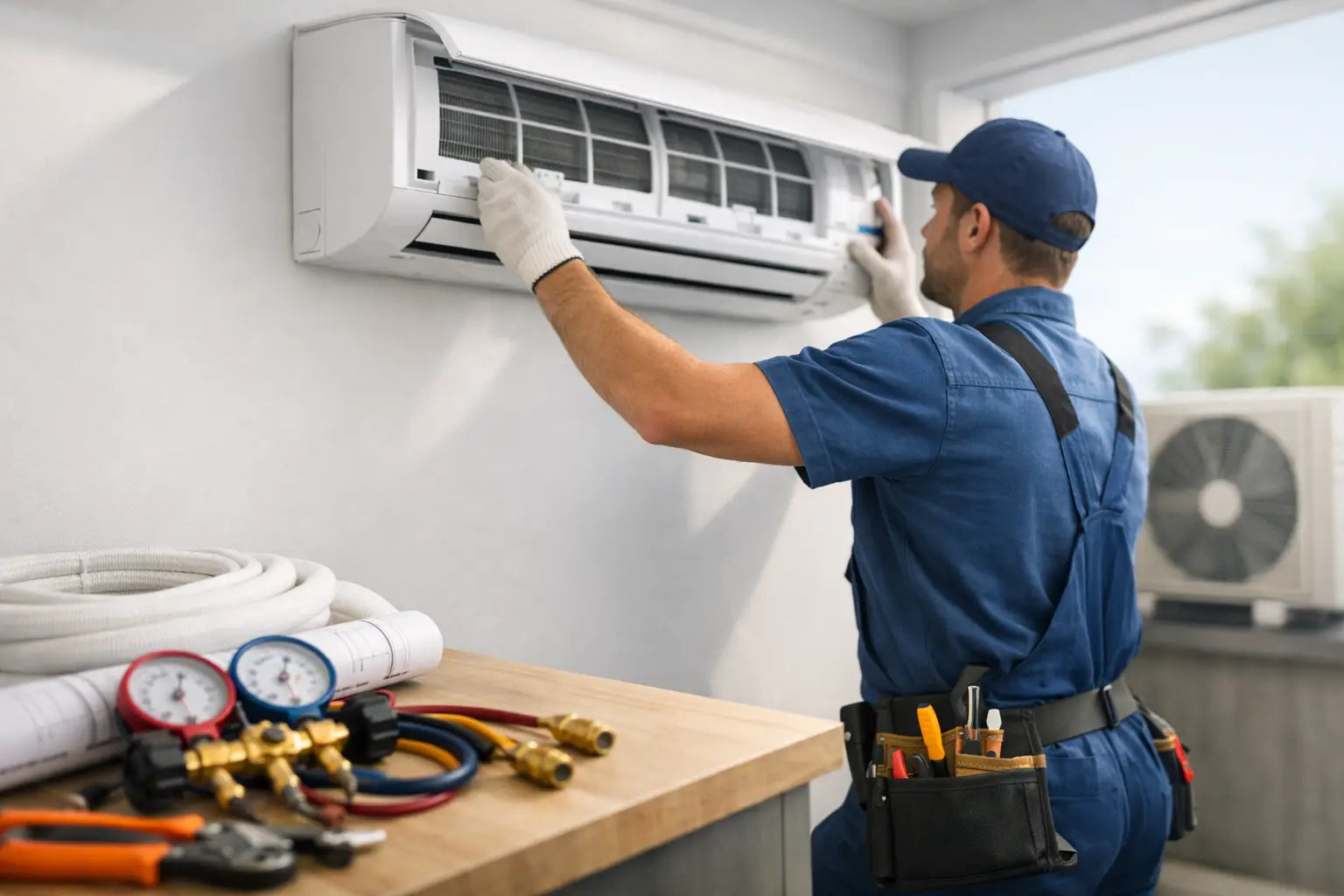
What Affects Aircon Installation Cost?
A low aircon quote can look attractive right up until the piping sweats, the drainage leaks, or the system struggles to cool evenly a few months later. If you are comparing proposals and wondering what affects aircon installation cost, the short answer is this: the price is shaped by far more than the indoor and outdoor units alone.
In practice, installation cost reflects the system design, the property layout, the materials used, the complexity of the work, and the standard of workmanship behind it. That is why two quotes for what seems like the same setup can end up looking very different. One may cover only the basics. Another may include thicker copper piping, better insulation, proper trunking, careful testing, and a more experienced in-house team. The difference is not just price. It is also reliability.
What affects aircon installation cost most?
The biggest cost drivers usually start with the type of air-conditioning system you are installing. A single split unit is naturally simpler than a multi-split system serving several bedrooms and a living area. The more fan coil units involved, the more piping, wiring, drainage planning, and installation time are required.
Capacity matters too. A larger system designed for bigger rooms or heavier heat loads will usually cost more, both in equipment and in installation requirements. Commercial spaces can be even more complex because cooling demand, operating hours, and layout constraints are rarely as straightforward as a standard residential setup.
Then there is the question many buyers overlook: is the installer pricing for a quick install, or for a proper one? Good installation work includes thoughtful pipe routing, correct insulation, leak testing, vacuuming, neat finishing, and support after the job is done. Those details affect cost because they affect labor time, materials, and accountability.
System type and property size
For homeowners, installation cost often starts with the number of rooms you want to cool and how the property is laid out. A compact apartment with short piping runs is a very different job from a larger condo or landed home where the compressor sits far from the indoor units. Longer pipe runs generally mean higher costs because more copper pipe, insulation, drainage pipe, and cable are required.
In a commercial property, the planning can be even more involved. Offices, retail stores, and F&B units may need different cooling zones, more careful condenser placement, and scheduling that avoids disruption to business operations. Installation cost rises when planning becomes more technical or when work has to be staged around operating hours.
A replacement job can also vary in price depending on whether existing piping can realistically be reused. Sometimes reuse sounds cost-effective, but old piping may not suit the new refrigerant standard or may already be degraded. Replacing it can cost more upfront, but it often reduces the risk of future leaks and performance issues.
Materials make a real price difference
One of the clearest answers to what affects aircon installation cost is the installation material specification. This is where the cheapest quote and the best-value quote can part ways.
Copper piping is a good example. Thicker, higher-grade copper costs more, but it gives better durability and can reduce the chance of leaks over time. Insulation quality matters too. Better insulation helps control condensation, improves thermal performance, and protects the piping system in Singapore's humid conditions.
Cables, drainage pipes, brackets, trunking, and finishing materials also influence cost. These may seem like small components compared with the aircon units themselves, but they are part of the system that determines whether the installation stays neat, safe, and dependable. Premium materials are not there for marketing. They directly affect long-term performance.
Site conditions and access
Installation is rarely priced in a vacuum. Site conditions can make the same system simple in one property and difficult in another.
If technicians have easy access to the installation area, with short piping routes and clear wall space, labor is generally more straightforward. If the team has to work around tight service ledges, high wall mounting, concealed routes, restricted access, or difficult outdoor unit placement, the work takes longer and may require additional equipment or manpower.
Renovation status also matters. Installing before carpentry or ceiling works are completed can be easier than retrofitting around finished interiors. In existing homes or offices, protecting completed surfaces, coordinating around furniture, and working within occupied spaces can add time and care requirements.
For commercial sites, building management rules can also influence cost. Permit requirements, restricted work hours, and loading access limitations all affect how efficiently the job can be executed.
Installation scope beyond the basics
Many buyers assume an aircon installation package covers everything. Sometimes it does not.
The base quote may include standard piping length, basic trunking, and regular wall-mounted installation. Costs can increase when the scope includes longer pipe runs, upgraded trunking, additional drainage points, extended wiring, wall hacking, patching, or decorative box-up works to conceal piping neatly.
This is not necessarily a hidden charge issue. Often, it simply reflects the difference between a standard install and a customized one. The key is whether the scope is explained clearly before work begins. Transparent pricing matters because customers should know what is included, what is optional, and what is required by the site.
Workmanship and who is doing the work
Not all installation teams are structured the same way, and that affects pricing. An experienced in-house team with clear installation processes, quality control, and after-sales responsibility will usually cost more than loosely arranged subcontract labor. That higher cost often reflects stronger accountability.
This matters because aircon problems are frequently installation problems in disguise. Poor flaring, weak insulation wrapping, bad drainage gradient, rushed vacuuming, and messy pipe routing may not show up on day one. They show up later as water leaks, gas loss, uneven cooling, and service headaches.
A proper installation is not just about mounting the units and switching them on. It is about making sure the full system is installed to last. That is why workmanship is one of the most important cost factors, even though it can be the hardest one to compare from a quotation alone.
Brand, compatibility, and system planning
Different aircon brands and models can also influence installation cost, especially when system requirements vary. Some setups may have more demanding piping layouts, electrical requirements, or mounting considerations. The installer should match the system to the property instead of forcing a one-size-fits-all approach.
This is where consultation matters. A cheaper system that is oversized, undersized, or poorly matched to room usage can lead to higher operating costs and uneven comfort. Good planning may not be the most obvious line item on an invoice, but it has real value.
For example, a bedroom used only at night and a retail space with constant door opening do not have the same cooling profile. The best installation quote is not always the lowest one. It is the one built around the right system, the right materials, and the right execution.
What affects aircon installation cost in the long run?
The upfront bill is only one part of the real cost. Long-term value comes from how well the installation holds up over time.
A cheaper installation may save money on day one, but that saving can disappear quickly if the system develops drainage issues, poor cooling performance, repeated gas top-ups, or premature wear caused by improper setup. On the other hand, a well-installed system using stronger materials can reduce service issues and support better efficiency over its lifespan.
That is why many property owners now look beyond headline price. They want to know what grade of insulation is being used, whether the copper thickness is upgraded, whether the team handles the work directly, and what support is available after installation. These are cost factors, but they are also trust factors.
At Commercestar Engineering, this is exactly why premium installation materials and in-house workmanship are part of the conversation, not hidden in the fine print. Customers are not just buying cooling equipment. They are investing in how that system is installed and supported.
How to compare quotes without getting misled
If you are reviewing multiple proposals, compare more than the unit model and final price. Ask what piping length is included, what material grade is being used, whether drainage and trunking are standard or upgraded, and whether site-specific extras have already been accounted for.
Also ask who will carry out the installation and what happens if there is a problem after handover. A detailed, transparent quote may come in higher than a stripped-down one, but it also gives you a clearer picture of what you are paying for.
That makes the buying decision easier. Instead of chasing the cheapest number, you can judge whether the price matches the quality, scope, and reliability offered.
When you understand what affects aircon installation cost, the quote stops being just a number. It becomes a reflection of materials, planning, workmanship, and how much future trouble you are choosing to avoid.