
Aircon Capacitor Replacement Signs and Costs
A working air conditioner can still leave you with a warm room when its capacitor begins to fail. The indoor unit may run, the display may light up, and yet the outdoor condenser struggles to start or keeps cutting out. Aircon capacitor replacement is often the repair behind this frustrating situation, but it should never be treated as a simple part swap without proper diagnosis.
A capacitor is a small electrical component with a major role in starting and running the compressor and fan motor. When it loses capacity, the system may draw more effort to do less work. Acting early can prevent unnecessary strain on more expensive components, particularly the compressor.
What an Aircon Capacitor Does
Most residential and light commercial split systems use capacitors in the outdoor condenser unit. A start capacitor provides an extra electrical boost for startup in systems designed with one. A run capacitor helps maintain the electrical phase shift needed for the compressor or fan motor to operate efficiently.
Many condensers use a dual run capacitor, which supports both the compressor and the condenser fan within one component. It is identified by specifications such as capacitance, measured in microfarads, and voltage rating. These values are not interchangeable simply because two capacitors look alike. Installing the wrong rating can lead to weak performance, repeated tripping, motor damage, or immediate component failure.
Heat, electrical fluctuations, age, vibration, and poor ventilation around the condenser all shorten capacitor life. Singapore's hot, humid conditions can place sustained demand on air-conditioning equipment, especially for systems that run for long hours in bedrooms, living areas, offices, retail spaces, and food and beverage premises.
Signs You May Need Aircon Capacitor Replacement
A failing capacitor rarely announces itself with one perfect symptom. The pattern matters, along with test results taken by a trained technician. You may notice the outdoor unit humming without properly starting, delayed cooling after switching the system on, or a condenser fan that starts slowly or stops unexpectedly.
Other common warning signs include warm air from the indoor fan coil despite the unit being set to cool, frequent circuit breaker trips, and intermittent cooling that returns after the system has rested. Some homeowners also hear a clicking sound as the unit repeatedly attempts to start. Do not keep restarting the system in hopes that it will catch. Repeated failed starts can place additional stress on the compressor.
Reduced cooling does not automatically mean the capacitor is at fault. A dirty condenser coil, faulty contactor, refrigerant issue, damaged fan motor, control board fault, or compressor problem can create similar symptoms. That is why a credible repair process starts with inspection and measurement, not a guess based on the most visible symptom.
Why the Outdoor Unit Deserves Attention
When the indoor unit blows air but the room does not cool, many people focus on the fan coil. The actual issue may be outdoors, where the compressor releases heat and the condenser fan keeps airflow moving across the coil. If a weak capacitor prevents either component from operating correctly, the entire system's cooling cycle is affected.
For commercial users, this can become an operational problem quickly. A warm office disrupts staff comfort, while inadequate cooling in a shop, kitchen-adjacent area, or server room may affect equipment, customers, and daily business activity. Prompt assessment is usually more cost-effective than waiting for a minor electrical component to contribute to a larger breakdown.
How a Proper Capacitor Diagnosis Should Be Done
Capacitors store electrical energy even after power is switched off. The outdoor unit also contains high-voltage circuits. For that reason, capacitor testing and replacement are jobs for qualified air-conditioning professionals, not a trial-and-error DIY repair.
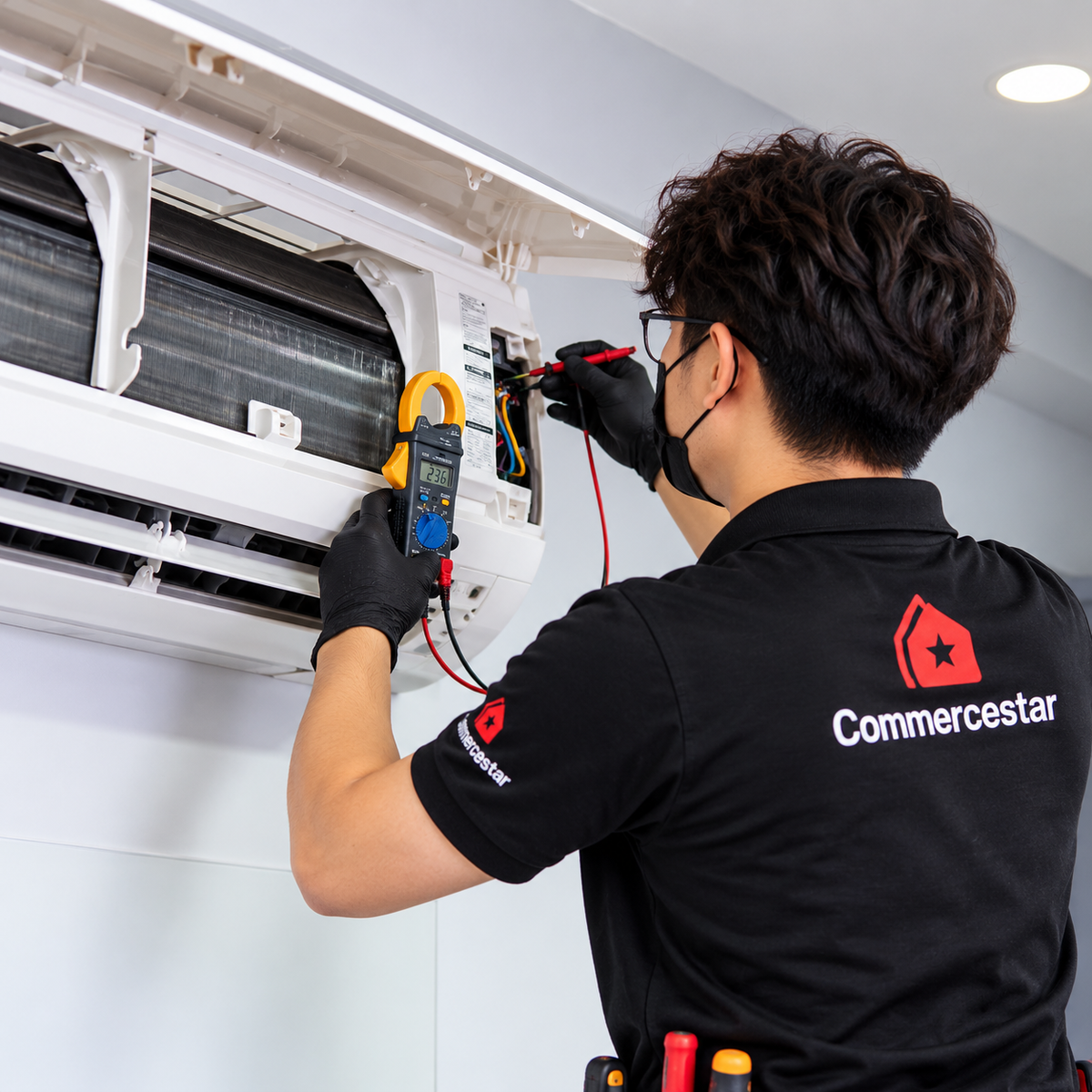
A proper visit begins with safe isolation of the power supply and a visual check of the condenser. The technician should inspect for loose wiring, burned terminals, swollen casing, oil leakage, corrosion, heat damage, and signs of arcing. A swollen capacitor is a strong failure indicator, but a normal-looking capacitor can still be out of specification.
The next step is electrical testing with the appropriate meter. The measured capacitance should be compared with the value printed on the component and its acceptable tolerance. The technician should also assess the contactor, wiring condition, compressor and fan motor behavior, current draw, and overall cooling performance. Replacing a capacitor without checking the surrounding circuit can mask the real cause of failure.
This diagnosis matters because a capacitor that fails unusually early may be a symptom rather than the root problem. For example, poor condenser ventilation, a weakening fan motor, unstable electrical supply, or an overheating compressor may contribute to repeated failure. Addressing only the capacitor in those cases may restore cooling temporarily but will not deliver long-term reliability.
What Affects Aircon Capacitor Replacement Cost
The cost of aircon capacitor replacement depends on more than the component itself. Capacitors are available in different capacitance and voltage ratings, and the correct part must match the system's design. A standard residential capacitor may be straightforward to source and fit, while less common or higher-capacity parts may require additional lead time or cost more.
Labor also varies with access and diagnosis. A condenser installed on an easily accessible ledge is different from a unit located at height, in a restricted service area, or within a commercial installation that requires coordinated access. The final price may also include troubleshooting, electrical testing, transport, and any related repairs such as replacing heat-damaged terminals or correcting loose connections.
Be cautious with unusually low quotes that promise a quick part change without testing. The lowest initial price is not always the best value if the technician installs an unsuitable component, overlooks an underlying fault, or leaves compromised wiring in place. Clear scope, correct parts, and documented workmanship are more meaningful than a vague flat rate.
Repair or Replace the Air Conditioner?
A capacitor failure alone does not mean the whole air-conditioning system needs replacement. If the system is otherwise in good condition, uses a supportable refrigerant, and delivers normal cooling after repair, replacing the capacitor is typically a sensible maintenance repair.
The decision changes when the unit has multiple recurring faults. If the compressor is failing, refrigerant leaks persist, electrical parts repeatedly burn out, or the system is nearing the end of its practical service life, it may be better to compare repair costs with a new installation. Energy consumption, parts availability, property renovation plans, and the number of rooms served should all be considered.
For a homeowner, the right answer may be a targeted repair that restores dependable cooling. For a business operator, planned system replacement may make more sense when downtime carries a higher cost. The key is receiving a clear explanation of the condition, options, and likely next steps rather than being pressured into a decision.
Preventing Premature Capacitor Failure
No maintenance plan can guarantee that an electrical component will never fail, but good system care reduces avoidable stress. Keep the outdoor condenser area clear enough for airflow, arrange regular servicing appropriate to how often the system runs, and investigate unusual noises or inconsistent cooling early.
Installation quality also has a long-term effect. Correct electrical connections, properly sized cables, neat piping work, sound insulation, and a stable condenser mounting arrangement all support reliable system operation. Commercestar Engineering approaches repairs and installations with this wider view: the component matters, but so does the condition of the complete system around it.
If your air conditioner hums, trips, cools inconsistently, or leaves the condenser fan struggling to start, switch it off and arrange a professional assessment. A correctly tested capacitor replacement may be a relatively focused repair, and timely attention can help keep a small electrical fault from becoming an uncomfortable and expensive interruption.