
Aircon System Comparison for Smarter Cooling
A good aircon system comparison starts with the rooms you need to cool, not the promotion attached to the unit. A system that looks inexpensive on paper can become costly when it is undersized, poorly piped, difficult to service, or installed with materials that will not hold up over time. For homeowners and business operators, the right choice is the one that delivers steady comfort, sensible energy use, and dependable support long after installation day.
Start With Your Property’s Cooling Requirements
Before comparing brands or packages, assess the layout. A compact apartment, a multi-bedroom home, a retail shop, and an office with heat-generating equipment all place different demands on an air-conditioning system. Room size matters, but it is only one part of the calculation.
Ceiling height, afternoon sun, window size, insulation, number of occupants, cooking activity, and connected open spaces can all increase the cooling load. A west-facing living room with large windows may need more capacity than a similarly sized bedroom. In a commercial setting, customer traffic, lighting, computers, and operating hours can change the requirement significantly.
This is why simply choosing the largest available unit is not the answer. Oversizing can lead to frequent cycling, uneven humidity control, and unnecessary upfront cost. Undersizing forces the unit to work continuously and may leave rooms warm during peak heat. Proper system planning matches each indoor unit to the room it serves while considering how many rooms will run at the same time.
Aircon System Comparison: System Types
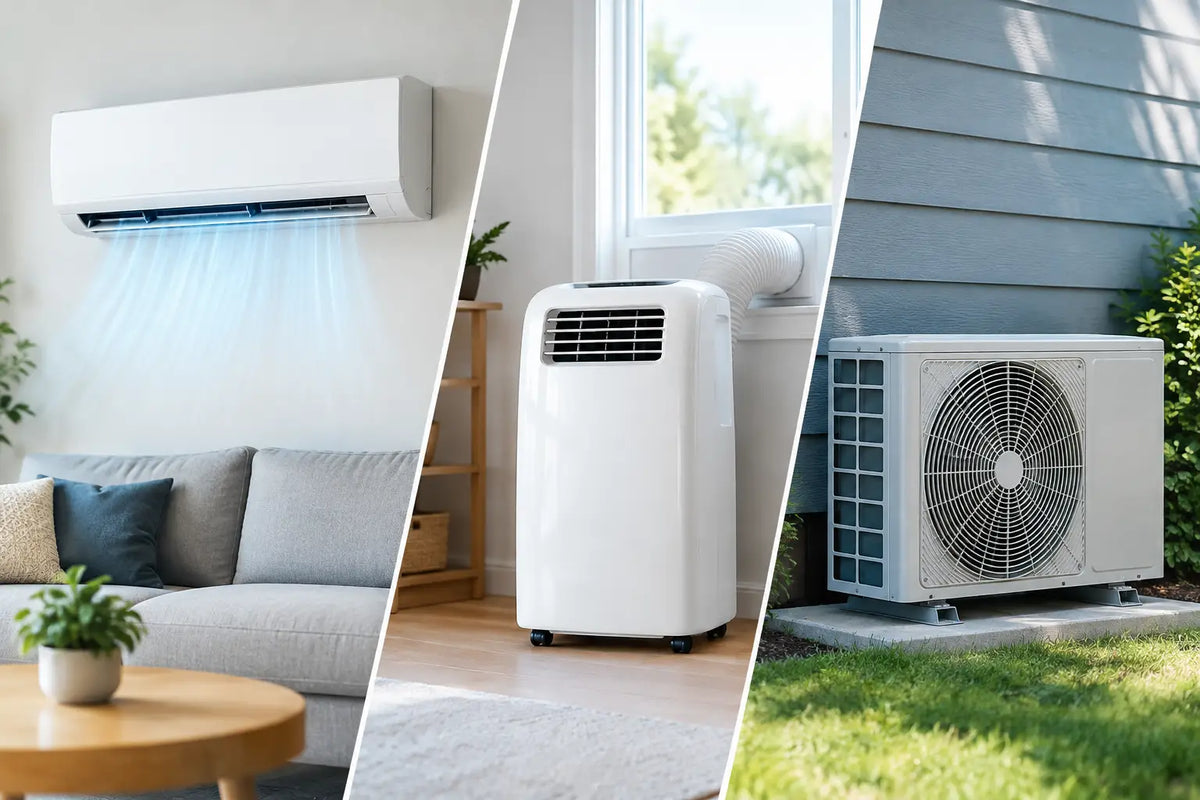
Most residential buyers are deciding between a single-split arrangement and a multi-split system. Commercial properties may also consider larger variable refrigerant flow systems, cassette units, ducted systems, or ceiling-suspended units depending on the space.
Single-Split Systems
A single-split system connects one indoor unit to one outdoor condenser. It is straightforward, can be a practical choice for a room addition or a space with isolated cooling needs, and allows each room to operate independently. The trade-off is outdoor space. Installing separate condensers for several rooms may be impractical in apartments, condominiums, or buildings with strict facade requirements.
Multi-Split Systems
A multi-split system connects several indoor units to one outdoor condenser. This is a common solution for homes because it reduces the number of outdoor units while allowing individual room control. System 2, System 3, System 4, and System 5 configurations are often selected based on the number of rooms to be air-conditioned.
The key question is not only how many indoor units are included. It is whether the outdoor unit has suitable capacity for your expected usage. A household that runs one bedroom unit overnight has a different demand from a family that cools the living room and several bedrooms at the same time every evening.
Commercial Systems
For offices, F&B spaces, retail locations, and industrial environments, system selection should account for operating hours, zoning, access for maintenance, and business continuity. A solution that is efficient for a small office may not be suitable for a restaurant kitchen-adjacent dining area or a shop with constant door traffic.
Commercial planning should also consider redundancy. If cooling is business-critical, relying on a single point of failure may create operational risk. An experienced installer can recommend zoning and equipment layouts that make future servicing less disruptive.
Compare Efficiency Beyond the Sales Label
Energy efficiency deserves close attention, particularly where air conditioning runs daily. Inverter systems adjust compressor output to match demand rather than repeatedly switching at full power. For many homes and businesses, this can reduce energy consumption while maintaining more stable room temperatures.
However, efficiency ratings should be read alongside real usage. A highly rated system will not perform at its best if the capacity is wrong, filters are neglected, refrigerant levels are compromised, or the refrigerant piping is poorly installed. Energy savings come from the complete system, not the condenser alone.
When comparing options, consider the unit’s efficiency rating, expected usage pattern, warranty terms, and available operating features. Quiet operation may be especially valuable in bedrooms, meeting rooms, and hospitality settings. Smart controls can be useful for scheduling and monitoring, but they should not distract from the fundamentals of correct sizing and installation.
Brand Choice Should Follow Your Priorities
Major brands such as Mitsubishi Starmex, Daikin, Panasonic, Mitsubishi Heavy Industries, Fujitsu, Samsung, LG, Haier, Toshiba, Hitachi, and Midea offer different strengths across product ranges. There is no single best brand for every property.
Some buyers prioritize proven long-term reliability and familiar servicing support. Others place more value on quiet indoor operation, advanced filtration, compact indoor-unit design, or a specific budget. For commercial users, parts availability, turnaround time, and the ability to maintain equipment with minimal disruption may matter more than extra consumer features.
Rather than comparing brand names alone, compare the exact model, its cooling capacity, efficiency, warranty coverage, and suitability for the planned installation. A reputable brand paired with an unsuitable configuration is still the wrong purchase. Likewise, a value-focused model can be a sensible choice when it is correctly matched to the application and supported by professional after-sales service.
Installation Materials Are Part of the System
This is where many quotations look similar until you examine the details. The indoor and outdoor units are visible, but the concealed materials determine much of the system’s long-term reliability. Refrigerant piping, insulation, electrical cables, drainage piping, trunking, and workmanship all affect performance and future maintenance.
Copper piping should be durable and appropriately specified for the installation. Thicker 21 SWG copper piping provides greater resistance to damage than thinner alternatives. Quality insulation, such as K-FLEX TITAN Class 0 insulation, helps manage condensation and protects against heat gain along the pipe run. Proper drainage gradient is equally important because poorly planned drainage can lead to leaks, water stains, and unpleasant odors.
Neat trunking and careful piping routes are not merely cosmetic. They make a property easier to maintain and can help prevent avoidable bends, pressure issues, and inaccessible connections. If box-up works are required for a cleaner finish, plan them with the air-conditioning layout rather than treating them as an afterthought.
Ask what materials are included and whether the installation is carried out by an in-house team or passed among subcontractors. Clear accountability matters when a system needs adjustment after commissioning.
Look at the Full Cost, Not Just the Package Price
An aircon package price may cover equipment and standard installation, but every property has different conditions. Longer pipe runs, nonstandard electrical work, wall drilling, condensate pump requirements, existing-unit removal, access constraints, and finishing work can affect the final scope.
A transparent quotation identifies what is included, what is excluded, and what may change after a site assessment. That clarity helps avoid the frustration of discovering unexpected charges during installation. It also gives you a fair basis for comparing quotations from different providers.
The lowest price can make sense when the scope, materials, workmanship standards, and support are genuinely equivalent. If they are not equivalent, it is not an apples-to-apples comparison. Paying slightly more for better copper, insulation, cables, drainage work, and accountable installation may reduce the likelihood of costly repairs later.
Plan for Servicing Before You Buy
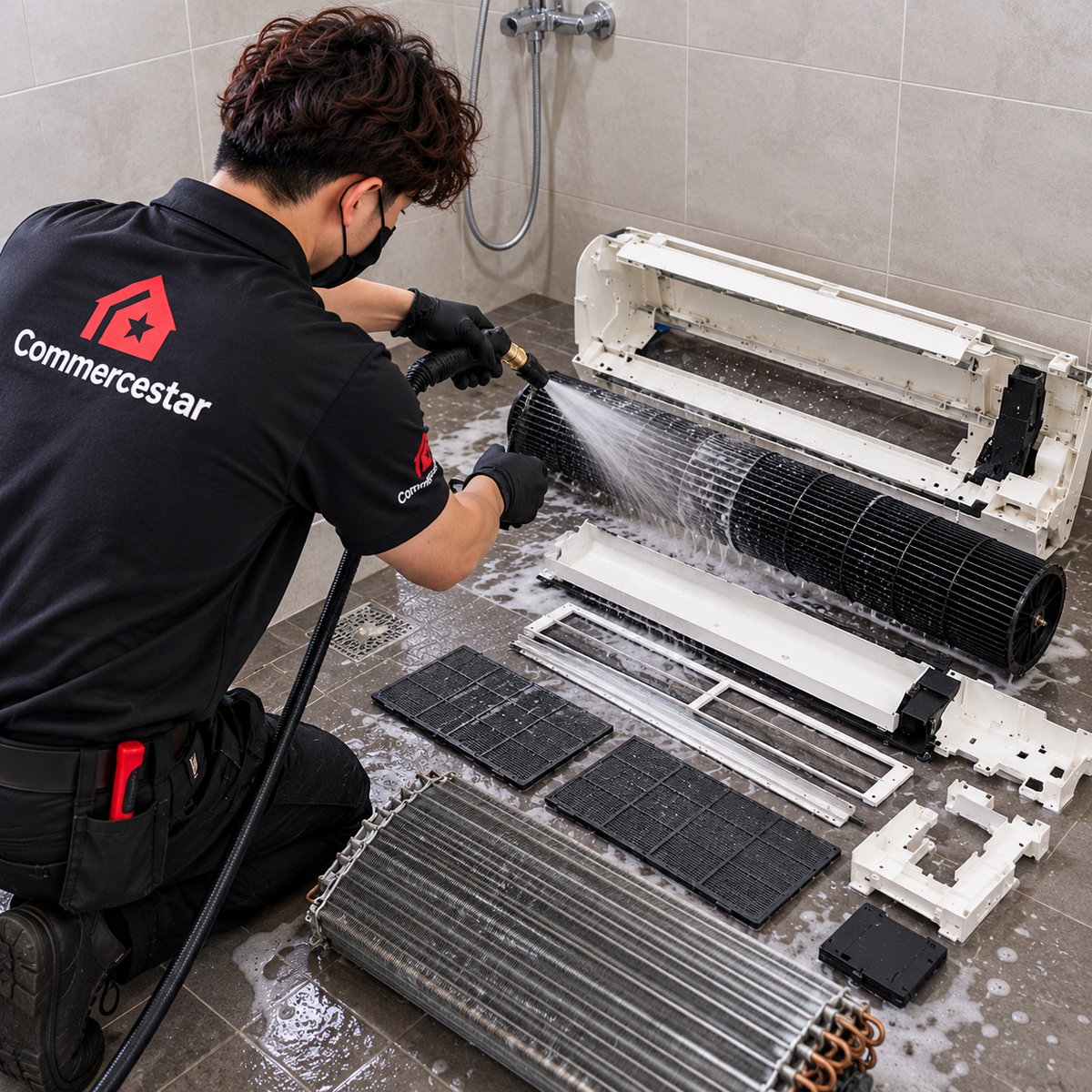
Every air-conditioning system needs routine care. Filters collect dust, drainage lines can become blocked, coils lose efficiency, and components naturally experience wear. Regular servicing protects cooling performance and helps identify small issues before they become a breakdown during a hot week or a busy business day.
For homeowners, a maintenance plan can provide predictable scheduling and reduce the chance that servicing is forgotten. For businesses, planned maintenance is even more valuable because downtime affects staff, customers, inventory, and operations. Choose a provider with an established service structure, responsive support, and technicians who understand the system they installed.
Commercestar Engineering approaches air-conditioning selection as an engineering decision, combining reputable equipment with premium installation materials and an in-house installation team. That approach is designed for customers who want clear pricing, neat execution, and support that continues after the units are switched on.
The best time to prevent air-conditioning problems is before installation begins. Take the extra step to review capacity, materials, access, warranty, and maintenance expectations together. A properly planned system should feel quiet, comfortable, and uncomplicated for years, which is exactly what a worthwhile investment in cooling should deliver.


