Aircon Copper Piping Guide for Better Cooling
A new air conditioner can look impressive on paper, but the real performance often depends on what sits behind the walls and above the ceiling. This aircon copper piping guide focuses on the part many buyers overlook until problems show up later - weak cooling, gas leaks, sweating pipes, water stains, or an installation that is much messier than expected.
Copper piping is the refrigerant pathway of an air-conditioning system. If the pipe size is wrong, the copper is too thin, the insulation is poor, or the routing is careless, even a good aircon brand can underperform. That is why experienced installers pay close attention not just to the fan coil and condenser, but also to the materials and workmanship that connect the whole system together.
Why copper piping matters more than most buyers think
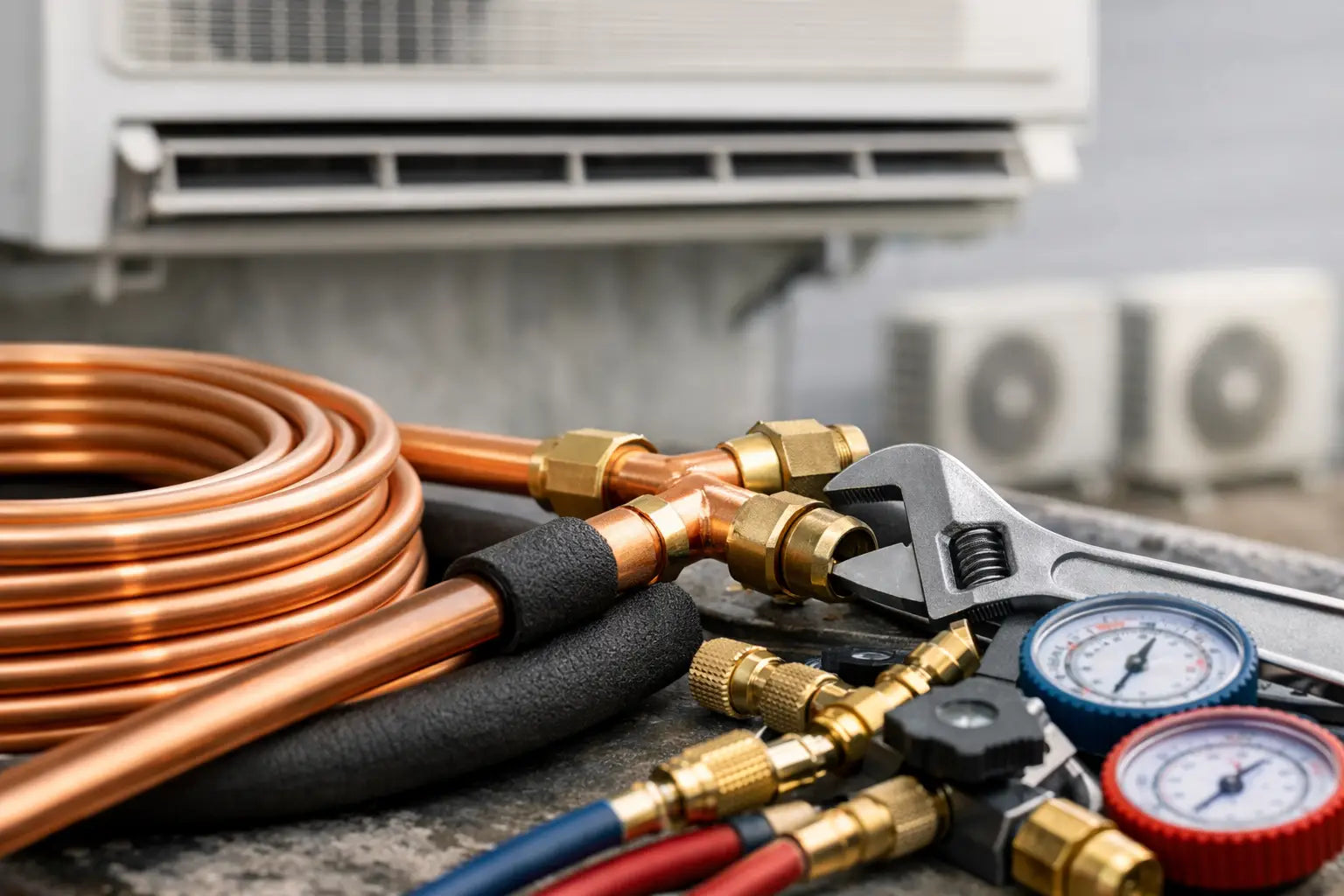
In a split air-conditioning system, refrigerant moves between the indoor and outdoor units through copper pipes. One line typically carries liquid refrigerant and the other carries gas. These pipes need to handle pressure, temperature changes, vibration, and years of operation without developing leaks.
When people compare aircon quotations, they often focus on brand, BTU, or package price. That is understandable, but it misses a major part of installation quality. Copper piping is not just a hidden accessory. It directly affects cooling efficiency, compressor health, and long-term reliability.
A well-installed set of pipes helps the system maintain correct refrigerant flow. A poor installation can create pressure drops, inefficient cooling, compressor strain, and future repair costs. This is one reason premium installers specify the copper grade, pipe thickness, and insulation brand instead of treating piping as a generic line item.
Aircon copper piping guide: the key details to check
If you are reviewing a quote or planning an installation, there are a few details worth asking about.
Pipe size must match the system
Different aircon systems require different pipe diameters. The correct sizing depends on the equipment model, cooling capacity, and manufacturer specifications. This is not a guesswork item.
If piping is undersized, refrigerant flow can be restricted and the system may run less efficiently. If it is oversized, the system may also behave differently than intended. Good installers follow the manufacturer’s requirements closely rather than forcing a one-size-fits-all approach across different brands and room sizes.
Copper thickness affects durability
Not all copper piping supplied in the market is equal. Thicker copper generally offers better strength and resistance to deformation during installation. It can also hold up better over time, especially where bends, vibration, or long pipe runs are involved.
For customers, this matters because thinner copper may help reduce upfront contractor cost, but it can be a false economy. The piping is one of the last things you want to redo after renovation is completed. Once it is concealed in trunking or box-up works, replacement becomes disruptive and expensive.
Insulation is part of the piping system
Copper alone is only part of the story. The insulation wrapped around it is just as important in hot, humid conditions. Good insulation helps reduce condensation, protects thermal performance, and lowers the risk of sweating along the pipe route.
If insulation quality is poor, you may end up with water droplets, damp patches, or staining near concealed sections. In real-world installations, this becomes a comfort issue and a finishing issue, not just a technical one.
Jointing and flaring work need precision
Copper piping connections must be done carefully. Improper flaring, over-tightening, under-tightening, or careless handling can create slow refrigerant leaks that only show up months later.
This is where workmanship separates a proper installation from a rushed one. The materials can be decent, but if the joining method is poor, the system may still fail. A professional installer pressure tests and checks for leaks before handover instead of assuming everything is fine because the unit powers on.
Routing, concealment, and neat execution
An aircon piping run should not be planned only around speed. It should also consider efficiency, future access, and visual neatness.
The shortest route is often desirable because it reduces material use and can support better system performance, but the shortest route is not always the cleanest or most practical. In apartments, offices, and retail spaces, installers often need to balance building layout, wall type, ceiling clearance, drainage slope, and finishing requirements.
For exposed trunking, neat alignment matters. For concealed routes, coordination matters even more. A badly planned concealed pipe run can lead to difficult servicing access later or interfere with other renovation works. Good installers think beyond installation day. They consider how the system will be maintained years from now.
Why insulation quality matters in humid climates
In warm and humid environments, poor insulation quickly becomes obvious. Condensation on refrigerant lines can drip into wall finishes, ceiling boards, or cabinetry. Over time, that creates an avoidable chain of problems.
This is why higher-grade insulation is often worth the upgrade. It helps maintain system efficiency and protects the surrounding interior. Brands that invest in better installation materials usually do so because they have seen what happens when corners are cut.
For homeowners, the benefit is fewer hidden issues behind renovated surfaces. For commercial spaces, it helps prevent disruption, complaints, and avoidable repair works. In both cases, the value is long-term peace of mind rather than just lower installation cost on day one.
Common mistakes this aircon copper piping guide can help you avoid
One common mistake is assuming all installation packages use the same piping standard. They do not. Two quotations may look similar at first glance, but the copper thickness, insulation class, cable quality, and workmanship process can be very different.
Another mistake is focusing only on the indoor unit position without thinking about the full pipe route. Sharp bends, excessive length, poor support, and awkward concealment can all affect the final result.
There is also the issue of choosing based on the lowest price without understanding what was removed to achieve it. In many cases, the hidden reductions are not in the aircon brand itself but in the installation materials. That is where future problems often start.
Residential and commercial needs are not always the same
For homes, piping decisions are often tied to renovation timelines, wall finishes, and aesthetics. A homeowner may care most about clean trunking lines, concealed piping, and avoiding future leaks after carpentry is installed. In that setting, neat workmanship and reliable after-sales support matter a lot.
Commercial projects bring a slightly different set of priorities. Offices may need coordinated routing above ceilings. Retail and F&B spaces may need practical placement that works around operations, signage, equipment, or customer areas. In these environments, downtime and serviceability can be just as important as appearance.
That is why there is no single best piping setup for every property. The right solution depends on layout, usage, equipment selection, and how much access you want for future maintenance.
What to ask before approving an installation
A good quote should make the piping specification clear enough that you are not guessing what is included. Ask what copper thickness is being used, what insulation grade is included, whether pipe sizing follows manufacturer recommendations, and how leak testing will be carried out.
It is also worth asking who will perform the installation. An in-house team with established standards usually provides better consistency than loosely managed labor. When a company is confident in its workmanship, it tends to be specific about materials and process rather than vague about both.
For buyers who want long-term value, transparency is usually a good sign. If a contractor can explain the technical choices in plain language, that often reflects a more reliable service structure behind the sale.
Choosing value over shortcuts
The best aircon installation is rarely the one with the lowest upfront number. It is the one that balances equipment, piping quality, insulation, neat routing, and accountable workmanship. Premium materials cost more for a reason, but they also reduce the chance of expensive rework later.
This is the approach many quality-focused installers, including Commercestar Engineering, bring to the job. The difference is not just in the aircon unit supplied. It is in the hidden engineering details that keep the system cooling properly after the installation team has left.
If you are comparing aircon packages, look past the brochure and ask about the copper piping. The answer usually tells you a lot about the kind of installation you are really buying.