Aircon Not Cold Repair: What’s Causing It?
A room that never gets comfortable, even with the thermostat turned down, usually means the problem has already started building for a while. When customers ask about aircon not cold repair, the real issue is rarely just “low cooling.” It is often a warning sign that airflow, refrigerant pressure, drainage, electrical parts, or system sizing is no longer working as it should.
In homes, that can mean restless nights, high utility bills, and moisture problems. In offices, retail shops, and F&B spaces, weak cooling affects staff comfort, customer experience, and day-to-day operations. The right response is not guessing and topping up gas immediately. Good repair work starts with proper diagnosis.
Why aircon stops blowing cold air
An air conditioner cools properly only when several parts work together. The indoor unit needs enough airflow across a clean coil. The outdoor unit must release heat efficiently. Refrigerant has to circulate at the right pressure, and controls must tell the system when to ramp up or shut down. If one part slips, cooling performance drops.
A dirty filter is one of the most common causes. It sounds minor, but restricted airflow can make a system feel weak, freeze the evaporator coil, and force the unit to run longer without delivering proper cooling. In many cases, homeowners keep lowering the temperature setting when the actual problem is air restriction.
Another common cause is a dirty evaporator or condenser coil. Dust, grease, and debris act like insulation where you do not want it. The system can no longer absorb or release heat efficiently, so the room stays warm even though the unit is running.
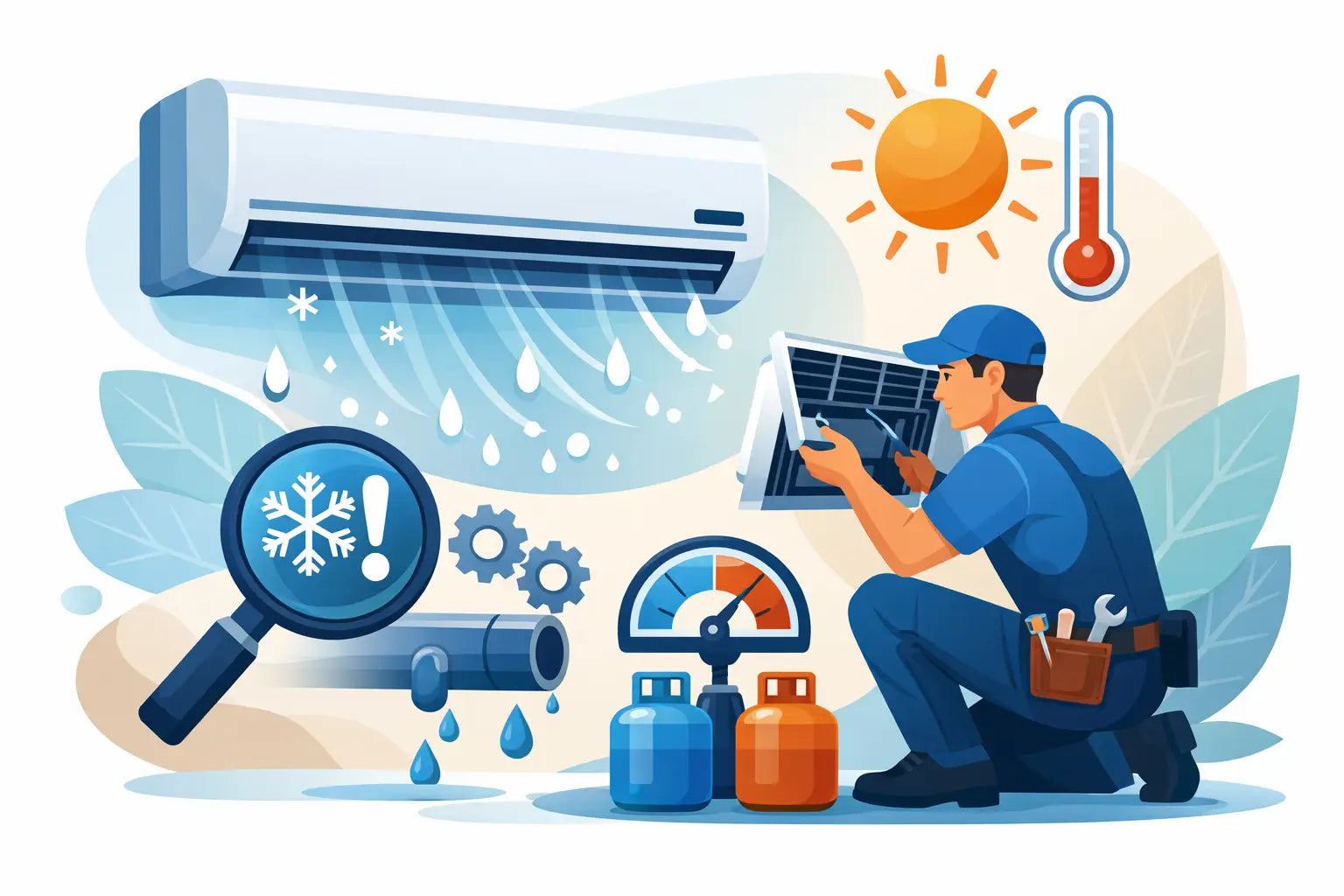
Low refrigerant is also a frequent issue, but it should be treated carefully. Refrigerant does not get “used up” like fuel. If the system is low, there is usually a leak somewhere. Topping it up without locating the leak may bring temporary cooling back, but it does not solve the underlying problem.
Electrical faults can create the same symptom. A weak capacitor, failing fan motor, damaged sensor, faulty PCB, or compressor issue may leave the unit running without full cooling performance. This is why aircon not cold repair should never be reduced to one standard fix.
Aircon not cold repair starts with diagnosis, not guesswork
The difference between a short-term patch and a proper repair is the inspection process. A technician should not just listen to “not cold” and proceed with chemical cleaning or gas top-up by default. The symptoms can overlap, but the repairs are different.
A proper check usually includes airflow condition, filter status, coil cleanliness, refrigerant pressure, drainage, thermostat response, fan operation, compressor behavior, and visible signs of leakage or insulation failure. In some properties, the issue is not the indoor unit at all. Poor outdoor unit ventilation, sun exposure, blocked condenser fins, or installation constraints can limit performance.
This is especially relevant in apartments, condos, and commercial units where piping runs may be longer or more complex. If installation quality was poor from the start, cooling issues may keep returning. Thin insulation, substandard copper piping, poor flare joints, and weak drainage setup can all create long-term problems that look like routine maintenance issues on the surface.
What you can check before calling for repair
There are a few simple checks that are worth doing before booking service. Start with the thermostat or remote setting. Make sure the unit is in cooling mode, not fan mode or dry mode, and confirm the set temperature is lower than room temperature.
Next, inspect the air filter if it is accessible. If it is visibly clogged with dust, wash and dry it properly before reinstalling. Also check whether doors or windows are being left open, especially in larger living rooms or commercial spaces with frequent foot traffic. A perfectly healthy unit can struggle if the cooling load is constantly being increased.
Take a look at the outdoor unit as well. If airflow around it is blocked by storage items, renovation debris, or plant growth, heat rejection will be affected. Listen for unusual noises such as clicking, buzzing, or fan irregularities. Those details help speed up diagnosis.
What you should not do is open panels, handle wiring, or attempt refrigerant work yourself. Air-conditioning systems involve electrical components, pressurized refrigerant, and condensate drainage. A wrong move can turn a repairable issue into a more expensive one.
Signs the problem is more serious
If the unit blows slightly cool air but never reaches the set temperature, that may point to coil contamination, low refrigerant, or declining compressor performance. If it starts cold and then becomes warm, icing, sensor faults, or drainage issues may be involved.
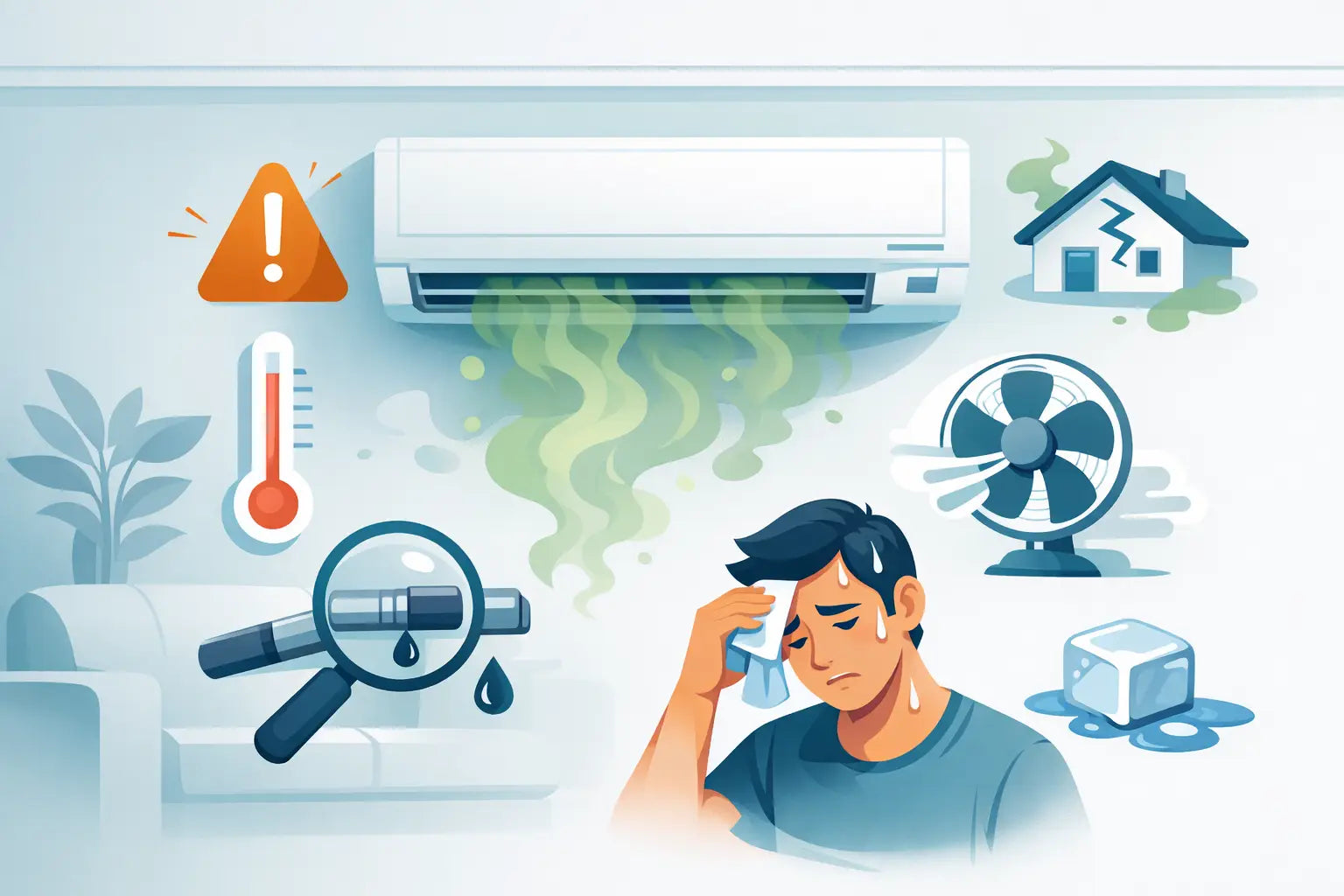
Water leakage together with poor cooling often suggests frozen coils, blocked drainage, or heavy dirt buildup. A burning smell or repeated tripping means electrical inspection should be done quickly. If one room cools properly but another does not, zoning, fan coil condition, or piping issues may be the cause.
In older systems, repair decisions also depend on age and overall condition. A single failed capacitor is straightforward. A leaking coil in an aging system is a different conversation. The repair may still be possible, but cost-effectiveness matters.
Repair or servicing - which one do you actually need?
This is where many owners get confused. Servicing and repair are related, but they are not the same.
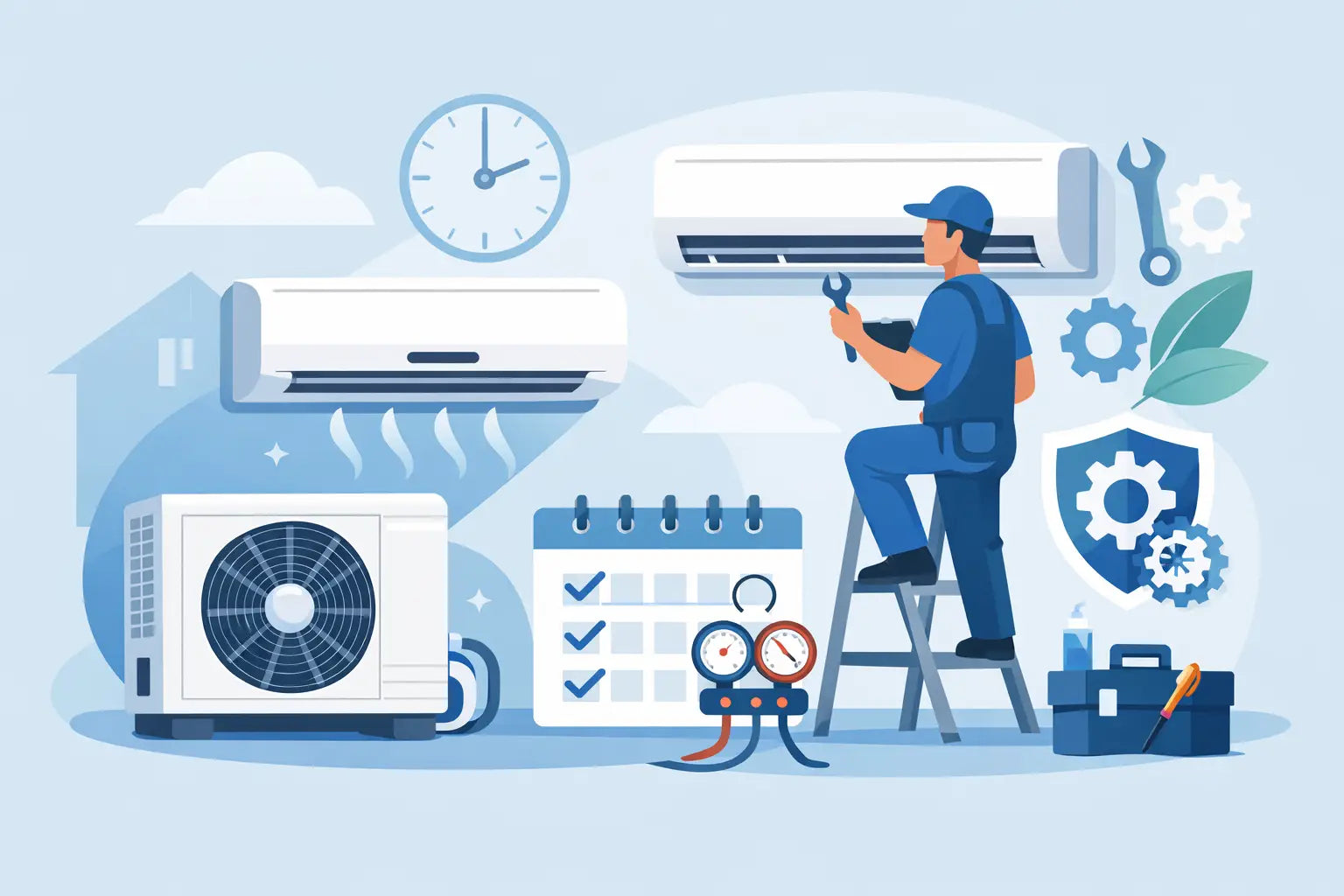
Routine servicing is preventive. It keeps filters, coils, and drainage in better condition so the unit can perform properly. If your air conditioner is not cold because it is heavily clogged and overdue for maintenance, servicing may restore normal cooling.
Repair is needed when a part has failed, refrigerant has leaked, the compressor is underperforming, a sensor is misreading, or electrical components are no longer functioning correctly. In some cases, both are needed together. A unit may require cleaning to restore airflow and testing to confirm whether there is also a pressure or parts issue.
That is why experienced technicians do not rush to label every weak-cooling complaint as a repair or a wash. The right answer depends on what the system is actually doing.
Why installation quality affects future cooling problems
A surprising number of “repair” jobs begin with workmanship issues from the original installation. Poor pipe insulation allows energy loss and condensation problems. Inferior copper thickness can affect durability. Weak flare connections increase the chance of refrigerant leaks. Improper drainage gradient can cause water backup and indoor issues.
This matters because even a premium air-conditioning brand can underperform if the installation standard is poor. On the other hand, a properly installed system with quality materials and correct sizing generally gives more stable cooling, fewer breakdowns, and lower long-term ownership cost.
For homeowners and business operators, this is worth remembering when replacing old units or planning a new setup. The sticker price of the unit is only one part of the equation. Workmanship has a direct effect on future repair frequency.
What to expect from a professional aircon not cold repair visit
A proper service visit should feel structured, not rushed. The technician should ask what symptoms you noticed, when they started, whether the issue affects one room or all rooms, and whether there are related problems such as leaks, noise, or odors.
From there, the inspection should narrow down the cause instead of offering a generic fix. If parts replacement is needed, the explanation should be clear. If refrigerant is low, you should know whether a leak check was performed and what the likely source is. If cleaning is recommended, it should be tied to an actual condition found in the unit.
Transparent pricing also matters. Customers should understand what they are paying for, whether the job is immediate repair, parts replacement, deeper cleaning, or follow-up work. That clarity is part of professional workmanship.
For property owners who value long-term reliability, this is where a specialist makes the difference. Commercestar Engineering approaches air-conditioning work with the same standard that matters in installation - proper diagnosis, quality execution, and no shortcuts that create repeat problems later.
When replacement makes more sense than repair
Not every not-cold problem should be repaired indefinitely. If the system is old, inefficient, leaking repeatedly, or facing major compressor or coil failure, replacement may be the smarter investment. This is especially true when utility costs are climbing and downtime is affecting comfort or operations.
For residential users, replacement often makes sense when multiple rooms are affected and service history has become frequent. For commercial users, the threshold can be even lower because inconsistent cooling disrupts business faster.
The key is not to replace too early or too late. A good technician should be honest about both options. Sometimes a targeted repair buys several more reliable years. Sometimes continuing to repair an aging system only delays a decision that is already obvious.
Weak cooling is rarely random. Your air conditioner is usually showing you that something in the system is no longer balanced, and the sooner that is checked properly, the easier the fix tends to be. If your unit is running but the room still feels warm, treat it as a technical issue that deserves a real diagnosis, not a quick guess.