Best Aircon Settings for Sleep: Cool and Quiet
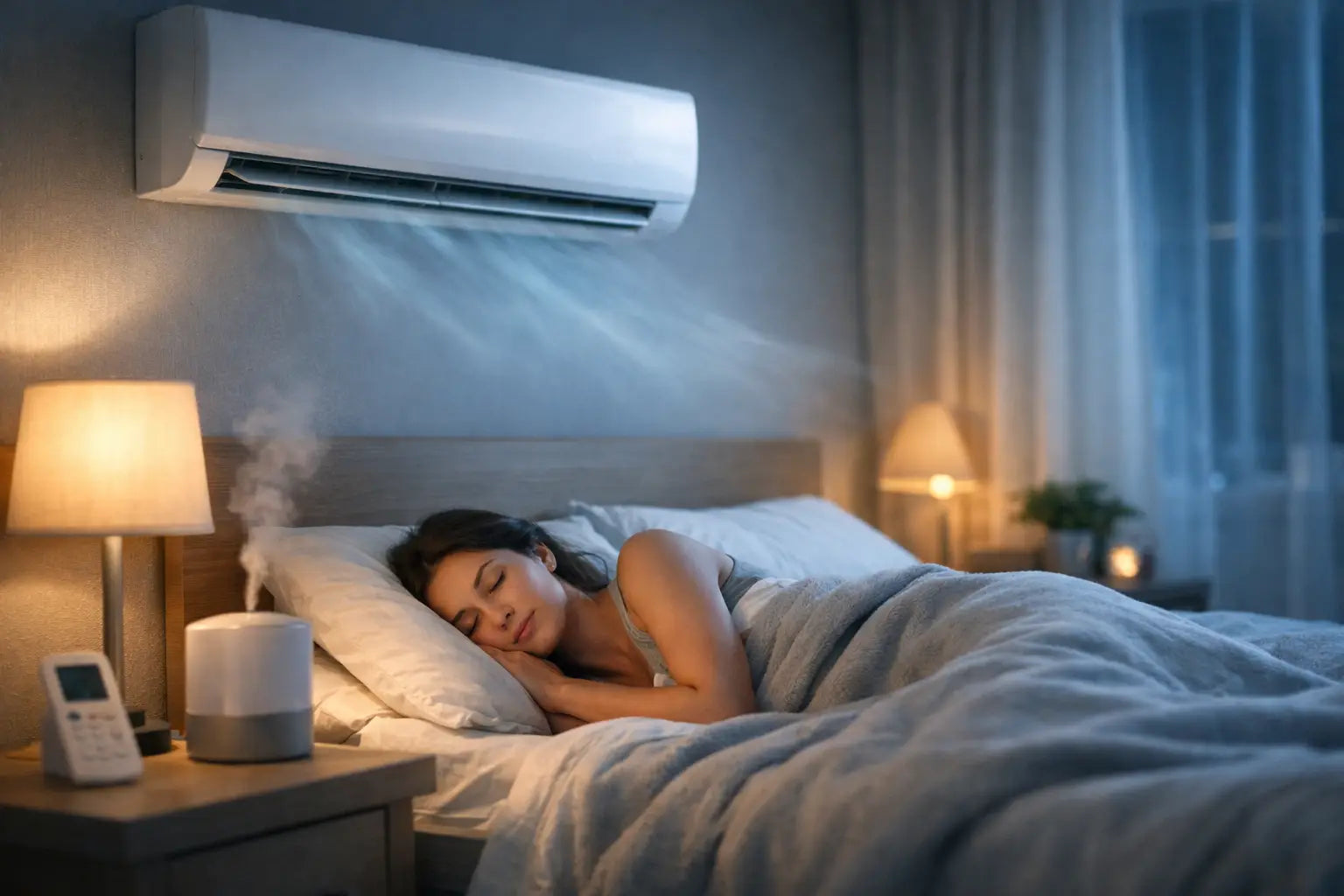
A bedroom that feels perfect at 10 p.m. can become too cold, too dry, or oddly stuffy by 3 a.m. Finding the best aircon settings for sleep is less about setting the lowest possible temperature and more about creating steady, quiet cooling that your body does not have to fight through the night.
For most homes, a good starting point is 68-72°F. From there, adjust based on humidity, bedding, airflow, the number of people in the room, and whether the room receives afternoon sun. The goal is consistent comfort, not a room that feels like a refrigerator when the air conditioner first starts.
Best Aircon Settings for Sleep: Start at 70°F
Set your air conditioner to 70°F for the first few nights, then make small adjustments of 1-2 degrees. Many sleepers are comfortable between 68-72°F, but there is no single number that suits every bedroom.
If you wake up cold but feel warm when you first lie down, do not immediately lower the thermostat. Your body temperature naturally changes as you fall asleep, so a setting that feels slightly warm at bedtime may be more comfortable later. Try 71-72°F, a lighter blanket, or a lower fan speed before making a major change.
A lower setting also does not necessarily cool the room faster. Most air conditioners cool at a fixed capacity. Setting the thermostat to 60°F simply tells the system to keep running longer, which can waste energy and leave the room uncomfortably cold.
Room conditions matter. A top-floor bedroom, a sun-facing room, or a space with poor window insulation may need a lower set point than a shaded room. If one room never feels comfortable while other rooms do, the issue may be airflow, system sizing, insulation, or installation quality rather than the temperature setting itself.
Use Cool Mode for Hot Nights, Dry Mode for Humid Ones
Cool mode is usually the right choice when the room is genuinely warm. It lowers the air temperature while removing some moisture as part of the cooling process. For most summer nights, this is the most reliable mode for a stable sleeping environment.
Dry mode can help when the room feels clammy even though the temperature is not especially high. Humid air can make bedding feel sticky and prevent your body from cooling down comfortably. In that situation, running Dry mode for a while before sleep can make the room feel better without aggressively lowering the temperature.
There is a trade-off. Dry mode is not a substitute for Cool mode during a hot night, and its performance varies by air conditioner model and room conditions. If your bedroom remains warm, switch back to Cool mode and raise the temperature slightly if you are concerned about energy use.
Avoid using Auto mode if it causes noticeable temperature swings or frequent fan changes that wake you up. Some units manage Auto mode very well, while others can be more disruptive than a simple Cool mode setting. Sleep quality comes first, so choose the mode that keeps the room stable and quiet.
Choose Auto or Low Fan Speed
Fan speed affects more than noise. A high fan setting can cool a warm room quickly, but it may create a draft, blow directly onto your face, and make the room feel colder than the thermostat reading suggests.
For sleeping, Auto fan is often the best first choice because the system can reduce airflow once the room reaches its set temperature. If Auto fan changes speed too audibly, use Low fan instead. Low fan provides gentler airflow and can make the bedroom feel more settled overnight.
The air should circulate around the room, not blast across the bed. Point the louvers upward or away from where you sleep, particularly if the indoor unit is installed directly opposite the bed. A direct stream of cold air may lead you to turn the temperature up unnecessarily, when a simple airflow adjustment would solve the problem.
If your system has a swing function, use a gentle vertical swing or set the louvers toward the ceiling. Cool air naturally falls, so this helps distribute cooling more evenly without creating a harsh draft.
Set Sleep Mode Carefully
Sleep mode can be useful, but it should not be treated as a one-size-fits-all setting. On many air conditioners, Sleep mode gradually raises the set temperature by a few degrees after you fall asleep. This may reduce energy consumption and prevent the room from becoming too cold before morning.
Try Sleep mode when you tend to wake up chilly or when your unit runs continuously through the night. Start with the temperature you normally find comfortable, then see how you feel after several nights. If you wake up warm, disable Sleep mode or start 1-2 degrees lower.
A timer can be a practical alternative for people who only need strong cooling while falling asleep. For example, run the air conditioner on Cool mode for two to four hours, then allow a ceiling fan or low-speed circulation fan to take over. This works best in homes where the overnight outdoor temperature drops and the bedroom holds its coolness reasonably well.
Keep Humidity in the Comfortable Range
A comfortable bedroom is not only about temperature. Humidity has a major effect on how the room feels. Many people sleep well when indoor humidity stays roughly between 40% and 60%.
When humidity is too high, the room can feel warmer than it is. When it is too low, you may wake with a dry throat, dry eyes, or irritated skin. Air conditioning naturally removes moisture, but excessive cooling can make the room feel dry, especially in smaller, tightly closed bedrooms.
If the room feels cold and dry, increase the thermostat by 1-2 degrees rather than switching the unit off completely. If it feels sticky, check whether windows are fully closed, bathroom doors are left open after showers, or the air conditioner needs servicing. Weak moisture removal can sometimes point to dirty filters, a dirty coil, or a system that is not operating at its intended capacity.
Small Bedroom Habits That Make a Big Difference
The best setting will struggle if heat and humidity keep entering the room. Close windows and doors before turning on the air conditioner, especially in humid weather. Close curtains or blinds before sunset if the room gets direct afternoon light.
Use breathable bedding and avoid heavy comforters unless the room is deliberately set cooler. A mattress that retains heat, thick pajamas, and an oversized blanket can make you think the air conditioner is underperforming when the actual issue is trapped body heat.
Keep heat-producing electronics away from the bed where possible. Gaming PCs, large monitors, and charging devices can add noticeable warmth in a small room. For a more accurate reading, make sure the thermostat is not being affected by direct sunlight, lamps, or blocked airflow around the indoor unit.
Maintenance Protects Your Sleep Settings
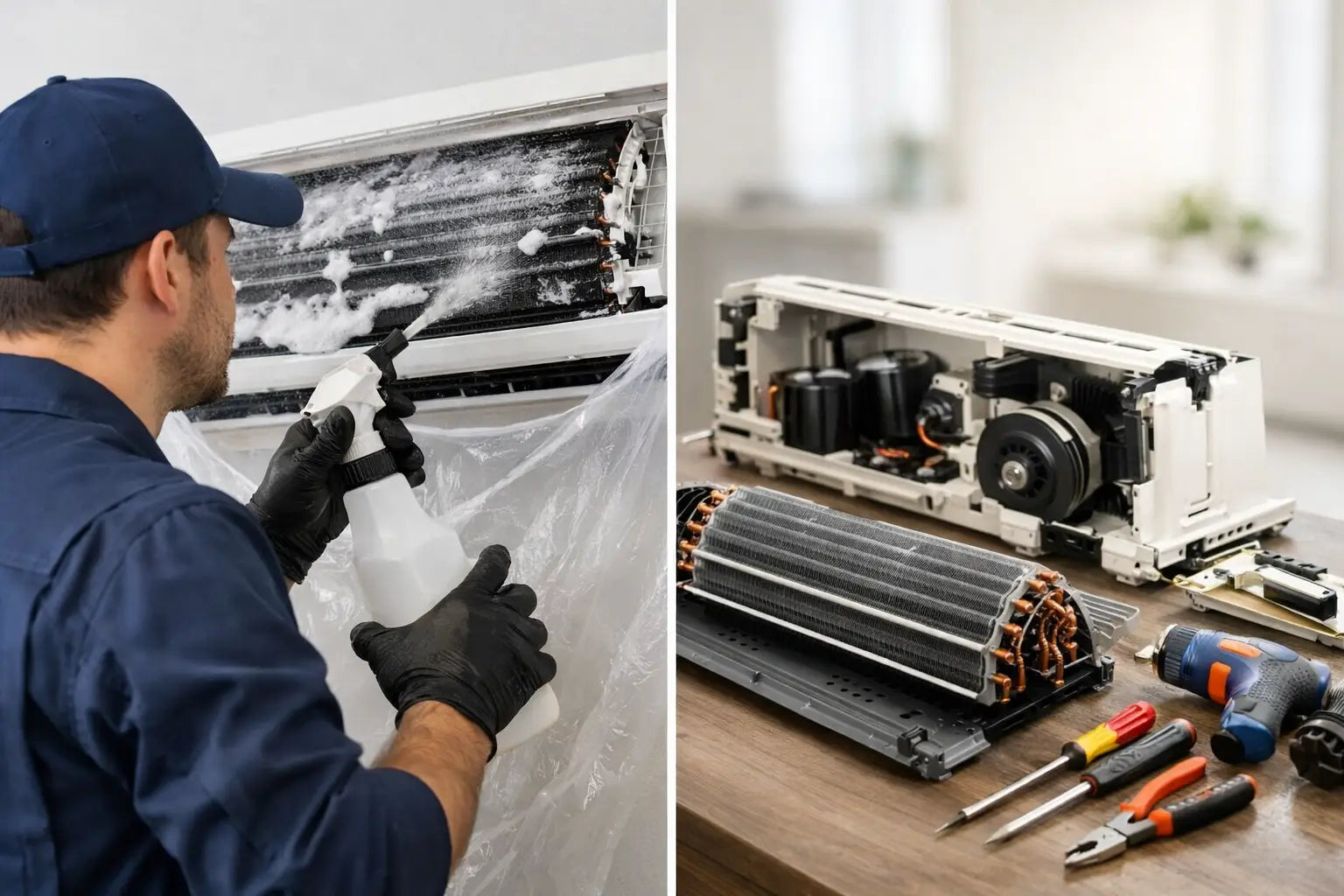
When an air conditioner is clean and correctly maintained, it cools more evenly, removes humidity more effectively, and operates with less noise. Those three things directly affect sleep comfort.
Clean or wash accessible filters regularly according to the manufacturer’s instructions, particularly if you use the unit nightly. Dust buildup restricts airflow and can leave the room feeling unevenly cooled. A professional maintenance visit should also assess the indoor coil, blower, condensate drainage, refrigerant performance, electrical connections, and overall operation.
Pay attention to changes that settings alone cannot fix. Musty odors, water dripping from the indoor unit, louder-than-normal operation, weak airflow, ice formation, or repeated short cycling all deserve professional attention. Continuing to lower the thermostat to compensate may increase utility costs without resolving the underlying issue.
When the Bedroom Is Still Too Warm
If your unit runs for long periods but cannot reach the set temperature, begin with the basics: clean filters, closed doors and windows, clear airflow, and properly positioned louvers. If those are in order, the room may have excess heat gain, ducting issues in a central system, refrigerant concerns, or an air conditioner that is undersized for the space.
A correctly planned and carefully installed system matters just as much as the remote-control settings. Quality piping, proper insulation, correct drainage, and sound electrical work all support consistent performance over the long term.
When You Wake Up Too Cold
Raise the setting by 1-2 degrees, select Low or Auto fan, and redirect the louvers away from the bed. If your unit has Sleep mode, test it for several nights. Small changes are more useful than jumping from 68°F to 76°F, because they help you identify whether temperature, airflow, or bedding is causing the discomfort.
The right overnight setting should fade into the background. If you are routinely waking up sweaty, cold, or bothered by noise, treat that as a useful signal: your bedroom climate needs adjustment, and the solution may be as simple as a better setting or as practical as timely air conditioner servicing.