HDB Piping Replacement Case Study That Lasts
A homeowner in an older HDB resale flat noticed a familiar pattern: the bedroom air conditioner was no longer cooling as well as before, water marks had appeared near the trunking route, and gas top-ups seemed to fix the problem for only a few months. The indoor unit was not the real issue. This HDB piping replacement case study shows why replacing damaged concealed or exposed refrigerant piping can be the more reliable decision when recurring leaks are already costing time, comfort, and money.
This is a representative project scenario based on common piping issues found in HDB homes. Every flat requires an on-site assessment, but the diagnostic process and workmanship standards are what determine whether a replacement solves the root cause or simply postpones the next breakdown.
The Problem: Cooling Loss That Kept Returning
The flat had a multi-split air-conditioning system serving three bedrooms and the living area. The homeowner had engaged different service providers over several years for low refrigerant pressure. Each visit involved leak checking, topping up gas, and restarting the system. Cooling would improve, then gradually weaken again.
By the time a proper assessment was requested, there were three warning signs: inconsistent cooling between rooms, visible condensation near sections of the existing insulation, and a history of repeated refrigerant top-ups. Refrigerant does not get used up during normal operation. If a system repeatedly needs gas, a leak or installation fault needs to be located and addressed.
In many older HDB flats, the original piping may have been installed years earlier with thinner copper, aging insulation, poorly protected joints, or trunking that no longer keeps condensation under control. A partial patch can make sense if there is one accessible and clearly isolated fault. When leaks are recurring or the pipe condition is compromised along multiple runs, replacement offers better long-term value.
HDB Piping Replacement Case Study: The Assessment
Before recommending replacement, the technician's role is to separate symptoms from causes. Weak cooling can come from dirty coils, a faulty fan motor, drainage problems, insufficient refrigerant, or a leak in the piping network. Replacing pipes without diagnosis is not good engineering.
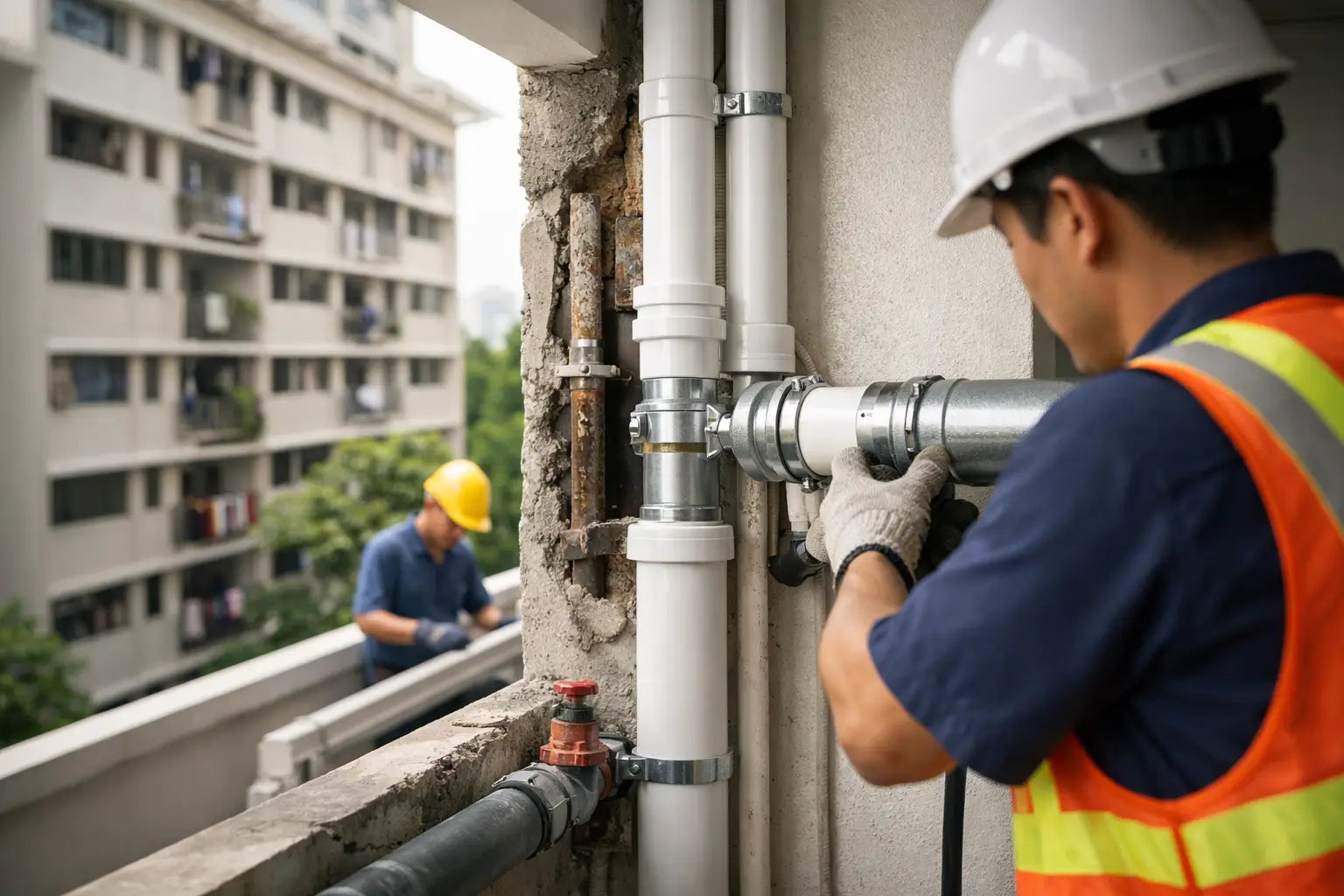
The assessment began with pressure testing and checking all accessible flare joints, insulation sections, and piping routes. The result pointed to a persistent leak risk within the old line set, rather than a fault isolated to one indoor fan coil unit. The insulation had also degraded in several areas, allowing sweating and increasing the chance of water damage around the trunking.
The homeowner had two realistic choices. The lower upfront-cost option was to repair accessible joints, replace selected insulation, and monitor performance. The more complete option was to replace the refrigerant piping and insulation for the affected system, then pressure test and commission it properly.
Because the flat was owner-occupied and the homeowner wanted to avoid repeated call-outs, full piping replacement was selected. That decision is not automatic for every household. If a system is near the end of its lifespan, it can be sensible to plan piping replacement together with a new air-conditioning system. If the existing units are still in good condition and compatible, piping work may extend their usable service life.
Planning the Work Around an Occupied Home
Piping replacement in an HDB flat needs more planning than simply removing old copper and installing new lines. The route must be measured carefully, trunking placement should look neat and remain accessible where practical, and the team must protect floors, furniture, and finished walls.
For this project, the team confirmed the route from the outdoor condenser to each indoor unit before work began. The homeowner was shown where new trunking would run, including turns at bedroom entrances and the living area. This step matters because a neat installation is not just cosmetic. Poorly aligned trunking, unnecessary joints, and tight bends can make future servicing harder and create avoidable stress on the pipework.
The existing indoor units were carefully disconnected, and the old piping was removed where accessible. In some HDB flats, pipe routes may be hidden behind built-in carpentry, false ceilings, or previous renovation work. In those situations, the most practical route may involve new surface trunking rather than opening finished walls. The right choice depends on access, budget, appearance expectations, and the condition of surrounding finishes.
Materials That Support Long-Term Performance
A piping replacement is only as dependable as the materials and installation practices behind it. Copper quality, wall thickness, insulation performance, drainage routing, cable selection, and joint workmanship all affect how the system performs over time.
For this case, the replacement used thicker 21 SWG copper piping and K-FLEX TITAN Class 0 insulation. The copper lines were sized according to the air-conditioning system requirements, while the insulation was installed continuously and sealed carefully at joints. Proper insulation helps reduce condensation, which is especially relevant in Singapore's humid climate where sweating pipes can stain walls, drip into cabinetry, or affect nearby finishes.
The team also checked the drainage arrangement while the trunking was open. A refrigerant piping project is a good time to inspect drain hose condition and slope, since blocked or poorly routed drainage can create water leakage that homeowners may mistakenly blame on the air conditioner itself.
There is a trade-off here. Better materials and more thorough installation work cost more than a quick repair using basic components. But lower-cost piping work can become expensive when it leads to repeat leaks, damaged finishes, additional refrigerant charges, or another replacement within a short period.
Testing Is Where Workmanship Becomes Visible
Installing new pipes is not the finish line. The system must be tested before it is handed back to the homeowner.
After the new piping was connected, the lines were pressure tested to verify that the system could hold pressure without loss. This is the stage that helps identify a weak flare connection or installation issue before refrigerant is charged. The system was then vacuumed to remove moisture and non-condensable gases from the piping circuit.
Skipping or rushing vacuuming can affect cooling performance and place unnecessary strain on the compressor. It may not be visible once the trunking is closed, which is exactly why homeowners should choose installers who treat commissioning as part of the installation, not an optional extra.
Once the system was restarted, each indoor unit was checked for cooling response, drainage, airflow, and unusual noise. The trunking was secured and cleaned up, with the homeowner briefed on the completed route and basic maintenance needs.
The Result: Fewer Unknowns, Better Peace of Mind
The immediate outcome was consistent cooling across the affected rooms, with no pressure loss during testing and no visible condensation around the new insulation. More importantly, the homeowner now had a new piping foundation rather than an aging network with an uncertain leak history.
That distinction matters. A gas top-up can restore cooling temporarily, but it does not repair a leak. Replacing the piping was not chosen because it was the cheapest solution. It was chosen because the condition of the old lines, the repeat service history, and the homeowner's long-term plans made it the more sensible one.
For homeowners comparing quotations, look beyond the headline price. Ask what copper thickness is being used, what insulation is included, whether pressure testing and vacuuming are part of the scope, how trunking and finishing will be handled, and whether the installation team will be accountable after the job is completed. These details shape both reliability and the appearance of the finished home.
When Should You Replace Aircon Piping in an HDB Flat?
Consider a full assessment when your air conditioner needs repeated gas top-ups, cooling falls off again shortly after servicing, piping insulation is sweating or crumbling, or you are replacing an old system during renovation. Replacement is also worth discussing when old piping has multiple inaccessible sections or when you want to avoid building a new system around questionable existing lines.
Commercestar Engineering approaches piping work as part of the complete air-conditioning system, not as an isolated add-on. Careful routing, upgraded materials, neat box-up finishing where needed, and accountable installation help protect the investment you make in your home.
If your air conditioner keeps losing its cooling, do not settle for another temporary refill without asking why. A proper assessment can tell you whether a targeted repair is enough or whether new piping is the practical step toward a cooler, cleaner, and more dependable home.