How to Compare Aircon Installers Properly
The cheapest quote can look great until the piping sweats, the trunking sits crooked on the wall, or the installer stops answering after handover. If you are wondering how to compare aircon installers, the real job is not just comparing prices. It is comparing what you are actually getting, how the work will be done, and whether the system will still perform properly months and years later.
That matters even more with air-conditioning because installation quality directly affects cooling performance, power consumption, noise, drainage, and lifespan. Two companies can quote the same brand and model, yet deliver very different results depending on their materials, workmanship standards, and after-sales support. A proper comparison helps you avoid false savings.
How to compare aircon installers without getting misled
Start by treating each quote like a scope of work, not just a final number. Many buyers compare only the system price, but that leaves out the details that decide whether the installation is built to last. A lower package price may mean thinner copper pipes, lower-grade insulation, weaker cables, rushed installation, or extra charges that appear later.
A good installer should be clear about what is included from the start. That means the brand and model, piping specifications, insulation type, drainage materials, wiring, trunking, mounting, testing, and any finishing works. If the quote feels vague, it is harder to compare fairly because too much is left open.
The goal is simple. You want to compare installers on total value, not headline price.
Look past the aircon brand and check installation materials
Many customers focus heavily on the indoor and outdoor unit brand, which is understandable. But even a strong brand can underperform if the installation is poor. The materials behind the wall and inside the trunking matter more than many people realize.
Ask what copper pipe thickness is being used. Ask what insulation is included, not just whether insulation is provided. Ask about cable origin and quality. These are not small technicalities. They affect durability, efficiency, and long-term reliability.
Higher-grade insulation helps reduce condensation issues and thermal loss. Better copper piping can support system durability and reduce the risk of future problems. Quality cable matters for safety and stable performance. If one installer is specifying premium-grade materials and another is only saying standard materials, that is not an equal comparison even if both quotes look similar.
This is one of the biggest reasons homeowners and business buyers end up disappointed. They assume all installation packages are basically the same. They are not.
What to ask about materials
You do not need to be an engineer to ask the right questions. Ask for the exact specifications in writing. If an installer is confident in their workmanship, they should be comfortable explaining what they use and why.
You can ask whether the insulation is Class 0, whether the copper piping is a thicker gauge option, and whether the electrical cables are from a reliable source. The answers will tell you a lot about whether the company competes on lasting quality or just on entry price.
Compare workmanship standards, not just manpower
Some installers talk about experience in broad terms. That is fine, but it is more useful to understand how they execute the actual job. Good workmanship is visible in routing, drainage planning, pipe support, wall finishing, trunking alignment, system testing, and overall neatness.
Ask whether the installation team is in-house or subcontracted. That does not automatically make subcontract work bad, but it does affect consistency and accountability. An in-house team usually gives the company tighter control over training, process, and service standards.
Also ask how they handle site protection and cleanup. A professional installer should have a process for protecting floors, keeping the work area tidy, and leaving the site in acceptable condition. For homes, this reduces stress. For offices, retail spaces, and F&B units, it helps minimize operational disruption.
Signs of a workmanship-first installer
Look for actual proof of neat installations, not generic marketing claims. Photos, customer reviews, and detailed before-and-after examples are useful here. If the company consistently shows tidy trunking lines, careful placement, and clean finishing, that is a stronger signal than a simple statement like we do quality work.
You should also look for installers who explain technical decisions clearly. For example, if drainage routing needs to change because of your room layout, a good team should tell you the trade-offs before proceeding.
Review pricing for transparency, not just affordability
A fair quote is not always the lowest one. It is the one that clearly tells you what you are paying for and where extra costs may apply.
When comparing prices, check whether the quote includes standard piping length, additional copper run charges, electrical work, wall drilling, dismantling of old units, brackets, upgrading materials, and finishing items such as box-up works. Hidden cost problems often start when these items are left ambiguous.
An installer with transparent pricing may not always appear cheapest at first glance, but they often end up being the safer choice because you can budget properly. That matters for both residential projects and commercial jobs, where change orders can quickly push costs upward.
If one quote is significantly lower than the others, ask why. There may be a valid reason, but there may also be a compromise somewhere in labor, materials, or service coverage.
Check after-sales support before you commit
This is where many comparisons fall apart. Installation day is only one part of the customer experience. What happens if there is a drainage issue, a communication problem, or a performance concern after the job is done?
A strong installer should have a clear after-sales structure. Ask about workmanship warranty, service response, and whether maintenance support is available. If the company also handles servicing and repairs, that is often helpful because they understand the installation history and can support the system over time.
This matters even more for businesses. If your office, shop, restaurant, or workspace depends on cooling to operate normally, delayed support is not a small inconvenience. It affects comfort, customer experience, and daily operations.
Reviews can help here, but read them carefully. Look for comments about responsiveness, follow-up, and problem resolution, not just comments that say good service. A company with many detailed positive reviews is usually a safer bet than one with only a few broad testimonials.
Ask how they assess your space
Not every installer approaches system planning with the same care. A proper recommendation should consider room size, usage patterns, heat load, layout, and installation constraints. If an installer pushes a package without asking much about your property, that is a warning sign.
For homes, room usage affects sizing and unit placement. A bedroom, living room, and kitchen-adjacent area do not behave the same way. For commercial spaces, cooling demand can vary even more depending on occupancy, equipment, and operating hours.
The right installer should explain why they are recommending a certain system and whether there are limitations to be aware of. Sometimes the best option is not the most powerful unit. Oversizing and undersizing both create problems.
Residential and commercial needs are not identical
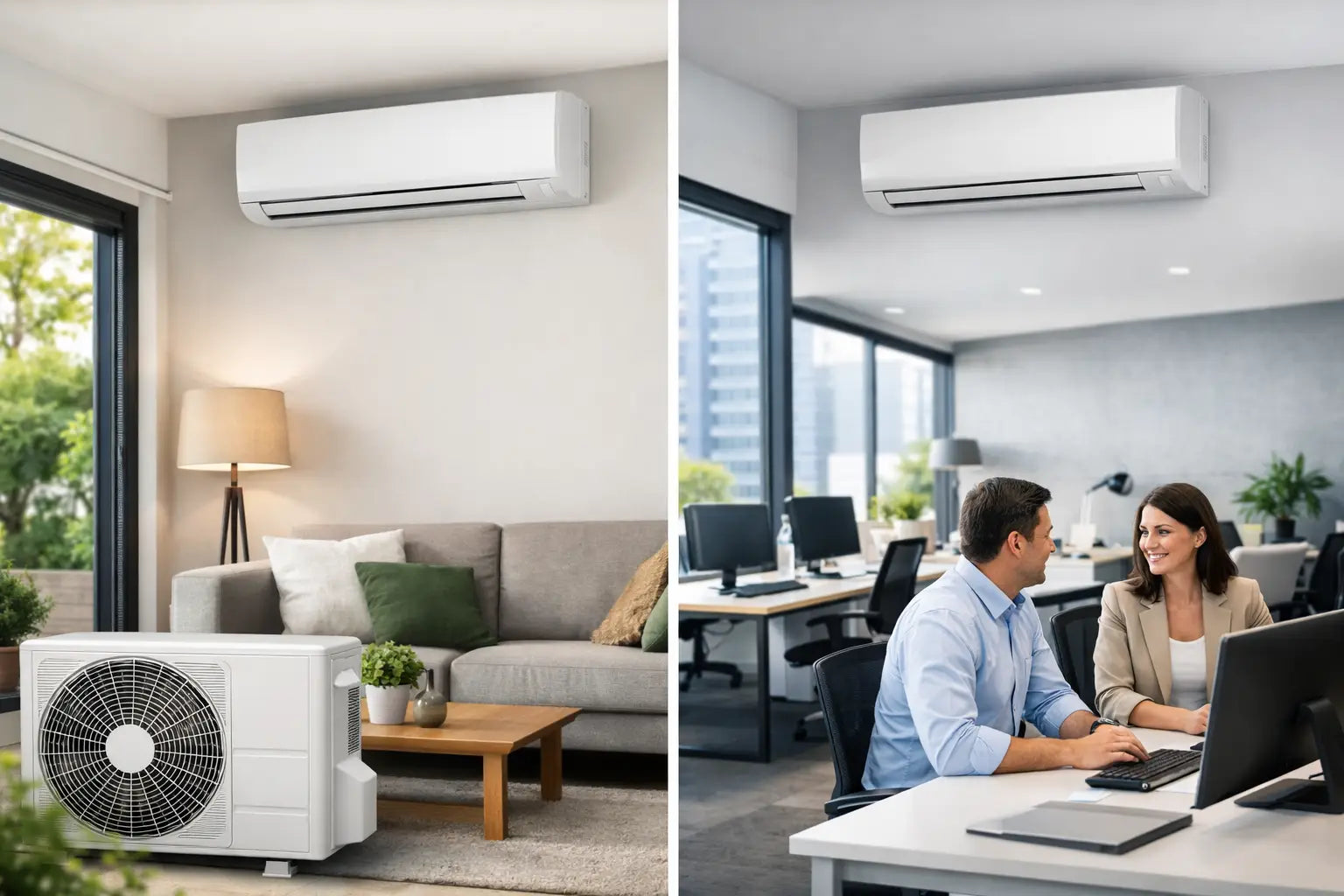
A homeowner may care most about quiet operation, neat piping, and a smooth installation process. A business operator may prioritize uptime, system planning, and fast support. When comparing aircon installers, choose one that understands your property type rather than assuming one approach fits everything.
That is one reason specialist providers often stand out. They are usually better at balancing product choice, installation execution, and long-term support instead of treating the job like a one-time transaction.
Compare proof, not promises
Any installer can say they offer premium service. The better question is what proof they provide. Look for verified customer reviews, repeat customer patterns, project photos, clear material specifications, and a service structure that makes sense.
If a company highlights technical materials, ask for those details in the quotation. If they emphasize workmanship, ask to see examples. If they claim strong support, check whether reviews back that up. A dependable installer should be able to support their claims with specifics.
In Singapore, where customers are often comparing multiple package offers quickly, this step is especially useful. It slows the process down just enough to reveal whether you are comparing serious professionals or just aggressive sales pricing. Companies such as Commercestar Engineering have built trust by making these details visible rather than burying them.
The best comparison question to ask
If you want one simple way to judge competing installers, ask this: what makes your installation package better over the long term?
A strong company will answer with specifics. They will talk about materials, process, workmanship, support, and why those choices reduce risk. A weaker one will usually return to price alone.
That tells you everything you need to know. Air-conditioning is not just a product purchase. It is a system that depends on proper planning and careful installation. When you compare installers properly, you are really choosing who you trust to build that system right the first time.
A good aircon installer does more than mount units on a wall. They protect your comfort, your budget, and your peace of mind long after the installation team has left.