Article: How to Clean Aircon Drain Line Without Damage
How to Clean Aircon Drain Line Without Damage
A puddle beneath an indoor air handler rarely starts as a major repair. More often, it begins with ordinary condensation that cannot exit through a partially blocked drain line. Knowing how to clean aircon drain line properly can stop water damage, musty odors, and an inconvenient cooling shutdown before they become expensive problems.
The key is to clear the clog without forcing debris deeper into the pipe, damaging the drain pan, or introducing harsh chemicals that can affect the system. A careful cleaning works well for light buildup. Repeated leaks, however, usually point to a drainage, installation, or maintenance issue that needs a trained technician.
Why an Aircon Drain Line Clogs
Your air conditioner removes moisture from indoor air as it cools. That moisture collects on the evaporator coil, drips into a condensate pan, and travels through the drain line to a safe discharge point outside.
Because this line carries water in a dark, damp environment, it can collect dust, biofilm, algae, mold, and fine debris over time. A dirty air filter makes the issue worse. More airborne dust passes through the system, settles around the coil and pan, and eventually finds its way into the drain.
A clog may also develop when the drain pipe has an incorrect slope, a loose connection, a crushed section, or an improperly designed trap. In those cases, cleaning may restore drainage temporarily, but it will not correct the root cause.
Signs Your Condensate Drain Needs Attention
Do not wait until water reaches flooring, ceilings, or electrical components. Check the drain system when you notice one or more of these warning signs:
- Water dripping from the indoor unit or collecting near the air handler
- A musty or sour smell when the system runs
- Cooling that stops unexpectedly because a float switch has triggered
- Visible algae, sludge, or standing water in the condensate pan
- Water stains around a ceiling-mounted cassette, wall unit, or nearby drywall
How to Clean Aircon Drain Line Step by Step
Before starting, turn off the air conditioner at the thermostat and switch off power at the breaker or disconnect. Water and electrical components do not belong together. If you cannot safely access the indoor unit or are unsure which breaker controls it, stop and arrange professional service.
1. Find the drain line and access point
Locate the indoor air handler or the drain connection near the evaporator coil. Many systems have a vertical access tee or capped opening close to the drain pan. The outdoor end of the drain line may terminate near the condenser, at an exterior wall, or above a designated drain point.
Place towels and a shallow container below the indoor access area. If the pan is already full, remove standing water carefully with a wet/dry vacuum or absorbent cloth before opening anything else.
2. Inspect the drain pan
Look for visible sludge, rust, cracks, or a pan that is not draining at all. Wipe away loose debris with a clean cloth. Do not scrape aggressively against thin metal or plastic pans, especially if they are older. A cracked pan can leak even after the line has been cleared.
If you see heavy mold growth, deteriorated insulation, or corroded components around the coil, this is no longer a basic cleaning task. A technician should inspect the system and clean it with the correct equipment.
3. Clear the blockage from the outdoor end
For most light-to-moderate clogs, the safest method is using a wet/dry vacuum at the exterior drain outlet. Create a loose seal between the vacuum hose and pipe with a cloth, then run the vacuum for about one to two minutes. This pulls slime and debris outward instead of pushing it back toward the indoor unit.
You may see dark water or gelatinous buildup in the vacuum container. That is common, but wear gloves and clean the equipment afterward. Avoid using high-pressure compressed air. It can separate glued joints, splash dirty water into the system, or force debris into a harder-to-reach section of pipe.
4. Flush the line gently
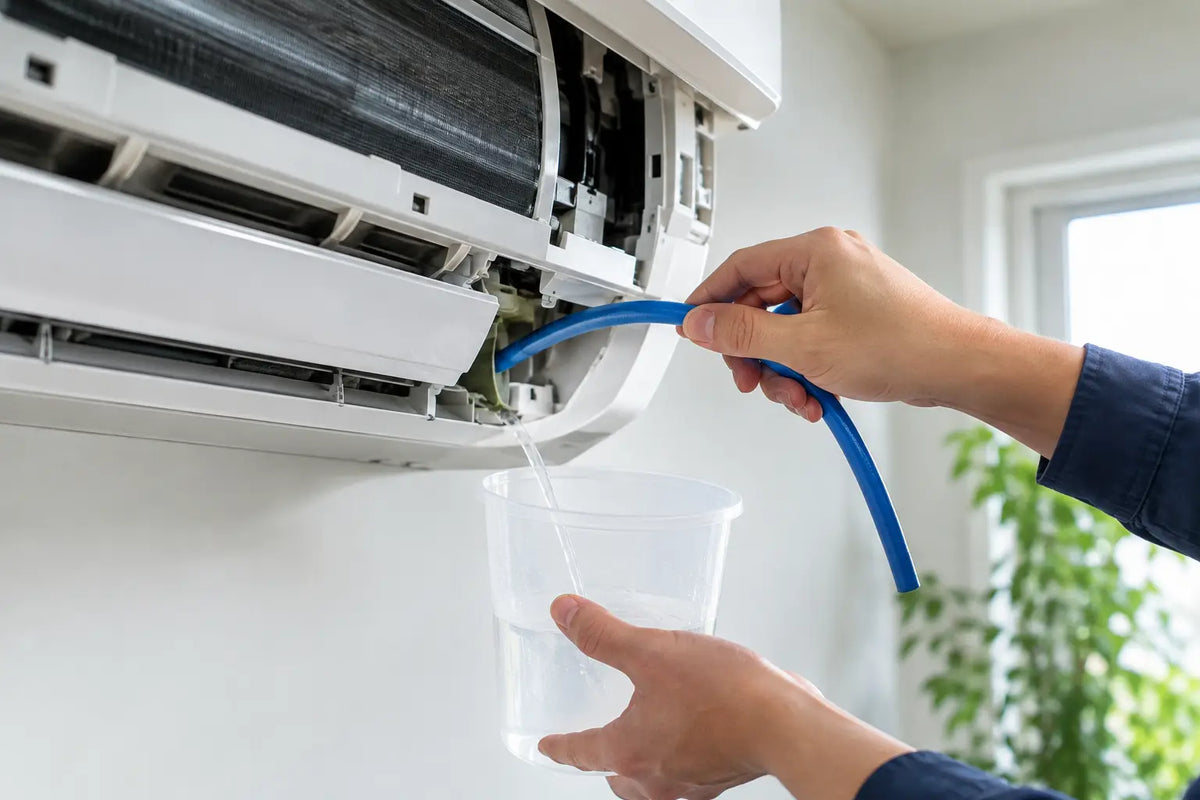
After vacuuming, return to the indoor access point and slowly pour a small amount of warm water into the drain line. Watch the outdoor outlet to confirm that water flows freely. If it drains normally, follow with a modest amount of distilled white vinegar to help reduce odor-causing buildup.
Do not mix vinegar with bleach or any other chemical. Do not use boiling water, strong drain cleaners, or corrosive products. They can damage drain components, create fumes, and leave residues that cause more problems later.
If water backs up immediately, the blockage may be stubborn, the pipe may be sagging, or the issue may be located at a trap or connection. Stop rather than repeatedly pouring more water into the line.
5. Reassemble and test the system
Replace the cap or access cover securely. Restore power and run the air conditioner long enough for it to produce condensate. Check the drain outlet outdoors and inspect the indoor unit for dripping or unusual noise.
A successful cleaning should produce a steady but modest discharge during normal cooling operation. The exact amount depends on humidity, system size, and runtime. No water at the outlet is not always a problem during a short test, but continued indoor leakage means the drain path still needs professional attention.
What Not to Do When Cleaning a Drain Line
A drain line looks simple, but several common shortcuts create avoidable repair bills. Do not push a rigid wire, coat hanger, or plumbing snake deep into the pipe. These tools can puncture soft tubing, disconnect fittings, or compact sludge farther down the line.
Avoid repeatedly adding bleach. Some homeowners use it because it appears to disinfect quickly, but it can be harsh on certain materials and should never be combined with other cleaning solutions. A gentle flush and regular service are the better long-term approach.
Also, do not assume every indoor water leak is a clogged drain. A frozen evaporator coil, low refrigerant level, damaged insulation, dirty coil, failed condensate pump, or poor installation angle can produce similar symptoms. Treating the wrong cause wastes time and allows the real problem to continue.
How Often Should You Clean the Drain Line?
For a typical home system, inspect the condensate drain line at least twice a year, ideally before periods of heavier cooling use. If your system runs daily in a humid area, quarterly checks are more sensible. Commercial systems, restaurants, and spaces with long operating hours often need a more structured maintenance schedule because a drainage failure can interrupt business operations.
Regular filter replacement is one of the simplest ways to reduce drain contamination. A clean filter supports airflow, helps prevent coil icing, and limits the dust that reaches the condensate pan. Professional maintenance adds more value because it includes inspection of the coil, pan, drainage slope, electrical safety components, and overall cooling performance.
When to Call an AC Professional
Call for service if the drain line clogs again soon after cleaning, water is leaking from a ceiling, the air conditioner has shut down, or you suspect a damaged drain pan or condensate pump. These conditions require more than a surface flush.
A qualified technician can clear the line with purpose-built equipment, inspect hidden pipe sections, verify proper drainage fall, and identify whether the leak is related to the coil or refrigerant system. That is especially worthwhile for concealed piping, ceiling units, multi-zone systems, and commercial installations where water damage can spread before it becomes visible.
A clean drain line is a small detail with a big job: it keeps condensation moving where it should go, not into your home or business. Make it part of routine AC care, and address recurring leaks early while the fix is still straightforward.