Aircon Filter Cleaning for Cleaner, Cooler Rooms
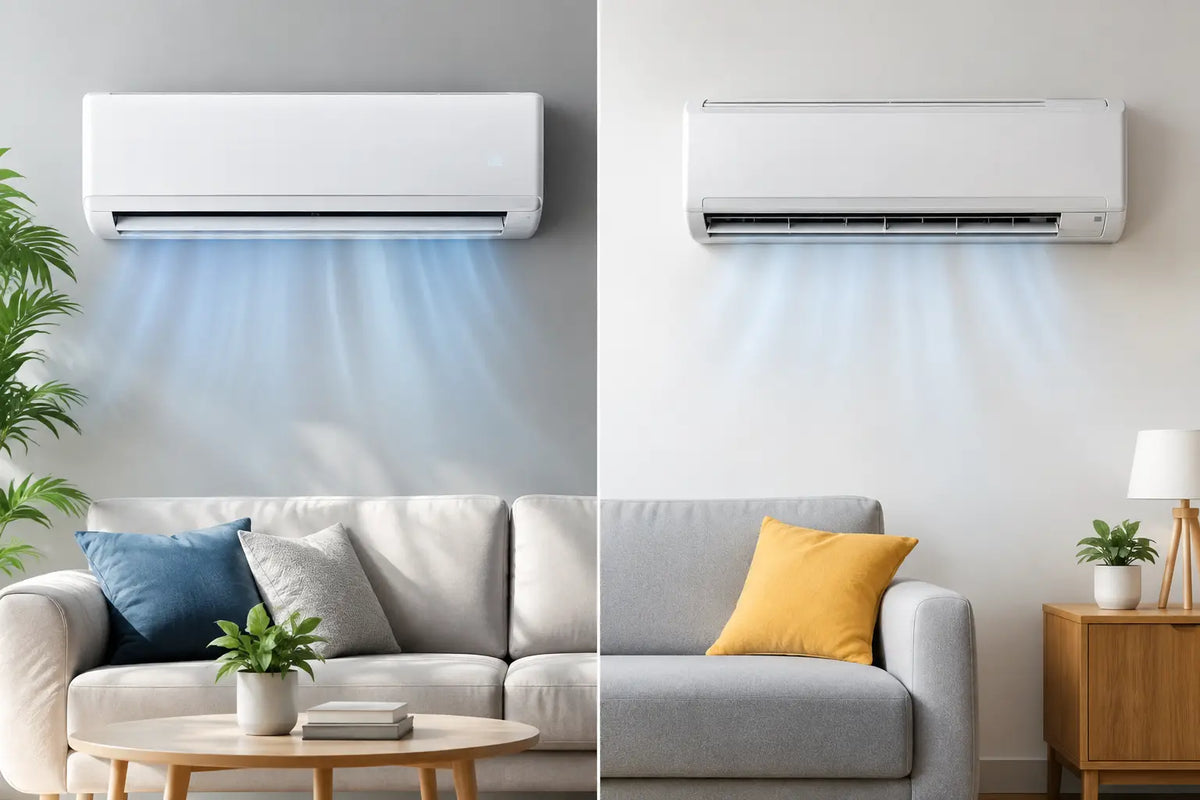
A bedroom air conditioner that suddenly feels weak is not always low on refrigerant or due for a major repair. Often, the first thing to check is the filter. Regular aircon filter cleaning removes the dust layer that restricts airflow, makes the fan work harder, and sends more particles back into the room.
For homes with daily air-conditioning use, especially in humid climates such as Singapore, a clean filter is one of the simplest ways to maintain comfort between professional service visits. It takes little time when done correctly, but there is a difference between a careful filter rinse and a full air-conditioner cleaning.
What an Aircon Filter Actually Does
The washable mesh filters behind the front panel of a wall-mounted indoor unit are the first line of defense against dust, lint, hair, and larger airborne particles. As the unit draws room air in, the filter catches this debris before it reaches the evaporator coil and blower wheel.
That protection matters. A clean filter allows air to pass smoothly across the cold coil, so the system can cool the room efficiently. A heavily coated filter reduces the volume of air moving through the unit. You may notice weaker airflow, longer run times, uneven cooling, or a musty smell when the system starts.
Filters do not remove every fine particle, odor, or microorganism from the air. They also cannot fix dirt already lodged deep in the coil, drain pan, or blower. Think of filter maintenance as a regular housekeeping task that helps prevent bigger performance issues, not a replacement for scheduled servicing.
How Often Should You Clean Aircon Filters?
For most occupied homes, clean the filters every two to four weeks. The right frequency depends on how the room is used. A lightly used guest room may only need monthly attention, while a living room unit running every day may need cleaning every two weeks.
Shorten the interval if you have pets, smoke indoors, live near construction work, keep windows open often, or notice visible dust on furniture. Families with young children and people sensitive to dust may also prefer more frequent cleaning.
Commercial spaces need a more deliberate routine. Retail stores, offices, F&B outlets, and workshops can load filters quickly because of higher occupancy, door traffic, cooking residue, fabric fibers, or outdoor pollutants. A clogged filter can affect comfort across customer areas and work zones, so filter checks should be built into the site’s maintenance schedule rather than handled only when complaints arise.
How to Carry Out Aircon Filter Cleaning Safely
Before opening the indoor unit, switch it off with the remote control and isolate the power at the appropriate breaker if possible. This reduces the chance of the unit starting while you are handling the panel or filters.
Lift the front cover gently. Most wall-mounted units have two mesh filters that slide or lift out without tools. Avoid forcing them. If a filter catches on a tab or frame, check the unit’s instructions or ask a technician rather than bending the plastic.
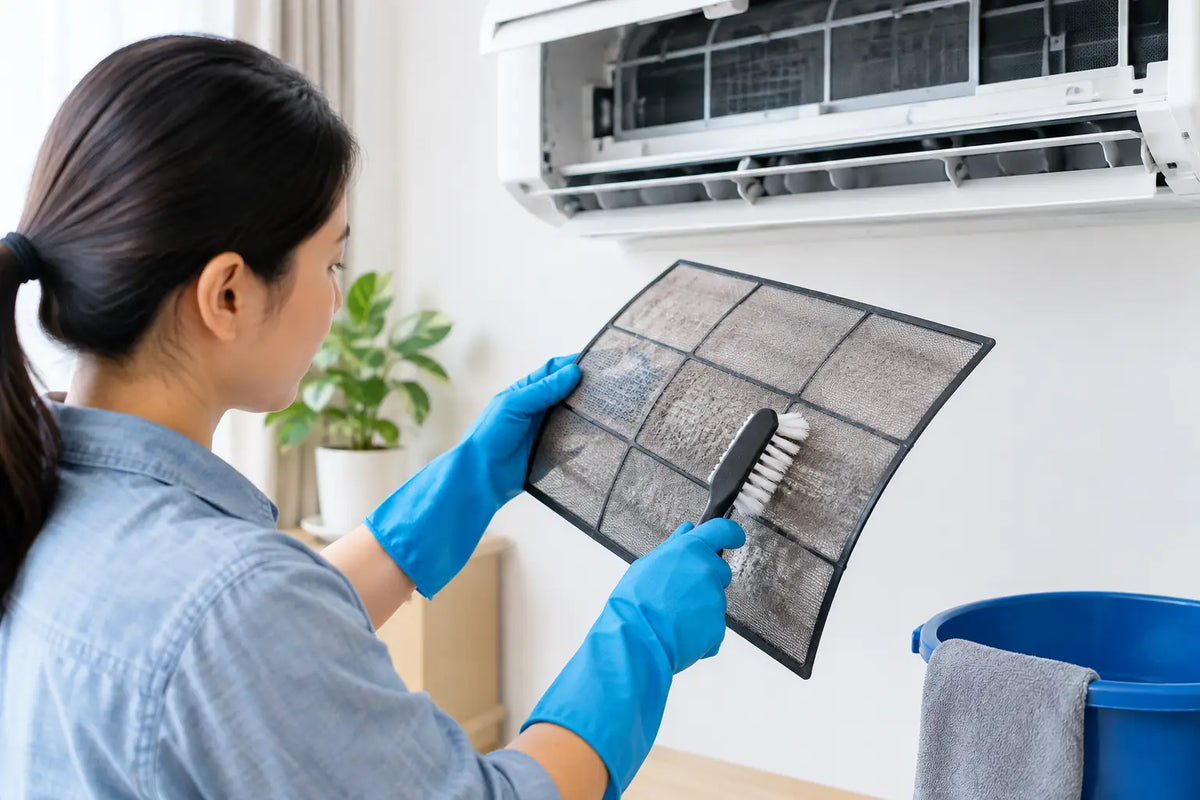
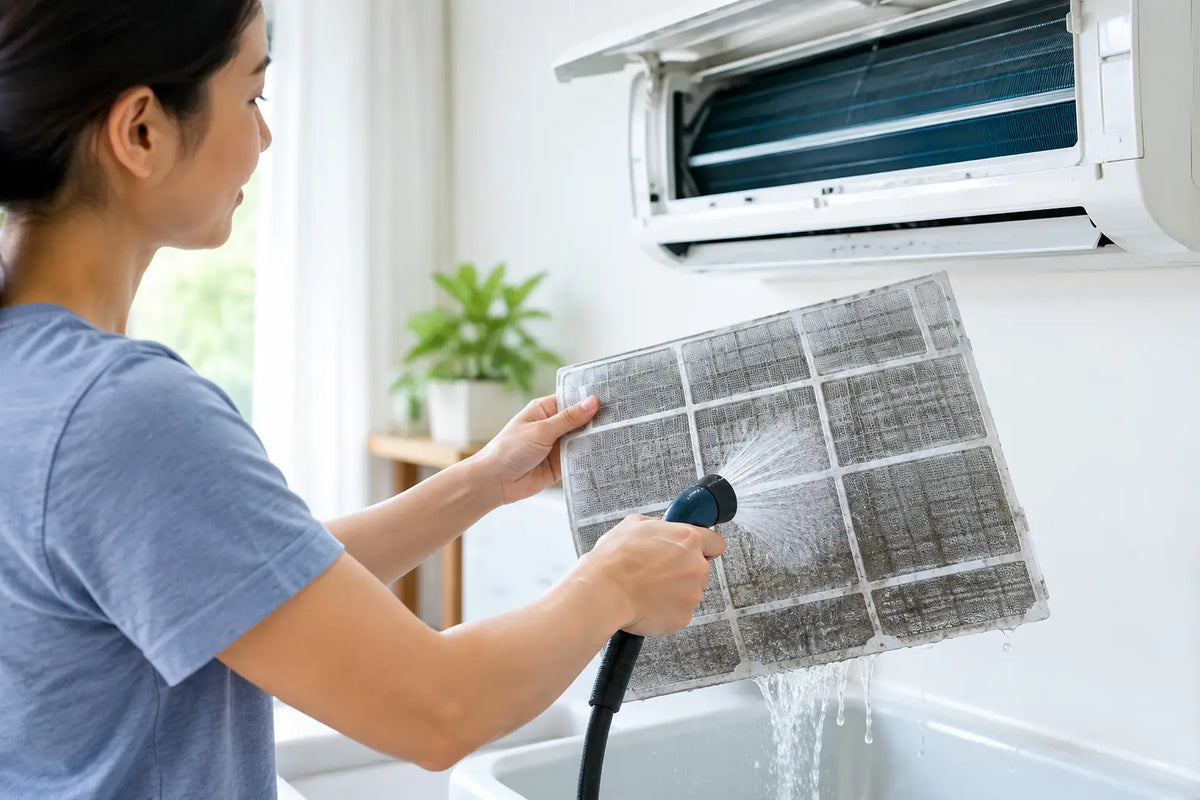
Take the filters to a sink, shower area, or outdoor washing point. Use a vacuum with a soft brush attachment first if the dust is dry and loose. Then rinse the filter under gentle running water. Wash from the cleaner side outward where possible, so debris is pushed away instead of further into the mesh.
For ordinary household dust, water is usually enough. If there is greasy residue, use a small amount of mild dish soap and rinse thoroughly. Do not use bleach, abrasive brushes, strong degreasers, or high-pressure water. These can damage the fine mesh, deform the frame, or leave chemical residue that affects indoor air quality.
Shake off excess water and allow the filters to air-dry fully in a shaded, ventilated place. Direct high heat can warp plastic frames. Never reinstall filters while wet. Moisture trapped in the indoor unit can encourage odors and microbial growth.
Once dry, slide each filter back into its original position, close the panel securely, restore power, and run the system. The airflow should feel more direct and consistent if the filters were the main restriction.
Signs the Filters Need Attention Sooner
Waiting for a calendar reminder is not always practical. Your air conditioner will often show signs when airflow is being restricted. A quick visual check can prevent a minor issue from turning into an inconvenient service call.
Look at the filters sooner if you notice:
- Airflow feels weaker even when the fan setting is high.
- The room takes longer than usual to reach the selected temperature.
- Dust is visible on the intake grille or filter mesh.
- The unit produces a stale or dusty smell when operating.
- Family members notice more dust settling in the room.
What Filter Cleaning Cannot Fix
A clean filter supports efficient cooling, but it will not repair refrigerant leaks, faulty capacitors, damaged fan motors, sensor errors, or drainage problems. It also cannot remove stubborn buildup on the evaporator coil hidden behind the filters.
If water is dripping from the indoor unit, ice is forming on the piping, the system is making unusual noises, or cooling remains poor after the filters are clean, arrange a professional inspection. These symptoms require the right tools and diagnosis. Adding refrigerant without finding the source of a leak, for example, is not a lasting repair.
The same applies to persistent odors. A mild dusty smell may disappear after filter cleaning. A sour, moldy, or foul smell usually means dirt and moisture have accumulated deeper inside the unit. Professional chemical cleaning or an appropriate servicing method may be needed, depending on the condition of the coil, drain pan, and blower assembly.
Keep the Indoor Unit Clean Between Service Visits
Good filter habits work best alongside sensible day-to-day use. Wipe the exterior casing and air outlet with a soft dry or lightly damp cloth. Keep curtains, shelves, and furniture clear of the indoor unit’s intake and discharge path. Restricted airflow around the unit reduces performance even when the filter is clean.
Avoid spraying fragrances, insecticides, or cleaning chemicals directly into the air conditioner. These products can settle on internal components and create residue. If you are renovating, doing drilling work, or sanding surfaces, switch off the unit and protect it from construction dust. Fine dust can quickly clog filters and coat the coil.
For landlords, homeowners, and facility managers, it helps to keep a simple record of filter cleaning and professional service dates. This is particularly useful where several fan coil units are installed. A consistent routine makes it easier to spot a unit that is getting dirty unusually fast or performing differently from the others.
Why Professional Maintenance Still Matters
Professional maintenance goes beyond washing accessible mesh. A trained technician checks the indoor and outdoor units, assesses cooling performance, clears drainage where necessary, and identifies early wear before it becomes a costly breakdown. The service scope should be clear, with no vague promises or surprise add-ons.
For newly installed systems, correct installation materials and workmanship also affect long-term performance. Properly insulated piping, secure electrical connections, neat drainage routing, and careful commissioning all reduce the risk of later problems that a clean filter alone cannot prevent. This is why homeowners and businesses should evaluate the complete installation and maintenance standard, not just the lowest initial price.
Commercestar Engineering approaches air-conditioning care as a long-term system responsibility. Regular user maintenance, backed by professional servicing when needed, protects comfort, equipment life, and the reliability people expect from their air-conditioning investment.
A clean filter is a small task, but it is an easy one to overlook until the room stops feeling comfortable. Make it part of your regular home or facility routine, and let a qualified technician step in whenever the issue goes beyond what a filter rinse can solve.