How to Clean Aircon Filters Safely at Home
A weak airflow problem often starts with something simple: a filter coated in dust. Before assuming your air conditioner needs refrigerant or a major repair, learn how to clean aircon filters safely. Done correctly, this basic task can help your unit circulate air more freely, reduce musty odors, and avoid unnecessary strain on the system.
The key word is safely. Filters are easy to remove, but rough handling, excessive water pressure, or reinstalling a damp filter can create new problems. A careful clean is worthwhile. If the unit is leaking, icing up, smelling strongly of mold, or still underperforming after the filter is clean, it is time to arrange professional aircon servicing rather than pushing the system harder.
Why a Clean Aircon Filter Makes a Real Difference
Your aircon filter is the first line of defense against airborne dust, lint, pet hair, and other particles entering the indoor unit. As debris builds up, the fan must work harder to pull air through the filter. That restriction can make a room feel slow to cool even when the thermostat is set correctly.
A dirty filter can also affect comfort in less obvious ways. Airflow may become uneven, the unit may sound louder than usual, and dust can accumulate more quickly around supply vents and furniture. For households with pets, frequent cooking, open windows, or nearby construction, filters can become dirty far sooner than expected.
Cleaning the filter is not a replacement for a complete maintenance service. The evaporator coil, blower wheel, drain pan, and condensate line sit deeper inside the unit and require different cleaning methods. Still, regular filter care is one of the simplest ways to support reliable performance between service visits.
Before You Clean Aircon Filters Safely
Start by turning the air conditioner off at the remote or wall control. For added protection, switch off power at the dedicated breaker or disconnect if your unit has one. This matters because indoor units contain moving fans and electrical components that should never be exposed to water while energized.
Place an old towel or drop cloth beneath the unit. Even a dry-looking filter can release dust during removal. Have a vacuum with a soft brush attachment, a basin or shower area, clean lukewarm water, a soft cloth, and a dry towel ready before opening the front panel.
Check your owner’s manual if it is available. Most washable mesh filters can be cleaned at home, but not every insert inside an air conditioner is washable. Some systems use deodorizing, electrostatic, carbon, or high-efficiency inserts with specific replacement schedules. Washing the wrong component can ruin it or reduce its effectiveness.
How to Clean Aircon Filters Safely Step by Step
1. Open the front panel gently
For a wall-mounted ductless indoor unit, lift the front cover slowly from the lower edge until it stays open. Do not force the hinges. On window or portable units, filter access may be behind a front grille or side panel. Remove only the cover designed for routine user access.
Look at how the filters are seated before pulling them out. Taking a quick photo can help you reinstall them in the correct orientation, especially if there are two separate panels.
2. Remove loose dust first
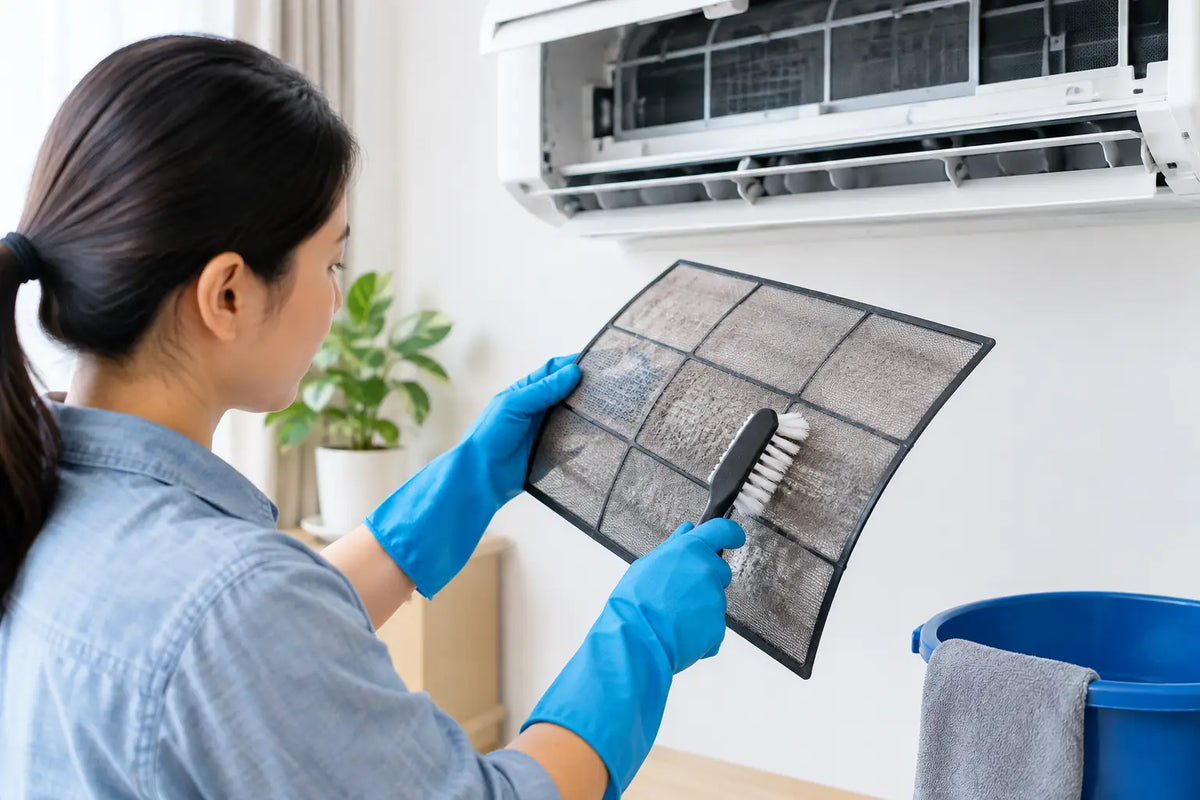
Slide the filters out carefully and carry them level to avoid shaking debris into the room. If the buildup is light and dry, use a vacuum with a soft brush attachment on both sides of the mesh. Work gently. Pressing hard can stretch or tear a fine filter screen.
Vacuuming is often enough for a weekly or light monthly clean. It is also the safer option when the filter has only a thin layer of dust and does not need a full rinse.
3. Rinse with low-pressure water
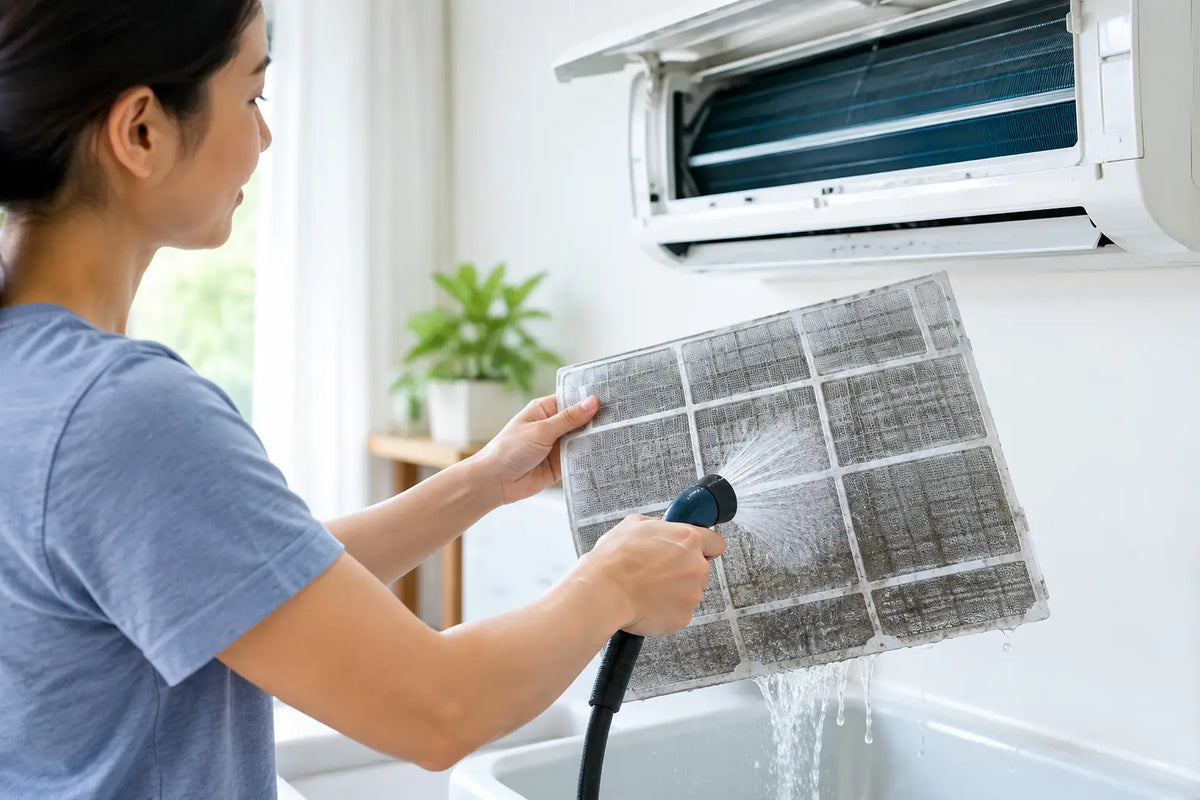
When dust is stuck to the mesh, rinse the filter under lukewarm running water. Direct the water from the cleaner side toward the dirtier side where possible, so debris is pushed out rather than deeper into the screen.
Avoid hot water, pressure washers, stiff brushes, and harsh household cleaners. These can warp plastic frames, loosen mesh, or leave chemical residue that circulates when the system runs. A mild soap may be used only if the manufacturer permits it and the filter is noticeably greasy, but plain water is usually sufficient for standard dust buildup.
4. Let the filter dry completely
Shake off excess water and place the filter on a clean towel in a well-ventilated area. Allow it to air-dry fully before reinstalling it. Do not use a hair dryer, set it in direct high heat, or put it back while damp.
A damp filter can encourage odor and microbial growth inside the unit. It can also allow moisture to reach areas that should remain dry. If you need cooling immediately, use a spare manufacturer-approved filter if you have one, or wait until the cleaned filter is completely dry.
5. Reinstall and test the unit
Slide the dry filters back into their tracks without bending them. Close the panel securely, restore power, and run the air conditioner for several minutes. Check that airflow feels normal and that there are no rattles from a filter that has not been seated properly.
If your unit has a filter reminder light, reset it according to the manual. The reminder is useful, but actual cleaning frequency should reflect how quickly your particular home or workspace collects dust.
How Often Should You Clean the Filters?
For many homes, checking filters every two to four weeks during regular cooling season is a practical routine. A light vacuum may be all that is needed most of the time. A more thorough rinse is appropriate when the mesh looks visibly gray, airflow feels reduced, or dust remains after vacuuming.
The right schedule depends on the environment. Homes with shedding pets, smokers, young children, frequent open windows, or active renovation nearby may need weekly checks. Offices, retail spaces, kitchens, and other commercial settings can also require more frequent attention because a busy system moves a higher volume of air each day.
Do not wait until the unit is visibly struggling. By that point, dust may already be affecting airflow and adding load to the blower motor. Consistent, light cleaning is easier on the equipment than occasional heavy cleaning after months of neglect.
What Not to Do When Cleaning Aircon Filters
The most common mistake is spraying cleaner or water directly into the indoor unit after removing the filter. The filter compartment is not the same as the coil area. Water can reach electronics, drip where it should not, or loosen built-up debris that later blocks the drain system.
Avoid fragrance sprays marketed as quick aircon refreshers. They may mask an odor briefly, but they do not remove the source. A sour or mildew-like smell may point to dirt on the coil, standing water in the drain pan, or microbial growth in the drainage system. Those issues need a proper inspection and cleaning process.
It is also unwise to keep running a unit that is dripping water, forming ice, tripping the breaker, or producing a burning smell. A clean filter will not correct a blocked drain line, electrical fault, refrigerant issue, or damaged fan motor. Shut the system down and have a qualified technician assess it.
When Filter Cleaning Is Not Enough
If airflow remains weak after the filter is clean and dry, the restriction may be deeper in the unit. Dirty evaporator coils and blower wheels are common causes, particularly where maintenance has been delayed. These components require careful access and cleaning to avoid damage to fins, sensors, wiring, and drain components.
Recurring water leaks deserve prompt attention. In many cases, the condensate drain is partially blocked, but the underlying cause can include accumulated dirt, incorrect drainage slope, or an installation issue. For ductless systems, neat piping and proper drainage planning are as important to long-term reliability as the indoor unit itself.
Professional maintenance also provides an opportunity to inspect cooling performance, drainage, electrical connections, insulation condition, and visible signs of refrigerant leakage. This is especially valuable for systems that run daily, serve multiple rooms, or support business operations where downtime affects customers and staff.
A Small Habit That Protects Your System
Cleaning your filter is a straightforward job, but it works best as part of a disciplined maintenance routine. Check it regularly, use gentle cleaning methods, and never reinstall it wet. Those few minutes can help preserve airflow and keep your aircon working more efficiently between professional service appointments.
When a unit shows signs beyond a dirty filter, do not settle for a temporary fix. A careful inspection and quality workmanship can protect the comfort, cleanliness, and long-term value of the system you rely on every day.