Servicing Versus Repair: What Your Aircon Needs
A system that is still blowing cool air can quietly be working harder than it should. A dusty coil, restricted drain line, or early refrigerant issue may not stop your air conditioner today, but it can raise energy use, weaken cooling, and create a larger bill later. Understanding servicing versus repair helps homeowners and business operators act at the right time rather than waiting for a breakdown in Singapore’s heat.
Servicing Versus Repair: The Core Difference
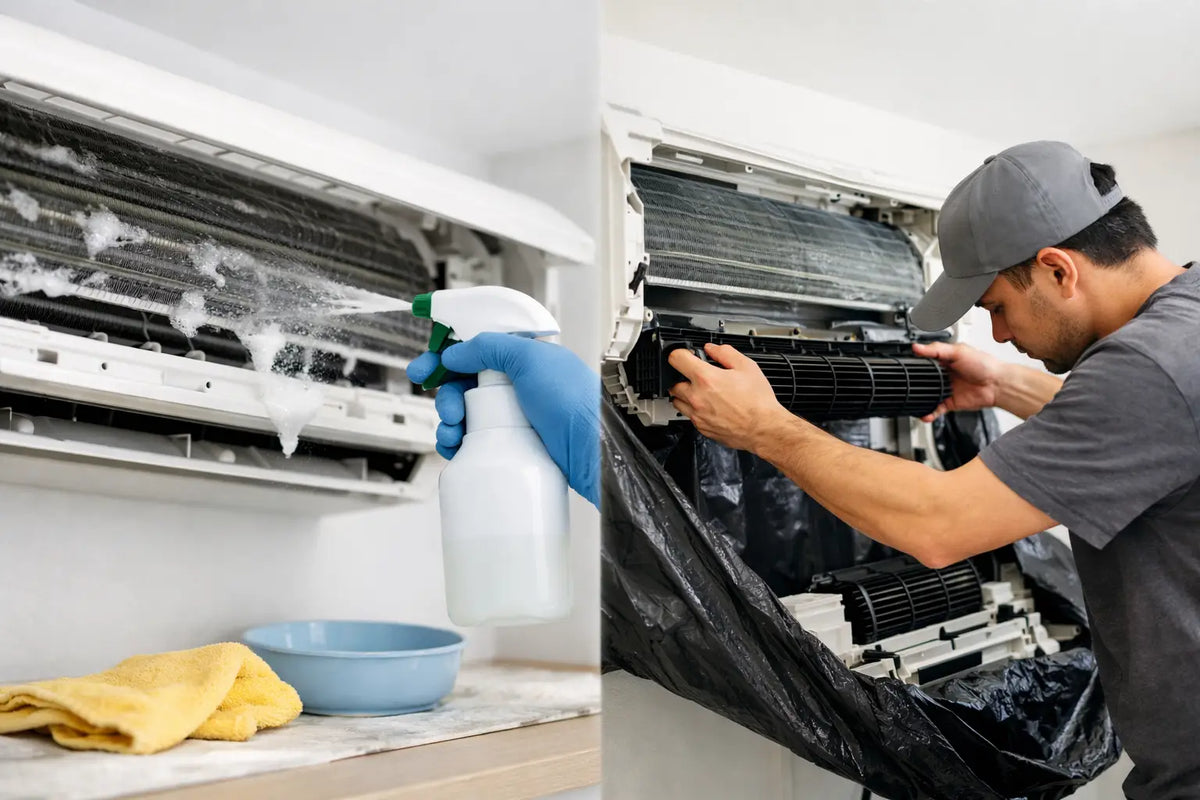
Aircon servicing is preventive care. Its purpose is to keep a working system clean, efficient, and less likely to fail. A technician inspects key components, cleans areas affected by normal use, checks drainage and electrical connections, and confirms that the unit is operating as it should.
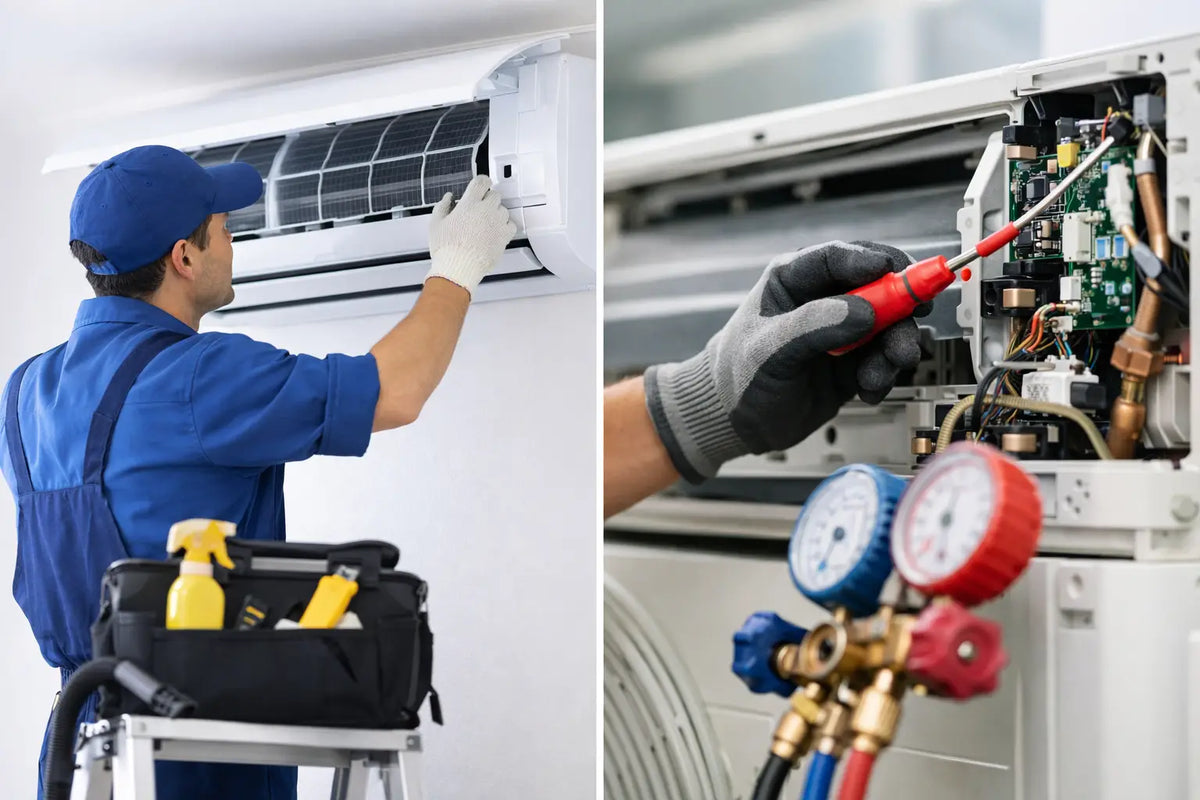
Aircon repair is corrective work. It is needed when something has already failed, worn out, leaked, or started operating outside normal conditions. Repair may involve diagnosing an electrical fault, replacing a failed capacitor, fixing a water leak, addressing refrigerant loss, or resolving a compressor-related problem.
The distinction matters because a service visit and a repair visit solve different problems. Servicing protects system condition. Repair restores a faulted system. A proper technician will not recommend a repair simply because a unit is dirty, and should not present basic cleaning as a solution for a genuine mechanical or electrical failure.
What Happens During Routine Aircon Servicing?
Routine servicing focuses on the parts that collect dust, moisture, and debris through normal operation. In a typical wall-mounted split unit, this usually includes cleaning filters, checking the evaporator coil and blower condition, clearing the drainage system where appropriate, inspecting the fan operation, and testing the unit’s cooling performance.
The outdoor condenser also deserves attention. It releases heat from your space, so poor airflow around the condenser coil can make the system work longer to reach the selected temperature. Leaves, dust, restricted airflow, and damaged components can all reduce efficiency.
Good servicing is not just about making a unit look clean. The technician should observe whether the aircon is draining properly, producing unusual sounds, cycling correctly, or showing signs that a repair may soon be needed. That early visibility is where regular maintenance creates real value.
For most homes, servicing every three to six months is a sensible starting point, depending on usage, household conditions, and the number of units. A family that runs several units nightly, has pets, cooks frequently, or lives near construction activity may need more frequent care. Offices, retail spaces, restaurants, and other commercial premises often require a maintenance schedule based on operating hours and cooling load rather than a fixed household timeline.
When Is Aircon Repair the Better Choice?
Repair becomes necessary when cleaning alone cannot address the cause of the issue. If your unit suddenly stops cooling, trips the breaker, leaks persistently, emits a burning smell, or produces loud mechanical noise, book a diagnostic visit instead of assuming it only needs standard servicing.
A common example is refrigerant loss. Refrigerant does not get “used up” during normal operation. If a system is low, there may be a leak that needs to be found and repaired before refrigerant is added. Simply topping it up without resolving the source can lead to repeat cooling problems and unnecessary cost.
Electrical faults are another repair category. A worn capacitor, faulty control board, damaged wiring connection, or failing fan motor can cause poor cooling or prevent the unit from starting. These components require proper testing and replacement where needed. Surface cleaning will not correct them.
Water leaks can fall into either category. A minor drain blockage caused by accumulated slime or dust may be resolved through servicing. But recurring leakage, damaged drain piping, poor installation slope, cracked insulation, or a frozen coil may call for repair work and a closer inspection of the entire system.
Signs You Should Not Delay
Some warning signs are easy to overlook because the unit still runs. Yet they often indicate that performance is deteriorating. Pay attention if your aircon takes noticeably longer to cool a room, has weaker airflow, produces a musty odor, leaks water, makes rattling or grinding sounds, or causes an unexplained rise in electricity use.
For commercial operators, small changes can quickly affect customers and staff. Uneven temperatures in an office, a noisy cassette unit over a dining area, or a persistent leak near stock or equipment should be assessed quickly. Waiting until a system shuts down can disrupt operations and limit your options for scheduling repairs.
If the issue involves burning smells, sparking, repeated circuit trips, or significant water leakage near electrical equipment, switch off the unit and arrange professional assessment promptly. These are not situations to solve with repeated restarts or do-it-yourself adjustments.
Why Servicing Cannot Replace Proper Repair
One of the most frustrating aircon experiences is paying for repeated servicing while the same problem returns. This often happens when the visible symptom is treated but the underlying fault is not diagnosed.
For example, a dirty filter can contribute to weak airflow, but so can a failing blower motor. Condensation can create dripping water, but so can a damaged drain pipe concealed above a false ceiling. Poor cooling may be linked to dirty coils, but it may also point to a refrigerant leak, compressor issue, or sensor fault.
A reliable service provider explains what was found, what work is included, and whether the recommendation is maintenance or repair. Clear diagnosis protects you from spending on unnecessary work and gives you a better basis for deciding whether to repair, monitor, or consider replacement.
Why Repair Does Not Eliminate the Need for Maintenance
A repaired aircon still needs regular care. Replacing a capacitor, patching a drain line, or correcting a refrigerant leak restores a specific part of the system, but dust, moisture, and daily wear continue after the repair is complete.
Skipping maintenance after a repair can shorten the benefit of the work. A clean coil supports airflow and heat exchange. A clear drain line reduces the chance of leakage. Regular inspections can also identify vibration, insulation damage, loose connections, and early component wear before they become urgent problems.
This is especially relevant for multi-split systems. Several indoor units may share one outdoor condenser, so a system-wide issue can affect more than one room. Consistent maintenance and accurate fault diagnosis help protect the overall installation, not only the unit that first showed symptoms.
Choosing the Right Type of Service Visit
When booking, describe the issue as clearly as possible. Mention how long the problem has been happening, whether it affects one or multiple units, and whether the unit is still cooling. Photos or videos of leaks, error codes, or unusual noises can also help a technician prepare for the visit.
Book routine servicing when the system is generally working but due for preventive cleaning and inspection. Request diagnosis and repair when there is a distinct fault, recurring problem, or performance change that cleaning has not resolved. If you are unsure, a professional assessment is the practical middle ground.
Look for a provider that is transparent about scope and workmanship. For aircon repairs, the lowest quoted price is not always the lowest long-term cost if the source of the problem is missed. Quality materials, correct installation practices, and technicians who take time to test the system matter, particularly for concealed piping, drainage, and electrical work.
Commercestar Engineering approaches aircon care with that long-term view: maintain systems before avoidable wear becomes costly, and repair faults with a clear explanation of what needs attention and why.
Repair, Service, or Replace?
There is a point where repair should be weighed against replacement. An older unit with repeated faults, declining efficiency, obsolete parts, or costly compressor work may no longer be the most economical choice. The decision depends on the unit’s age, repair history, condition of the piping and insulation, and the expected cost of restoring reliable operation.
Replacement should not be treated as an automatic answer to every problem. A well-installed unit with a straightforward component fault can often be repaired cost-effectively. On the other hand, fitting a new indoor unit onto poor-condition piping or drainage can carry forward problems from the previous installation. A sound recommendation considers the full system, not just the appliance on the wall.
The best time to make that decision is before the hottest day of the month turns a minor concern into an emergency. Keep to a maintenance schedule, respond early to changes in performance, and ask for a clear diagnosis when something feels wrong. Your aircon will give you plenty of clues - the value lies in acting on them before comfort, energy costs, or business operations are affected.