Chemical Wash vs Chemical Overhaul Explained
A wall-mounted air conditioner that starts dripping onto the floor, smells musty when switched on, or takes far too long to cool a room usually needs more than a quick filter rinse. The question is whether a chemical wash vs chemical overhaul is the right next step. Both services clean internal components that normal maintenance cannot reach, but they involve different levels of dismantling, time, cost, and risk.
Choosing the larger service by default is not always the best value. The right decision depends on the unit’s symptoms, condition, service history, and whether a proper inspection points to dirt buildup, drainage blockage, a refrigerant issue, or a failing part.
Chemical Wash vs Chemical Overhaul: The Main Difference
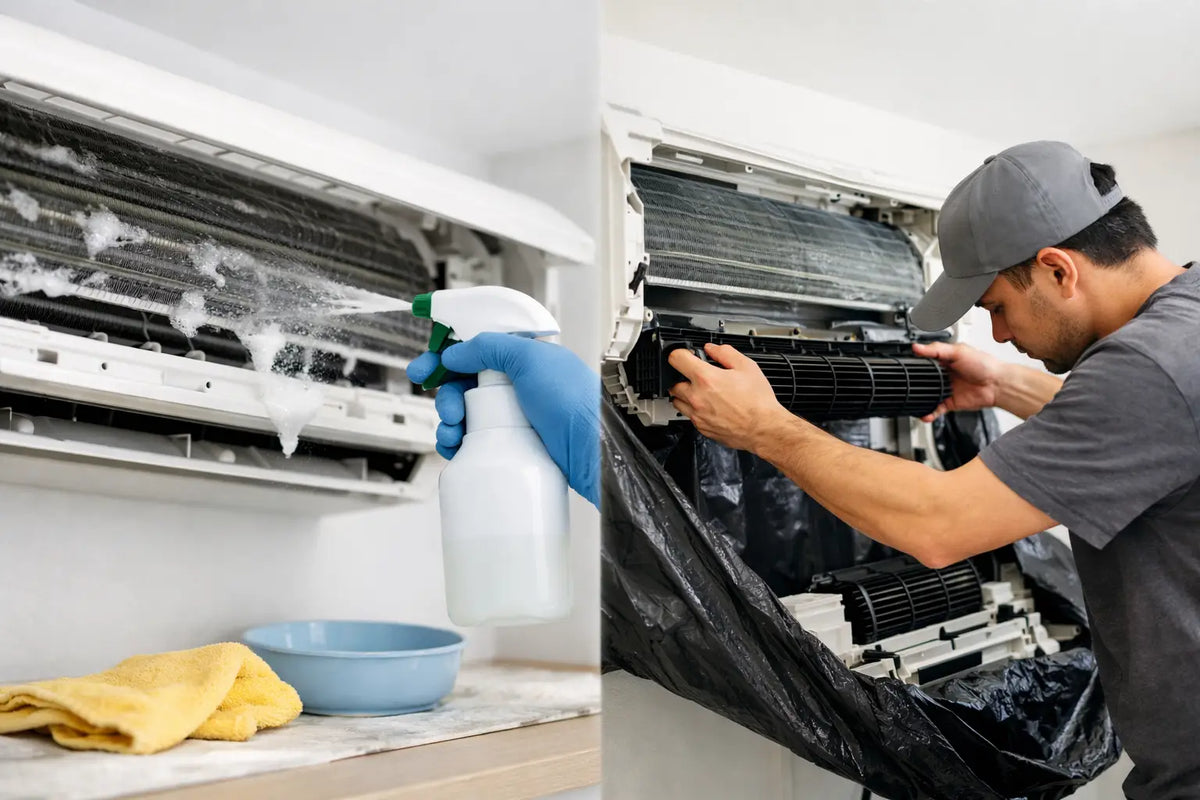
A chemical wash is a targeted deep-cleaning service. A technician removes accessible components, commonly including the air filters, front cover, and fan coil sections where practical, then uses an approved cleaning solution to remove embedded dust, grease, slime, and microbial buildup. The evaporator coil, blower area, and drainage system are typically the focus.
A chemical overhaul is a more comprehensive restoration service. The indoor fan coil unit is dismantled much more extensively so that major parts can be cleaned individually. Depending on the unit design and confirmed scope of work, this may include the evaporator coil, blower wheel, drain pan, fan motor housing, casing, and drainage piping connection.
Put simply, a chemical wash cleans a heavily soiled unit in place with partial dismantling. A chemical overhaul takes the system further apart to address contamination and blockage in areas that cannot be properly reached during a standard wash.
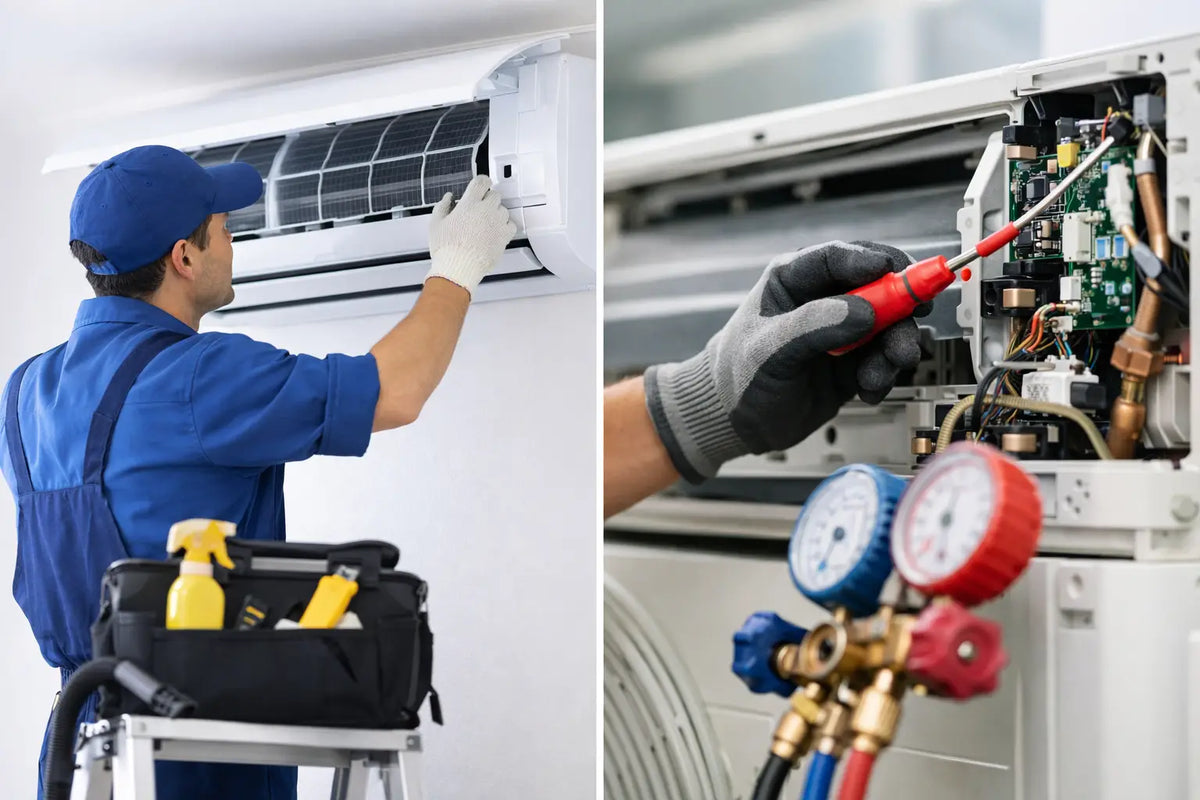
Neither service is a substitute for correct troubleshooting. If the air conditioner is low on refrigerant due to a leak, has a faulty sensor, a weak capacitor, or a damaged drain pump, chemical cleaning alone will not solve the underlying issue.
What a Chemical Wash Is Best For
A chemical wash is often a sensible option when the unit is still cooling reasonably well but has clear signs of internal dirt accumulation. Common examples include reduced airflow, mild odor, occasional water dripping, visible grime around the coil, or a unit that has missed routine servicing for an extended period.
In a properly performed service, the technician protects the surrounding area, applies the cleaning solution carefully, flushes away residue, clears the condensate drain line, and checks the unit’s basic operation afterward. The goal is to restore airflow and drainage without dismantling every major internal part.
This service can be especially practical for homeowners who have caught the problem early. A system that receives regular maintenance is less likely to require a full overhaul because dust and biofilm have not had years to build up inside the blower wheel and drain pan.
However, the word “chemical” should not be treated as a promise of a permanent fix. The quality of the work matters. Strong chemicals used carelessly, insufficient rinsing, or rough handling of delicate coil fins can create new problems. A professional technician should use suitable products, protect electrical components, rinse thoroughly, and avoid forcing fragile parts beyond what the unit requires.
When a Chemical Overhaul Makes More Sense
A chemical overhaul is usually recommended when the unit has severe contamination, recurring drainage issues, persistent odor, or poor cooling and airflow that have not improved after normal servicing. It can also be appropriate for an older unit that has been neglected for years and is visibly dirty inside.
The extra dismantling allows the blower wheel and drain pan to be cleaned far more thoroughly. These are common hiding places for sticky dust, mold, and sludge. When buildup coats the blower wheel, the air conditioner may technically be running but deliver noticeably weaker airflow into the room. When the drain pan or pipe is blocked, condensate can overflow and leak through the indoor unit.
A proper overhaul also gives the technician a better opportunity to inspect components that are normally concealed. That does not mean every concern will be resolved by cleaning, but it can reveal whether damaged insulation, a worn drain connection, corroded parts, or an electrical fault needs separate attention.
The trade-off is that an overhaul costs more and takes longer because it requires careful dismantling and reassembly. It should be done by an experienced team that understands the model being serviced. Incorrect reinstallation can lead to water leakage, rattling panels, loose wiring, or poor drainage even when the unit initially appears clean.
Symptoms That Help You Decide
Water leakage is one of the most common reasons people consider chemical cleaning. Yet not all leaks mean the same thing. A blocked drain line or dirty drain pan may respond well to a chemical wash. If leaking returns repeatedly, or if thick sludge and contamination are found inside the unit, an overhaul may be the better long-term option.
Weak cooling needs more careful diagnosis. Dirt on the evaporator coil can reduce heat transfer, and a clogged blower can limit airflow, making a wash or overhaul useful. But low refrigerant, a compressor issue, or an undersized system can cause similar symptoms. Paying for deep cleaning without checking operating conditions may leave you with the same warm room afterward.
Musty smells generally indicate moisture and microbial buildup around the coil, drain pan, or blower. A chemical wash may resolve a mild odor. If the smell is strong, returns quickly, or is paired with leaking and weak airflow, deeper dismantling is often more appropriate.
Unusual noise is not automatically a cleaning issue. A dirty blower wheel can create imbalance or airflow noise, but clicking, buzzing, grinding, or repeated shutdowns may indicate a mechanical or electrical fault. Request an inspection rather than assuming an overhaul is the answer.
Scope Matters More Than the Service Name
Service names are not standardized across every air-conditioning company. One provider’s “chemical wash” may include drain flushing and partial dismantling, while another may offer a much narrower clean. The same applies to “chemical overhaul.” Before approving any work, ask what parts will be removed, what areas will be cleaned, whether the drain line will be flushed, and what testing will be carried out after reassembly.
You should also confirm whether the quoted price includes transportation, protective setup, replacement of minor worn parts if needed, and follow-up support if there is a service-related issue. Transparent pricing is valuable because deep-cleaning work can expose separate faults that were not visible at the start.
For multi-split systems, do not assume every indoor unit needs identical treatment. One bedroom fan coil may be leaking while another is operating normally. A condition-based recommendation is usually more cost-effective than applying the most extensive service to every unit without inspection.
How to Protect Your Air Conditioner After Deep Cleaning
Chemical servicing works best as corrective care, not as a repeated emergency measure. Once the unit is clean, routine maintenance helps preserve the result. Clean or wash filters regularly, keep furniture and curtains from restricting airflow, and do not ignore early signs of dripping or reduced cooling.
For homes with daily air-conditioning use, pets, renovation dust, or family members sensitive to odors and airborne dust, more frequent professional servicing may be worthwhile. Commercial spaces may need a more structured schedule because long operating hours and heavier occupancy place greater demand on the system.
Installation quality also affects how reliably an air conditioner performs over time. Proper drainage gradient, secure pipe insulation, sound electrical connections, and neat workmanship reduce the chances of leaks and avoidable service calls. Deep cleaning can restore a dirty unit, but it cannot correct poor installation without separate remedial work.
Choose the Service Based on Evidence
A chemical wash is generally the practical choice for moderate dirt buildup, mild odor, and early drainage or airflow concerns. A chemical overhaul is better suited to severe contamination, persistent leaks, recurring odor, and units that need extensive internal access for a proper clean.
The best next step is a clear diagnosis, not an automatic upsell. A trained technician should explain what was found, show the condition of the relevant components where possible, and recommend work that matches the actual problem. Commercestar Engineering takes this workmanship-first approach because lasting cooling depends on correct service scope, careful reassembly, and honest advice as much as it depends on cleaning itself.
If your air conditioner is showing early warning signs, arrange service before a small drainage or airflow problem becomes a disruptive breakdown. Timely, well-scoped care is usually the most economical way to keep your space cool, clean, and comfortable.