Choosing the Best Aircon for an F&B Shop
A lunch crowd can turn a comfortable dining area warm within minutes. Add kitchen equipment, open doors, humid outdoor air, and a constant flow of staff, and an undersized system will struggle long before the day is over. The best aircon for F&B shop use is not simply the unit with the highest capacity. It is a properly planned commercial system that handles real heat load, protects customer comfort, and remains practical to service during business hours.
For restaurant, café, bakery, and beverage operators, air conditioning affects more than comfort. A hot dining room shortens customer dwell time, makes staff fatigue more likely, and can leave guests with the wrong impression of your business. Choosing the right system starts with understanding how your space actually operates.
What Makes the Best Aircon for an F&B Shop?
F&B spaces place far greater demands on air conditioning than a typical office or retail store. Cooking appliances generate sensible heat. Steam and washing areas add moisture. Refrigerators, display cases, lighting, and people all contribute to the cooling load. Even a small shop can require a serious cooling strategy when the kitchen is active all day.
That is why floor area alone is not enough for selecting capacity. A contractor should consider ceiling height, frontage exposure, window size, seating capacity, kitchen layout, operating hours, and whether doors remain open during peak traffic. A café with a compact prep area needs a different solution from a full-service restaurant with woks, fryers, and a busy dishwashing zone.
In most F&B projects, commercial-grade split systems, cassette units, ceiling-suspended units, or multi-split and VRF systems are more suitable than residential wall-mounted units. The right choice depends on the shop’s layout, not on a one-size-fits-all package.
Cooling capacity must match real heat load
Oversizing and undersizing both create problems. An undersized air conditioner runs continuously, struggles to pull down temperature, and increases power consumption. An oversized system may cool the room too quickly without managing humidity effectively, leaving diners feeling cold and clammy while energy is wasted.
A proper site assessment is the safest starting point. Rather than choosing based on a quick square-foot calculation, assess the heat-producing equipment and the number of occupants expected during the busiest period. This is especially important for spaces where the kitchen and dining area share the same air volume.
Airflow matters as much as horsepower
A powerful unit will not solve a poor airflow layout. Cold air that blows directly onto a table can make customers uncomfortable, while stagnant corners near the entrance may remain warm. In a long, narrow shop, one wall-mounted unit at the back is rarely enough to distribute air evenly.
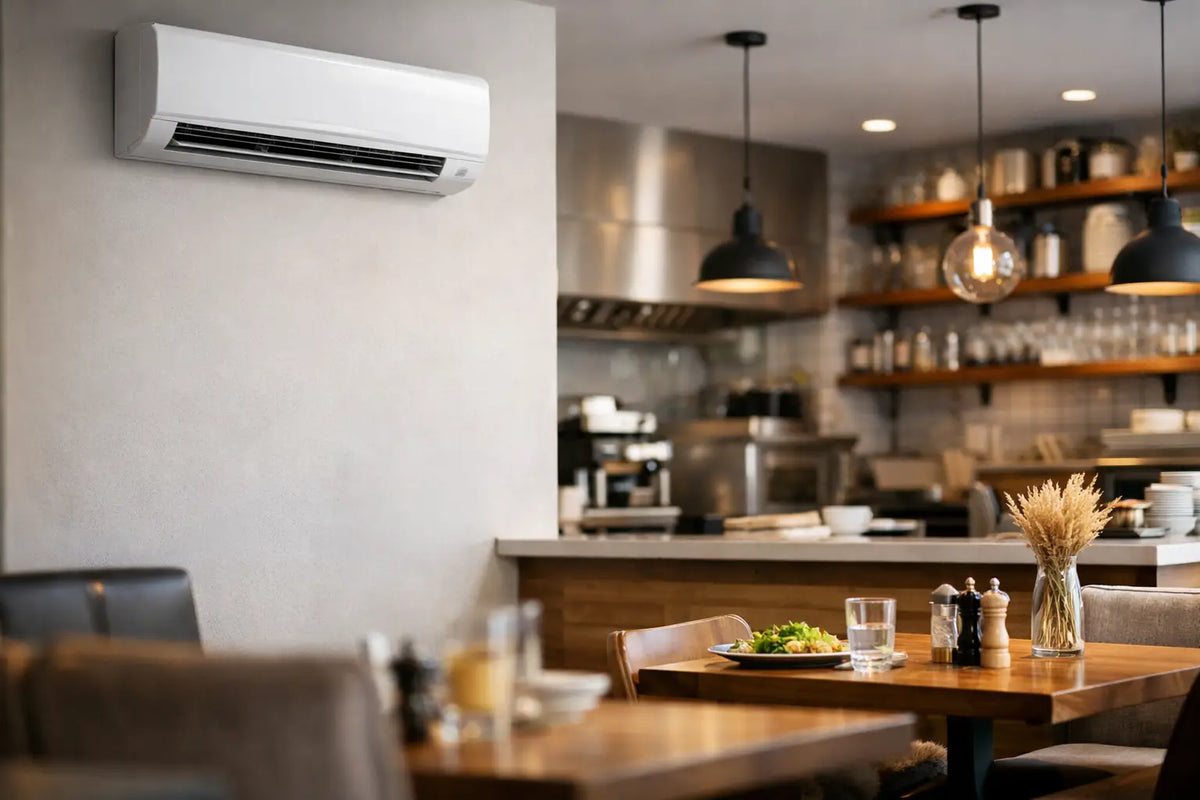
Cassette air conditioners are often effective for open dining areas because they distribute air in multiple directions from the ceiling. Ceiling-suspended units can suit deeper spaces or layouts with limited ceiling void. Wall-mounted units may still work well in smaller cafés, private dining rooms, offices, or enclosed service areas when positioned correctly.
The objective is consistent comfort across the customer zone, not a single cold spot near the indoor unit. Good airflow planning also keeps staff workstations more manageable without directing cold air into food preparation areas where it may interfere with operations.
Separate Kitchen Ventilation From Dining-Room Cooling
One of the most costly mistakes in F&B air-conditioning planning is expecting the dining-room system to overcome kitchen heat and fumes. Air conditioning is designed to cool and dehumidify conditioned space. It is not a replacement for proper kitchen exhaust, fresh-air provision, or grease management.
A commercial kitchen needs an effective hood and exhaust arrangement to remove heat, smoke, grease-laden vapor, and odors at the source. Without it, hot air migrates into the dining area and forces the air conditioner to work far beyond its intended load. The result is poor comfort, frequent breakdowns, greasy indoor coils, and higher electrical bills.
Where possible, keep kitchen and dining areas operationally separated. If the kitchen is open, invest in stronger extraction and plan the air-conditioning layout around the heat plume. This may mean additional units near the dining perimeter, better air distribution, or a system with zoning so different areas can be controlled independently.
Humidity deserves equal attention. In a humid climate, a restaurant can feel uncomfortable even when the thermostat shows a reasonable temperature. A correctly sized inverter system with steady operation generally manages humidity better than a unit that repeatedly starts and stops.
Which Aircon Type Fits Your Shop Layout?
There is no single brand or model that is automatically the best choice for every F&B business. Reliability, service access, capacity range, and system design should guide the decision. Major brands such as Mitsubishi Heavy Industries, Daikin, Mitsubishi Electric, Panasonic, and Toshiba offer commercial solutions across different configurations, but the installation design still determines much of the long-term performance.
For a small takeaway outlet or beverage kiosk, a high-quality wall-mounted inverter split unit may be sufficient if heat-producing equipment is limited and ventilation is adequate. The unit should still be sized with peak customer traffic and sun exposure in mind.
For cafés and casual dining shops with an open customer area, cassette units often provide a neater finish and more balanced airflow. They work particularly well with false ceilings, provided there is enough service clearance above the ceiling for drainage, piping, and future maintenance.
For larger restaurants, multiple zones, or spaces with varied operating schedules, a multi-split or VRF system may offer better control. It allows separate indoor units to serve different parts of the premises, so a private room, dining area, and office do not all need to run at the same setting. The trade-off is a higher upfront investment and the need for experienced design, installation, and servicing.
Installation Quality Is Part of the Aircon System
An F&B operator can select an excellent unit and still face leaks, weak cooling, water damage, or recurring faults if installation standards are poor. The pipes, insulation, drainage route, electrical cable, supports, and workmanship behind the ceiling are not minor details. They are essential to reliable operation.
Commercial air-conditioning piping should be properly sized, pressure-tested, insulated, and routed with service access in mind. Quality insulation helps reduce condensation and energy loss, particularly in humid conditions. Durable copper piping and correctly installed drainage also reduce the risk of hidden leaks that can disrupt business and damage finishes.
Neat trunking, tidy box-up work, and sensible outdoor-unit placement matter too. A restaurant cannot afford a service team needing to dismantle major finishes every time maintenance is required. Plan for access to filters, drain pans, electrical components, and outdoor condensers from the beginning.
At Commercestar Engineering, premium installation materials and in-house workmanship are treated as part of the complete air-conditioning solution, not an optional add-on. For commercial operators, that approach helps reduce avoidable disruption after handover.
Plan Maintenance Around Operating Hours
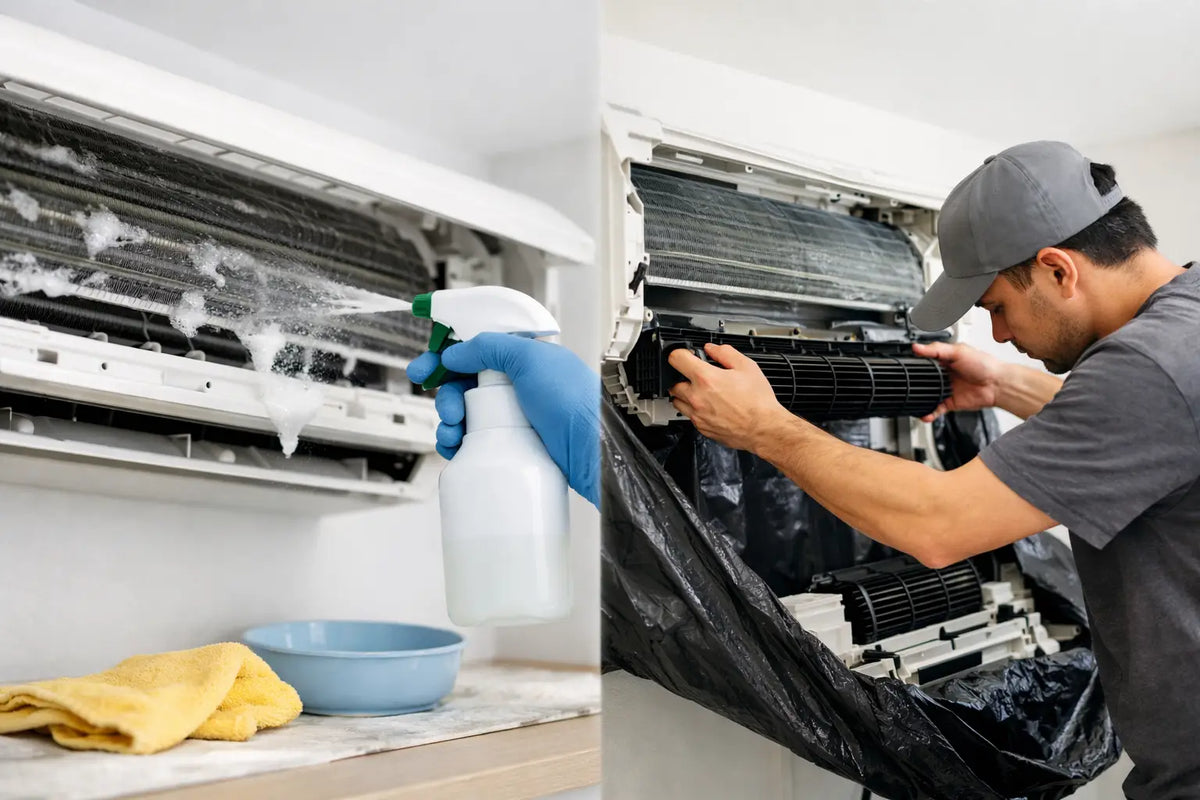
F&B air conditioners collect dirt faster than systems in homes or offices. Cooking vapor, oil particles, dust, and high occupancy can clog filters and coat indoor coils. When airflow drops, the system consumes more energy and delivers less cooling. Left unattended, drainage lines can also clog and cause water leaks above customer seating or food-service areas.
A maintenance schedule should reflect the shop’s actual environment. Light-use cafés may require routine servicing at standard intervals, while busy restaurants or outlets near heavy cooking activity may need more frequent filter cleaning and coil checks. There is no benefit in using a fixed schedule that ignores how the business operates.
During servicing, technicians should inspect cooling performance, refrigerant pressure where applicable, drainage, electrical connections, insulation condition, and signs of corrosion or oil buildup. Cleaning should be thorough but appropriate for the equipment. A quick surface wipe is not the same as preventive maintenance.
It also helps to schedule work before opening, after closing, or during quieter periods. A service provider that understands commercial operations will plan around customer traffic and leave the work area clean and presentable.
Questions to Ask Before You Buy
Before approving an air-conditioning proposal, ask how the cooling capacity was calculated and whether kitchen equipment, occupancy, sunlight, and ventilation were included. Confirm the proposed indoor-unit locations, drainage route, outdoor-unit access, electrical requirements, and future servicing access.
You should also ask what installation materials are included, whether pressure testing and commissioning are part of the scope, and what after-sales support is available if the system develops an issue. Transparent answers are more valuable than a low initial quote with vague specifications.
For a new shop, coordinate air-conditioning planning early with your interior designer, electrician, kitchen contractor, and exhaust vendor. Late changes are often expensive because ceiling works, electrical loads, and piping routes may already be fixed.
A well-planned system lets guests focus on the food, conversation, and atmosphere rather than the temperature. That is the standard worth designing for before the first customer walks through the door.