VRF Versus Split: Which AC System Fits Your Space?
A VRF versus split decision is rarely just about which air conditioner costs less at the quotation stage. It affects how each room is cooled, how much control occupants have, how the installation is routed, and what happens when the system needs service years later. For a compact home, the straightforward answer may be a split system. For a multi-zone office, retail unit, or larger residence with varying cooling needs, VRF may be the more capable investment.
The right choice starts with the space itself: its layout, occupancy, operating hours, heat load, electrical capacity, and future plans. A properly planned system with quality piping, insulation, drainage, and commissioning will outperform a poorly installed system, regardless of the equipment category.
VRF versus split: the core difference
A split air-conditioning system connects one outdoor condenser to one indoor unit. In a multi-split arrangement, one outdoor unit can serve several indoor fan coils, subject to the manufacturer’s capacity and connection limits. This is the familiar setup in many apartments, smaller homes, and compact commercial spaces.
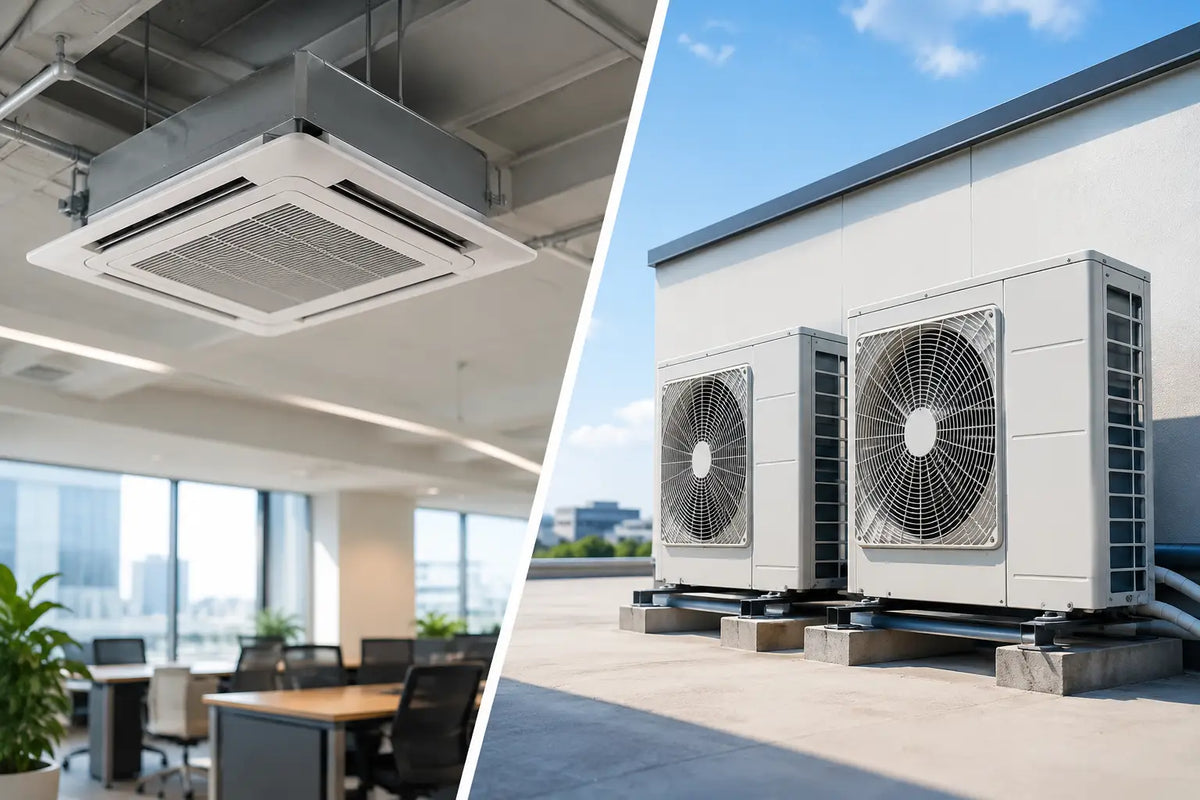
VRF, short for Variable Refrigerant Flow, is designed for larger and more complex applications. One or more outdoor units can serve many indoor units across separate zones. The system varies refrigerant flow according to the demand in each zone, rather than treating every room as if it needs the same level of cooling.
That distinction matters in a building where one room is packed with people, another faces afternoon sun, and a third is only used occasionally. VRF gives each area more independent control while allowing the overall system to respond to changing demand.
When a split system is the better choice
Split systems are popular for good reason. They are relatively simple, familiar to homeowners, and well suited to spaces with a limited number of rooms. A typical apartment or single-floor residence may only need a few indoor units, making a multi-split system practical and cost-conscious.
The initial equipment and installation cost is usually lower than VRF. Repairs can also be more straightforward because the system architecture is less complex and technicians commonly service these configurations. If one indoor unit has an issue, diagnosis is often more direct, especially where the piping route is accessible and the installation has been completed neatly.
A split system makes sense when cooling requirements are predictable. For example, bedrooms may be used mainly at night, while a living area is cooled in the evening. With correctly sized fan coils and a reliable inverter condenser, homeowners can achieve strong comfort and reasonable energy performance without paying for a commercial-grade zoning platform they do not need.
There are limits. A multi-split outdoor unit has a defined capacity, and the connected indoor units share that available capacity. If every room demands maximum cooling at the same time, performance depends on proper system selection and load calculations. Oversizing is not the answer either. It can increase upfront cost and create less efficient operation at low demand.
Where VRF earns its higher cost
VRF is built for properties that need more zones, longer piping runs, and better control across different operating conditions. Offices with meeting rooms, open work areas, executive rooms, server closets, and reception spaces are a common example. Each area can have different occupancy, equipment heat, and preferred temperatures.
Retail and food-service businesses also benefit when customer areas, kitchens, storage zones, and back-of-house rooms have different cooling demands. A conventional split arrangement can become cluttered when too many outdoor units are needed. VRF can reduce the number of outdoor condensing locations while serving a larger number of indoor units.
The energy case is strongest when zones do not all operate at full load at once. A VRF system can direct capacity to the spaces that need it, instead of running separate units at high output simply because they are switched on. This does not mean VRF is automatically the lowest-cost option in every property. Energy savings depend on operating habits, design accuracy, controls, maintenance, and the actual load profile.
Some VRF systems also offer heat recovery configurations, allowing simultaneous cooling and heating in different zones. That feature is more relevant in climates with mixed seasonal needs. For many consistently warm-climate applications, the main benefit remains flexible, efficient cooling control rather than simultaneous heating and cooling.
Installation quality matters more than most buyers expect
The best equipment cannot compensate for careless installation. Refrigerant piping must be correctly sized, pressure-tested, evacuated, insulated, and protected. Drainage needs the right gradient and access for cleaning. Electrical cabling, control wiring, condensate routes, and indoor unit positioning all affect long-term reliability and appearance.
VRF installations demand even more planning because pipe lengths, branch arrangements, elevation differences, and communication wiring must follow manufacturer specifications. A small design error can lead to poor cooling distribution, recurring error codes, oil return issues, or difficult troubleshooting later. The contractor should assess the space before recommending the system, not simply count rooms and match them to a package.
For both VRF and split systems, ask what materials are included and how the work will be managed. Better insulation helps reduce condensation risk. Proper copper pipe thickness supports durable refrigerant lines. Neat trunking or box-up works can protect services while keeping the finished space presentable. These are not cosmetic afterthoughts. They are part of a system that must operate reliably for years.
At Commercestar Engineering, this workmanship-led approach means looking beyond the indoor and outdoor unit price. Premium installation materials, careful routing, and an in-house team create a clearer standard of accountability from installation through after-sales support.
Maintenance and repair considerations
A split system is generally easier and less expensive to maintain on a per-unit basis. Regular filter cleaning, fan coil servicing, drain flushing, and outdoor condenser checks help preserve airflow and efficiency. If an individual component fails, replacement options may be more accessible, depending on the system’s age and brand support.
VRF maintenance requires technicians who understand the specific manufacturer’s controls, fault codes, branch components, and commissioning parameters. Its diagnostic capabilities can be an advantage, but repairs may take more planning and specialized expertise. Because one VRF system may serve many rooms, downtime planning is also more important for businesses.
Neither system should be selected on the assumption that it will be maintenance-free. Dirty filters, blocked drains, poor airflow, refrigerant leaks, and neglected outdoor coils can reduce performance in any air-conditioning system. A preventive maintenance plan is particularly valuable for commercial premises where an unexpected shutdown affects staff, customers, inventory, or operating hours.
How to choose between VRF and split
The decision becomes clearer when you assess four practical factors:
- Number of zones: A few rooms usually favor a split or multi-split setup. Many independently controlled areas point toward VRF.
- Usage pattern: VRF is compelling when rooms operate at different times and carry different heat loads.
- Budget and lifecycle value: Split systems typically cost less upfront. VRF can justify its investment in larger, more complex properties through zoning and operational control.
- Installation constraints: Outdoor unit space, pipe routing, ceiling access, electrical supply, and future expansion all need review before equipment is selected.
For many homeowners, a carefully designed split system is the sensible answer: cost-effective, efficient, and easy to manage. For larger homes, offices, retail spaces, and properties where room-by-room control matters, VRF deserves serious consideration. The most useful next step is a site assessment that treats air conditioning as an engineered system, not a quick appliance purchase. Get the layout, load calculation, and installation details right before committing, and the system will be far easier to live with long after the installation day.