Why Aircon Insulation Prevents Costly Aircon Leaks
A newly installed air conditioner can look perfect on day one, then leave water marks on a wall, drip from a concealed trunking route, or lose cooling efficiency months later. In many cases, the issue is not the fan coil unit. It is the aircon insulation around the refrigerant piping - a detail that is easy to hide, but expensive to overlook.
For homeowners and business operators in Singapore, insulation is not an optional finishing touch. Our hot, humid climate places constant pressure on air-conditioning materials. When cold refrigerant pipes meet warm, moisture-heavy air, condensation can form quickly. Proper insulation keeps that moisture where it belongs: out of your ceiling, wall, flooring, and electrical components.
What Aircon Insulation Actually Does
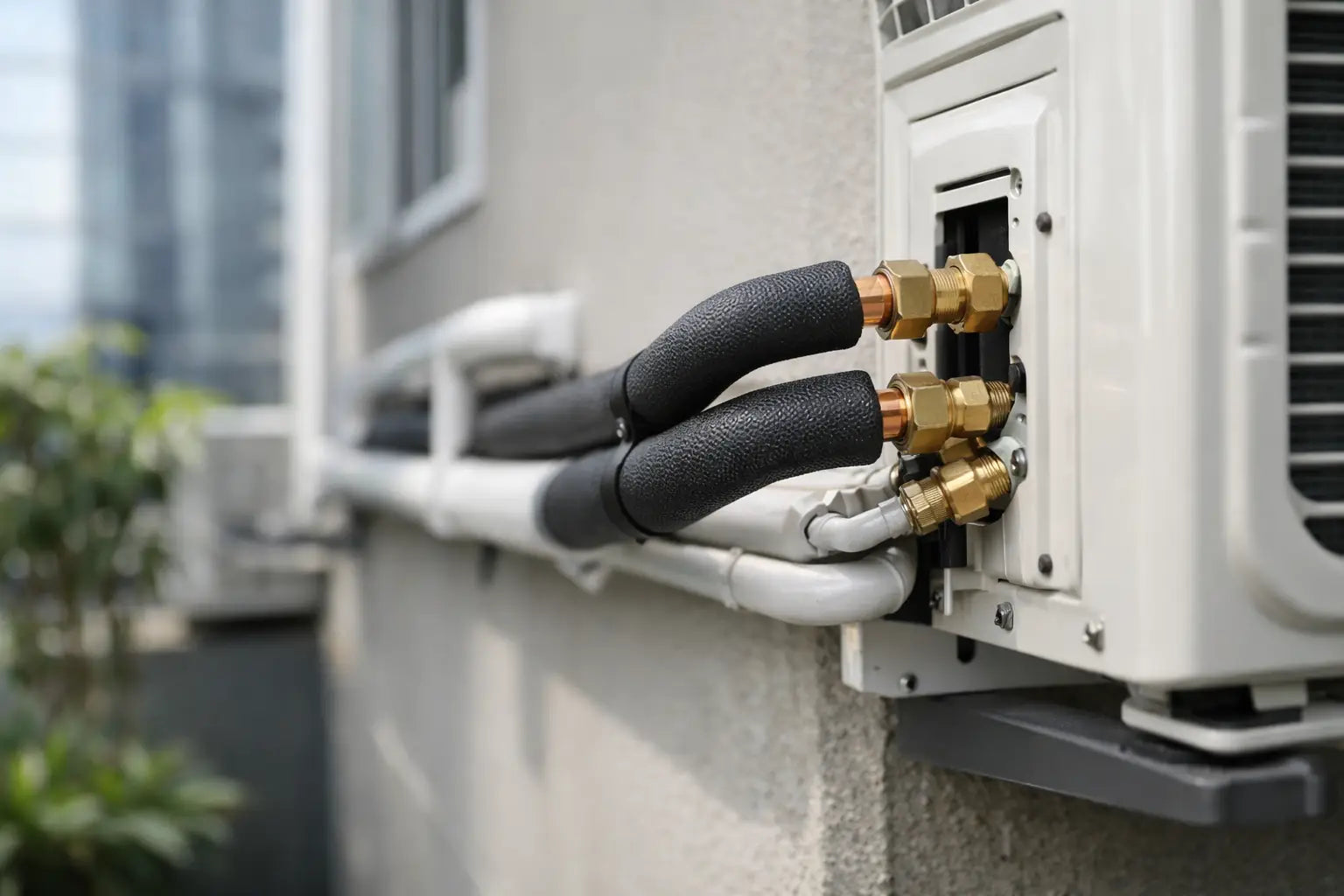
Aircon insulation is the protective foam layer wrapped around refrigerant pipes. These pipes carry refrigerant between the indoor fan coil and outdoor condenser, allowing the system to remove heat from a room. Because the suction pipe becomes very cold during operation, it needs a continuous thermal barrier from end to end.
Good insulation performs three jobs at once. It reduces heat gain into the refrigerant line, helping the system cool efficiently. It prevents humid air from reaching the cold pipe surface, reducing the risk of condensation and water leaks. It also cushions piping against vibration and external damage during normal use.
The visible result may be a neat piping installation. The real value is what you do not see: dry ceilings, protected pipework, stable cooling performance, and fewer avoidable repair calls.
Why Singapore Installations Need Better Insulation
Singapore's humidity makes small installation shortcuts much more noticeable. A tiny gap in insulation, a poorly sealed joint, or a crushed section behind a box-up can become a condensation point. Water may collect slowly before appearing as a stain on a false ceiling or a drip from an aircon trunking route.
This is why the insulation material and installation method should be considered together. Even premium insulation will not perform as intended if it is cut carelessly, stretched too tightly, or left unsealed at joints. Conversely, an experienced team can only do so much with thin, low-grade material that tears easily or loses its shape over time.
For concealed piping in particular, the stakes are higher. Once pipes are hidden above a ceiling, behind a wall, or inside a finished box-up, access becomes more difficult. A repair can involve opening finished surfaces, coordinating reinstatement work, and disrupting a home or business. Spending attention on insulation before those surfaces are closed is practical long-term planning.
The Difference Between Basic and Premium Insulation
Not all closed-cell insulation is the same. Thickness, density, vapor resistance, fire rating, and durability all affect how the material performs over time. A basic material may appear adequate at installation, yet be more likely to compress, split, or allow moisture through as conditions change.
Premium options such as K-FLEX TITAN Class 0 insulation are designed for demanding air-conditioning applications. The Class 0 fire rating provides an added safety consideration, while the closed-cell construction helps resist condensation. Quality insulation should also remain flexible enough to wrap pipe bends properly without tearing or leaving exposed sections.
Thickness matters, but thicker is not automatically better in every situation. The pipe route, available space, system design, and type of installation all need to be considered. What matters most is using a suitable specification and installing it continuously, with careful attention to joints, bends, branch connections, and areas near wall penetrations.
A lower initial quotation may use thinner insulation or leave technical specifications unclear. That does not always mean the installation will fail, but it gives the customer less assurance about long-term protection. When comparing aircon quotations, asking what insulation is included is as sensible as asking which air conditioner brand is being installed.
Where Insulation Problems Usually Start
Condensation issues rarely begin in the middle of a straight, well-protected pipe run. They are more likely to occur at points where workmanship requires extra care. These include joints between insulation lengths, sharp bends, pipe branches, wall openings, and sections compressed inside trunking or behind finishing works.
The connection areas close to the fan coil unit also deserve attention. If the insulation does not meet neatly around fittings, cold surfaces may be exposed to humid air. Taping alone is not a substitute for properly fitted insulation. Tape can support a clean seal, but the insulation itself must be cut and joined accurately.
Another concern is damaged insulation during renovation work. A pipe may be stepped on, squeezed by a ceiling frame, pierced by a screw, or disturbed while electrical and carpentry works are taking place. Coordination matters, especially in BTO renovations, resale flat upgrades, and commercial fit-outs where multiple trades may work in the same area.
Signs Your Existing Insulation May Need Attention
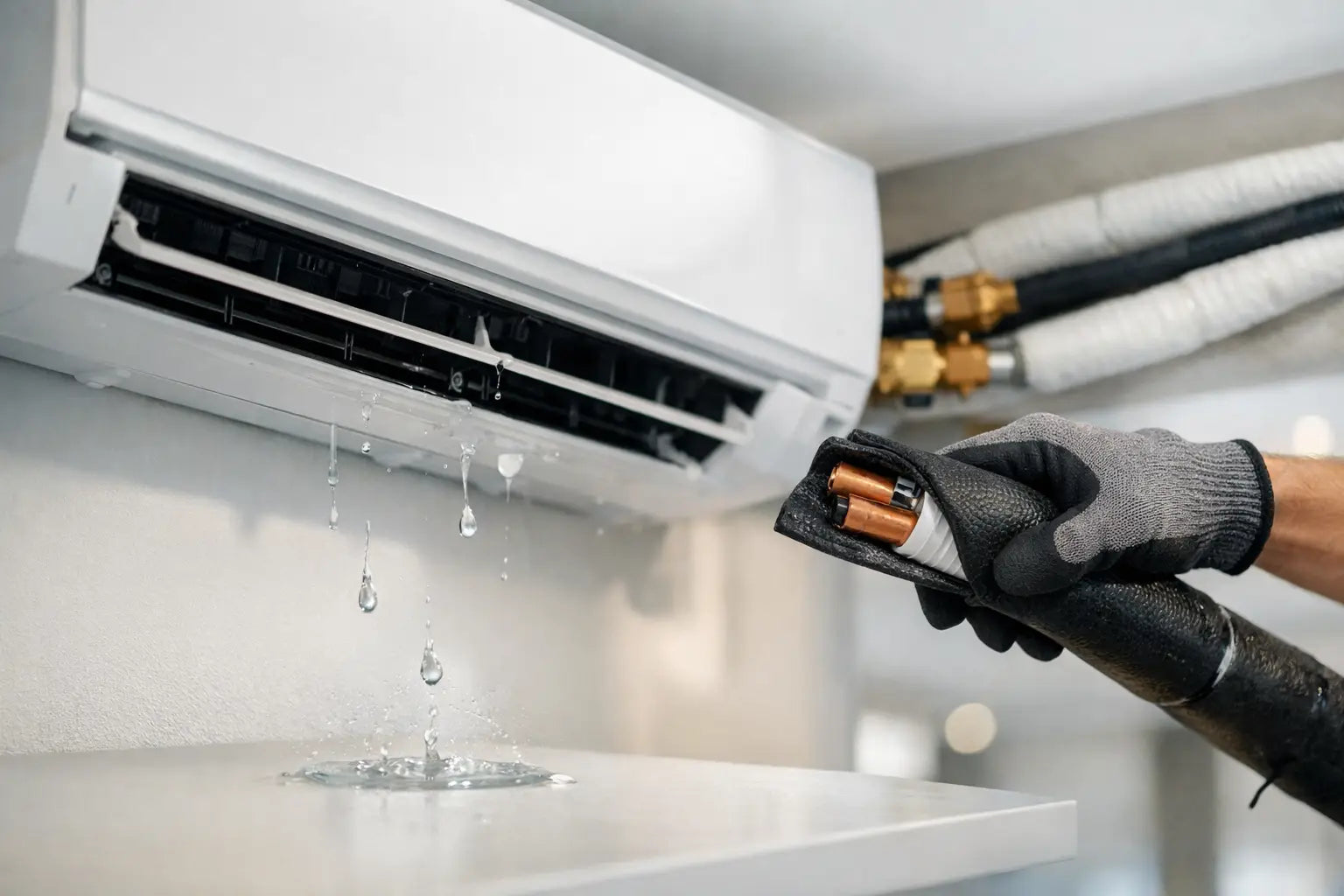
Water dripping from an indoor unit can have several causes, including a clogged drain pipe or dirty fan coil. However, water stains along a piping route, damp trunking, or moisture around a concealed pipe opening can point to an insulation issue. Do not assume every leak comes from the unit itself.
Other signs include recurring condensation on exposed piping, musty smells near a ceiling access panel, peeling paint around aircon pipe routes, or cooling that seems less consistent than before. These symptoms do not confirm the cause on their own. A proper inspection should assess the drainage system, refrigerant piping, insulation condition, unit cleanliness, and installation environment.
If the insulation is visibly cracked, flattened, wet, or deteriorating, replacement may be necessary. The correct repair depends on access. An exposed route may allow localized replacement, while concealed piping may require a more careful assessment to determine whether repair, re-insulation, or partial rerouting is the sensible option.
What to Ask Before Approving an Installation
A professional installer should be able to explain the materials used without vague assurances. Ask what insulation brand and grade will be installed, whether the pipe joints will be sealed, and how the team protects insulation at bends and connections. For a concealed installation, ask when the piping will be tested and inspected before ceilings, walls, or box-up works are completed.
It is also worth confirming the copper pipe specification, electrical cable quality, drainage routing, and trunking finish. Air-conditioning performance is a system outcome. A high-quality unit paired with compromised piping materials or rushed workmanship cannot deliver the reliability most homeowners expect.
For commercial sites, planning should include future access and operational demands. An office, retail shop, restaurant, or industrial space may run air-conditioning for longer hours than a typical residence. Pipe routing, insulation protection, and maintenance access should match that reality rather than simply follow the quickest installation path.
Insulation Is Part of a Proper Installation Standard
Aircon insulation is hidden after installation, which is exactly why customers need a contractor that treats it seriously. The best time to check material quality, workmanship, and pipe routing is before the final trunking cover or ceiling finish is in place.
At Commercestar Engineering, premium installation is built around that principle: use suitable materials, install them carefully, and give customers clarity about what sits behind the finished surface. This includes using upgraded insulation options alongside quality copper piping, properly planned drainage, and neat finishing work.
The goal is not to over-specify every job. A straightforward exposed installation and a fully concealed multi-room renovation have different requirements. The goal is to make informed choices based on the property, the system, and the risks that matter after installation day.
When you review an aircon proposal, look beyond the condenser capacity and promotional package price. Ask about the insulation, because a dry ceiling and dependable cooling often depend on the part of the installation you will never see.