Why Is My Aircon Noisy? Common Causes
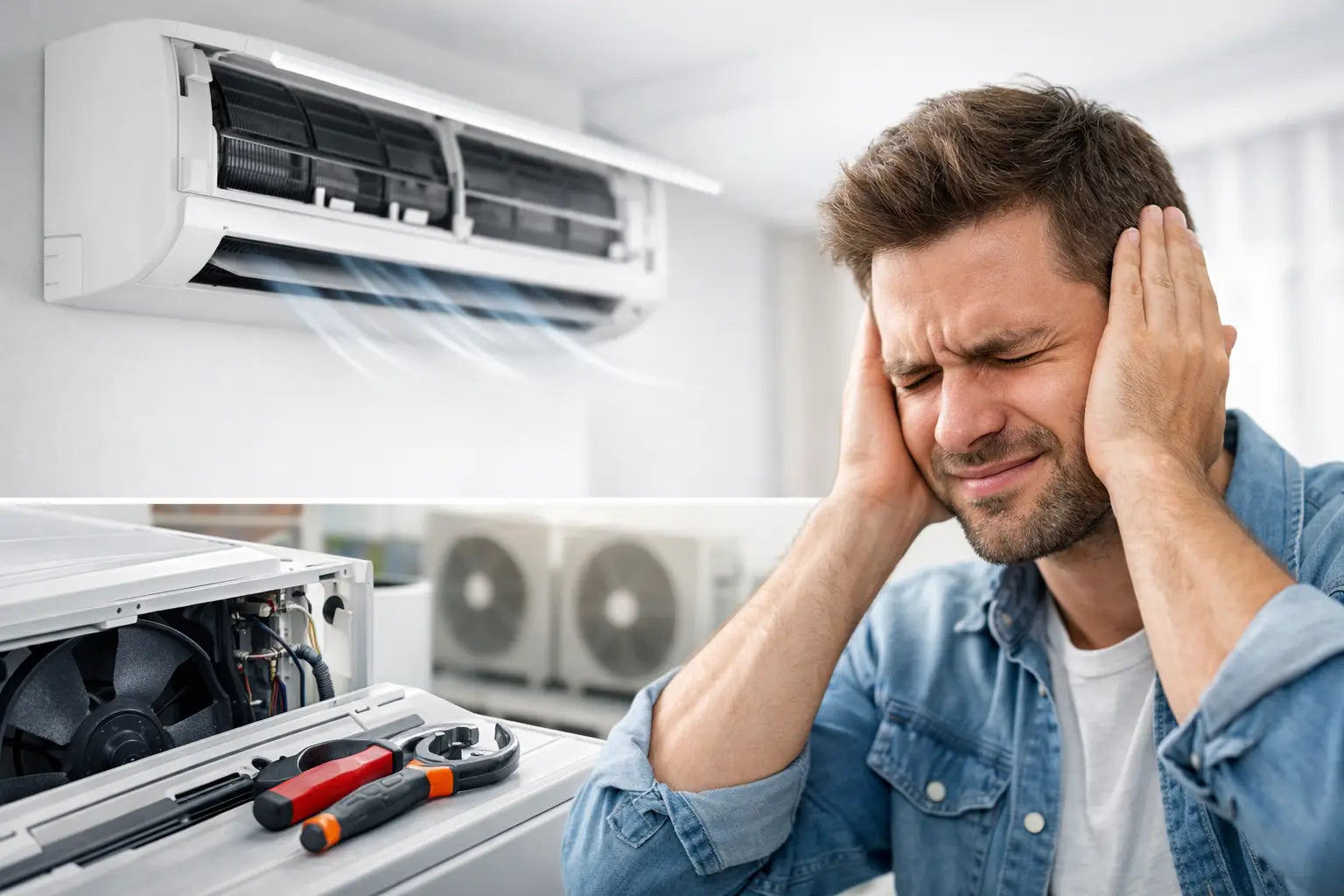
A quiet air conditioner usually fades into the background. When it starts rattling through the night, clicking during startup, or buzzing loud enough to interrupt a call, it gets your attention fast. If you are asking, "why is my aircon noisy," the sound itself is often an early warning that something is loose, worn, dirty, or incorrectly installed.
Some noises are minor and easy to fix. Others point to parts under strain, airflow problems, or workmanship issues that should not be ignored. The key is not just that the unit is making noise, but what kind of noise it is making, when it happens, and whether cooling performance has changed at the same time.
Why is my aircon noisy all of a sudden?
If the noise appeared suddenly, there is usually a specific trigger. Dust buildup, a clogged filter, a loose panel, a failing fan motor, or debris caught in the outdoor condenser can all cause a previously normal unit to become loud. In homes and businesses, this often happens after long periods without servicing, after renovation work, or after a recent installation that was not secured properly.
Sudden noise is different from the low background hum most air conditioners make. Normal operation produces a steady fan sound and a mild compressor hum. What should raise concern is a change in character - sharper sounds, vibration, irregular knocking, repeated clicking, or a buzzing tone that was not there before.
What different aircon noises usually mean
Banging or knocking
A banging sound often suggests a loose or displaced component. This could be a fan blade hitting something, an internal part shifting, or mounting hardware that has loosened over time. In some cases, the issue is inside the outdoor unit, where the compressor or fan assembly is no longer stable.
This is not a sound to leave alone. Continued operation can turn a small fastening issue into damage to the motor, housing, or fan blade.
Buzzing
Buzzing can come from electrical issues, loose parts, dirty condenser coils, or vibration from an uneven installation. If the system still cools but makes a persistent buzz, the problem may be mechanical rather than catastrophic. Even so, electrical buzzing should be checked quickly because it can point to a failing capacitor, contactor, or wiring issue.
For split systems, buzzing can also happen when the outdoor unit is mounted poorly or when brackets and supports transmit vibration into the wall.
Clicking
A single click at startup or shutdown can be normal. Repeated clicking is different. That may indicate a control problem, a thermostat issue, or electrical components struggling to engage properly. If the unit clicks but does not cool, it is more likely a functional fault than a harmless sound.
Rattling
Rattling usually points to something loose. Front covers, screws, panels, drain trays, and fan housings can all rattle. Sometimes the cause is simple. Sometimes the rattle is a sign that vibration has been present for a while and is now worsening.
Poor installation quality can make this more common. If tubing, trunking, brackets, or covers were not secured neatly, the system may develop rattling as it runs.
Hissing or bubbling
A soft refrigerant flow sound may be normal for a moment, but persistent hissing or bubbling deserves attention. This can indicate a refrigerant leak or pressure issue. If cooling has dropped and the sound continues, stop guessing and arrange a proper inspection.
Refrigerant issues are not a DIY job. They need correct diagnosis, leak testing, and proper repair standards.
Squealing or screeching
This often points to a motor or fan problem. Bearings may be worn, or the fan assembly may be struggling due to dirt, misalignment, or age. The longer this continues, the more likely the part will fail entirely.
The most common reasons an aircon becomes noisy
Dirty filters and blocked airflow
Restricted airflow makes the system work harder. A dirty filter can cause whistling, strain on the fan, and uneven operation that creates extra noise. This is one of the most common and most preventable causes.
If your indoor unit sounds louder than usual and airflow feels weak, check the filter first. In homes with pets, heavy use, or dusty surroundings, filters clog faster than many owners expect.
Fan problems
Indoor blower fans and outdoor condenser fans can both create noise when dirty, bent, or loose. A fan blade that is slightly out of balance may start as a faint wobble and turn into a noticeable vibration. If debris enters the outdoor unit, the fan can also strike it while spinning.
Loose panels, covers, or mounting parts
Air conditioners rely on secure installation and stable support. Even a well-performing system can become noisy if a front panel is not seated properly or if bracket hardware loosens. In apartments and commercial spaces, this is especially noticeable when vibration transfers into walls, ceilings, or partitions.
Refrigerant or pressure issues
Leaks, incorrect gas charge, or pressure imbalances can create unusual operating sounds. These problems also affect cooling efficiency and compressor health. If your unit is noisy and not cooling the way it used to, refrigerant should be on the shortlist of possible causes.
Worn motor or compressor components
Older systems naturally develop wear. Motors, bearings, and compressors become louder as tolerances change and parts age. The trade-off is simple: you may be able to keep the unit running with repairs, but if the system is old and increasingly noisy, replacement can sometimes offer better long-term value than repeated fixes.
Poor installation workmanship
This is the cause many owners overlook. If piping is poorly routed, the unit is not level, supports are weak, insulation is substandard, or components were not properly fastened, noise problems can show up much earlier than expected. A premium aircon system can still perform poorly if the installation standards are weak.
That is why material quality and installation method matter. Correct pipe support, proper insulation, solid brackets, clean routing, and neat finishing all help reduce vibration, strain, and long-term noise issues.
What you can check before calling for service
Start with the basics. Clean or inspect the air filter, make sure the front cover is fitted correctly, and look for any visible debris around the outdoor unit. If the noise is a light rattle, see whether anything external is vibrating against the casing.
You should also notice the pattern. Does the sound happen only during startup, only when the compressor kicks in, or throughout operation? Is cooling still strong, or has performance dropped? These details help narrow down the likely cause.
What you should not do is open sealed components, handle electrical parts, or top up refrigerant based on guesswork. That creates more risk, not less.
When noisy aircon means you should stop using it
Some sounds mean the unit should be switched off and inspected promptly. Loud banging, persistent electrical buzzing, burning smells, hissing paired with poor cooling, or screeching from the motor area should not be ignored. Continuing to run the system can increase repair costs and, in some cases, create a safety issue.
For businesses, this matters even more. A noisy unit in an office, retail space, or F&B environment affects comfort, customer experience, and staff concentration. Waiting too long often turns a manageable service call into an urgent breakdown.
How proper servicing helps prevent noise problems
Routine servicing is not just about cleaning for better cooling. It helps catch loosened parts, drainage issues, fan wear, dirty coils, and early electrical faults before they become loud or expensive. A technician can also check whether the noise is coming from the indoor unit, outdoor condenser, refrigerant line, or installation supports.
For systems that have already had repeated issues, a more detailed inspection may be needed. That includes checking mounting stability, pipe insulation quality, drainage slope, and overall installation condition. At Commercestar Engineering, this is where workmanship matters - not just getting the unit running again, but identifying whether the root problem comes from wear, maintenance gaps, or installation quality.
Why is my aircon noisy after installation?
A newly installed system should not sound rough, unstable, or excessively loud. If it does, possible causes include loose panels, poor bracket alignment, piping vibration, improper leveling, or contact between components that should have been isolated. Sometimes the unit itself is fine, but the installation setup is transmitting sound into the wall or ceiling.
This is where better materials and better execution make a real difference. Good insulation, proper pipe support, secure mounting, and careful finishing are not cosmetic details. They contribute directly to stable, quieter performance over time.
If your aircon has become noisy, do not focus only on the sound. Treat it as a signal. The earlier you identify whether it is dirt, wear, refrigerant loss, or installation-related vibration, the easier it is to protect both comfort and repair budget.