Aircon Troubleshooting Guide for Common Issues
When your air conditioner starts blowing warm air at 11 p.m. or drips water onto the floor just before guests arrive, you do not need guesswork. You need an aircon troubleshooting guide that helps you separate simple fixes from real technical faults - quickly, safely, and without making the problem worse.
In homes and businesses alike, most aircon complaints start the same way. Cooling gets weaker. The unit sounds different. Water appears where it should not. Then comes the usual question: is this a minor maintenance issue, or a repair problem that needs a technician? The answer depends on what the system is telling you.
Aircon troubleshooting guide: start with the symptom
A good troubleshooting process begins with what you can see, hear, and feel. If the system powers on but does not cool properly, the issue is often different from a system that will not start at all. If there is water leakage, that points you in another direction. And if the unit is noisy, the source matters - rattling, buzzing, clicking, and hissing each suggest different causes.
Before checking anything, switch off the unit if there is a burning smell, repeated tripping, or obvious electrical instability. Those are not DIY situations. They need professional attention.
If the aircon is running but not cold
Weak cooling is one of the most common complaints, and it does not always mean the unit is spoiled. Start with the thermostat or remote settings. It sounds basic, but units are often left on fan mode instead of cool mode, or the set temperature is too high to trigger meaningful cooling.
Next, check the air filter. A clogged filter restricts airflow, which reduces cooling performance and puts strain on the system. In many homes, this happens gradually enough that occupants only notice it when the room takes much longer to cool than usual. If the filter is washable, clean and dry it fully before reinstalling.
Then consider whether the room load has changed. Midday sun, cooking heat, a crowded room, or doors opening constantly can make a properly functioning system feel underpowered. This is especially relevant in commercial spaces and open-plan layouts where usage patterns shift throughout the day.
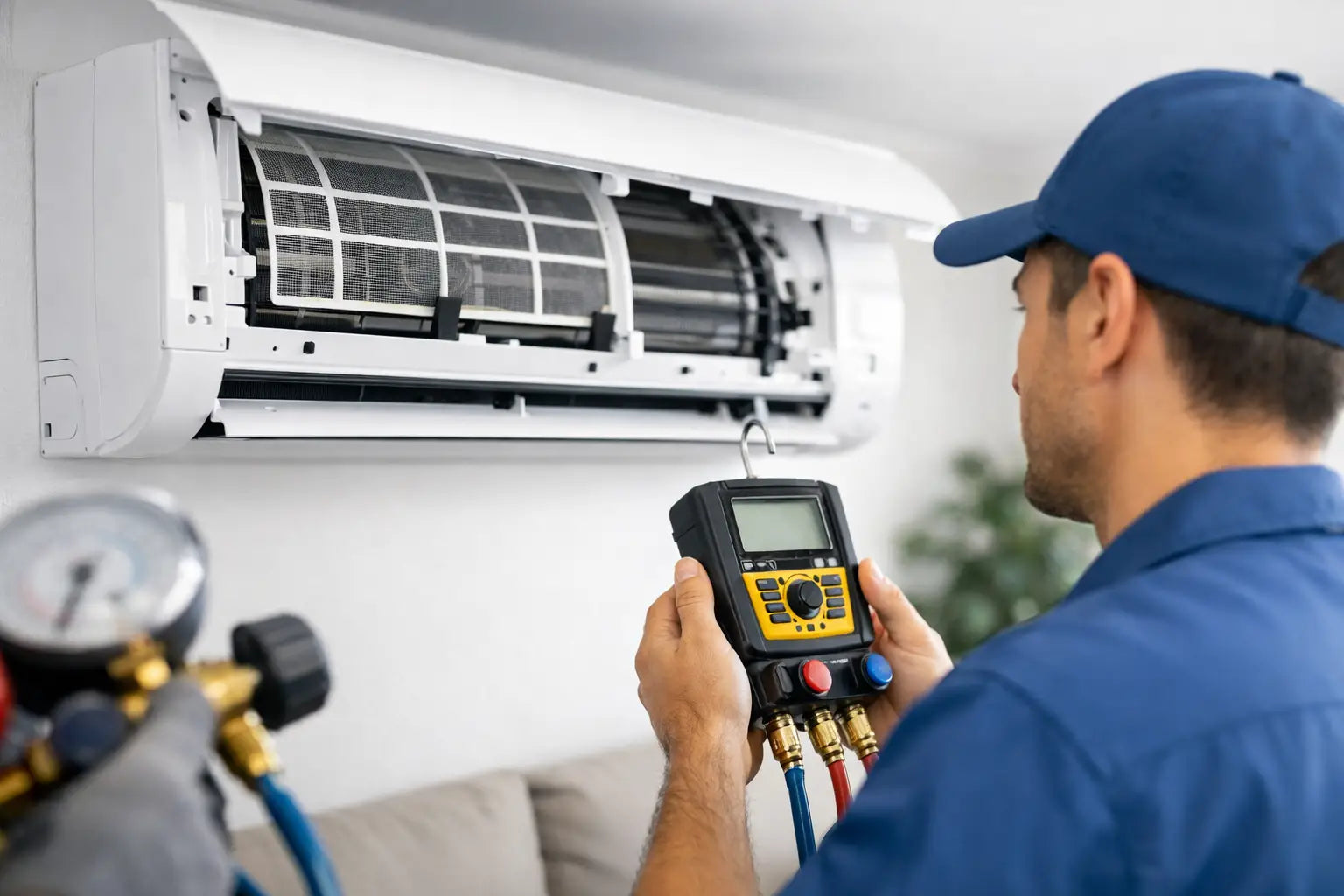
If cooling remains weak after basic checks, the likely causes move into technical territory. Low refrigerant, dirty coils, sensor faults, or compressor-related issues can all affect performance. That is where proper diagnosis matters. Topping up gas without finding the leak, for example, is not a real fix. It only delays the next breakdown.
If the aircon will not turn on
When the unit does not respond at all, begin with the power supply. Check whether the breaker has tripped or if the isolator switch is off. If there was a recent power interruption, the system may also need a few minutes before restarting.
Remote control issues are another common culprit. Weak batteries, poor signal contact, or a damaged display can make a working unit appear dead. Try fresh batteries and a direct line of sight to the indoor unit.
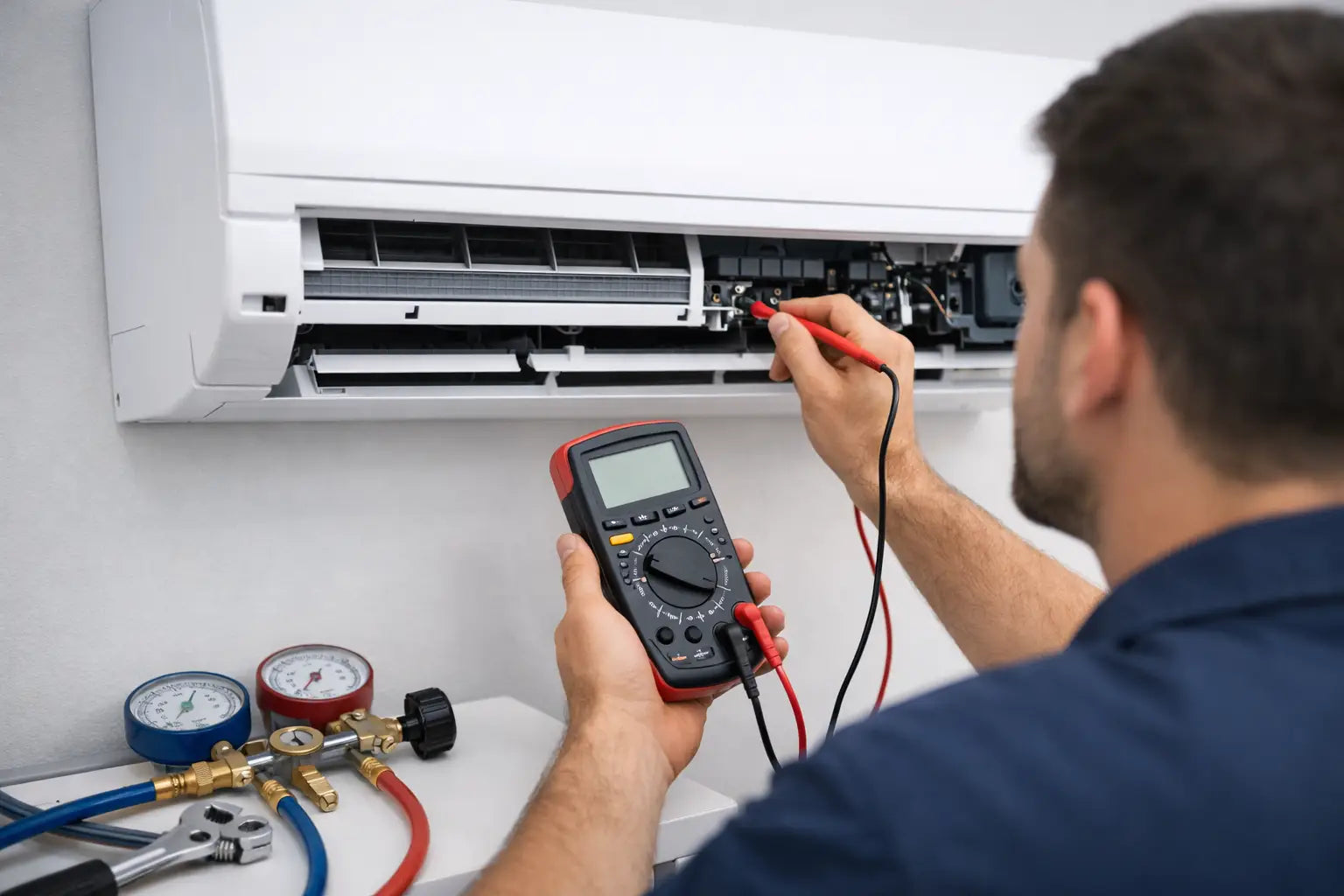
If power is present but the unit still does not start, the problem may involve the control board, capacitor, wiring, or internal safety protection. These are not parts to test casually. Electrical faults can escalate if handled incorrectly.
What water leakage usually means
Water leaking from an indoor unit is frustrating because it looks dramatic, but the cause is not always severe. In many cases, the drainage system is blocked. Dust, biofilm, and debris can build up in the drain line over time, causing condensate to back up and overflow.
A dirty evaporator coil can contribute as well. When airflow is restricted, the coil can get too cold, ice up, and later thaw into excess water. Poor installation angle is another possibility. If the unit is not properly leveled for drainage, water may collect and spill even if the rest of the system is functioning.
There is a trade-off here. Some leakage issues are maintenance-related and fairly straightforward. Others point to installation quality or long-term neglect. If leaking happens repeatedly, especially after prior servicing, it is worth looking beyond quick cleaning and checking whether the drainage routing, insulation, or piping setup was done properly in the first place.
If the aircon is noisy
Air conditioners are never completely silent, but changes in sound matter. A light airflow hum is normal. Sudden rattling is not.
Rattling can mean a loose panel, bracket, or internal component. Buzzing may indicate electrical issues or debris around the outdoor unit. Clicking at startup and shutdown can be normal, but repeated clicking without operation may suggest a control fault. Hissing sometimes points to refrigerant leakage, although airflow over components can create similar sounds.
The important thing is to notice patterns. Does the sound happen only during startup? Only when strong cooling is selected? Only from the indoor unit or also outside? These details help narrow the cause and reduce wasted time during diagnosis.
Aircon troubleshooting guide for bad smells
Odor complaints are common, especially in humid climates and high-use spaces. A musty smell often comes from mold or bacterial buildup on the coil, filter, or drain pan. This is especially likely if the unit has not been cleaned thoroughly for some time.
A burnt smell is different and should be treated seriously. It may signal overheating insulation, motor issues, or wiring problems. Turn the unit off and arrange inspection.
If the smell resembles sewage or stale drainage, the source may not be the aircon alone. Nearby plumbing or trapped moisture around concealed areas can affect the air moving through the room. That is why odor diagnosis sometimes needs a broader site check rather than just chemical cleaning.
When icing is the real problem
If you see ice on the indoor coil or refrigerant pipe, do not ignore it. Ice is a symptom, not the core fault. Restricted airflow from dirty filters or blower problems can cause it. So can low refrigerant charge from a leak.
Some owners switch the unit off, let the ice melt, and find that cooling returns briefly. That does not mean the issue is solved. It usually means the same operating condition is still there and will freeze up again. Proper testing is needed to find out whether airflow, refrigerant pressure, or component performance is at fault.
What you can check safely before calling for service
A sensible aircon troubleshooting guide should save you from unnecessary callouts without encouraging risky DIY work. Safe checks include confirming the mode and temperature settings, cleaning accessible filters, making sure vents are not blocked, checking for obvious drainage overflow, and noting whether the outdoor unit is running.
You can also pay attention to timing. Did the issue start after a storm, a recent cleaning, renovation dust, or unusually heavy usage? Context helps. So does consistency. If one room is affected but others are fine, the fault is often localized. If a multi-split system has several indoor units underperforming, the diagnosis may involve shared outdoor components or refrigerant conditions.
What you should not do is open electrical covers, handle refrigerant, dismantle major components, or keep resetting a tripping breaker. Those are not shortcuts. They are ways to turn a manageable repair into a larger one.
Why recurring aircon problems usually point to maintenance or installation quality
One-off faults happen. Repeated faults usually tell a bigger story. If a system needs frequent gas top-ups, leaks water every few months, or struggles to cool despite being relatively new, the issue may be deeper than normal wear.
This is where workmanship matters. Correct pipe sizing, proper insulation, sound drainage layout, secure electrical connections, and careful commissioning all affect long-term performance. Better materials also make a difference over time, especially in demanding climates where poor insulation or thin copper can lead to avoidable failures.
For property owners, that means the cheapest installation is not always the lowest-cost decision. A lower upfront price can lead to repeat servicing, repair downtime, tenant complaints, or comfort issues that drag on for years. Good troubleshooting should not just solve the symptom today. It should identify why the issue developed in the first place.
When to call a professional technician
Call for professional help if the system is leaking repeatedly, not cooling after filter cleaning, making unusual electrical or refrigerant-related sounds, tripping power, freezing up, or showing signs of poor installation performance. Commercial sites should act even faster because cooling issues affect operations, customer comfort, and equipment reliability.
A good technician does more than patch the visible problem. They check operating conditions, airflow, drainage, electrical integrity, and whether earlier work was done to standard. That is the difference between a temporary fix and a repair you can rely on.
At Commercestar Engineering, that standard matters because air-conditioning should not be treated as a basic box on the wall. It is a system, and systems perform best when installation quality, servicing discipline, and troubleshooting are handled with care.
If your aircon is acting up, the smartest move is often simple: pay attention to the symptom, rule out the easy fixes, and do not wait too long when the signs point to a bigger fault.