10 Best Aircon Maintenance Tips That Work
Your air conditioner usually gives warning signs before it fails. Cooling gets weaker. The unit runs longer than usual. Water starts dripping where it should not. The best aircon maintenance tips are not complicated, but applying them consistently can save you from expensive repairs, uneven cooling, and unnecessary energy waste.
In Singapore-style living and working environments where air conditioning runs hard for long hours, maintenance is less about convenience and more about protecting system performance. Whether you manage a home unit in a condo, cool a family living room in an HDB, or rely on multiple systems in a shop or office, small maintenance habits make a measurable difference over time.
Why the best aircon maintenance tips matter
Most aircon problems do not begin with a major part failure. They start with buildup, neglect, or installation weaknesses that slowly reduce performance. A dirty filter restricts airflow. A clogged drain line leads to water leaks. Loose electrical connections create inconsistent operation. If these issues are left alone, the system has to work harder, power bills rise, and wear on key components increases.
This is also where many owners misread the situation. When an aircon stops feeling cold, the first assumption is often that it needs gas top-up. Sometimes that is true, but not always. Low cooling can also come from dirty coils, blocked airflow, thermostat issues, or drainage-related problems. Good maintenance helps identify the real cause early instead of paying for temporary fixes.
Start with the filter before anything else
If there is one maintenance habit that delivers immediate results, it is filter cleaning. A dirty filter chokes airflow, reduces cooling efficiency, and makes the fan motor work harder. In homes with pets, frequent cooking, renovation dust, or heavy daily usage, filters can get dirty much faster than expected.
For most residential units, checking the filter every two to four weeks is a sensible routine. If it looks visibly dusty, clean it. If it is damaged or too worn to clean properly, replace it if your system allows for replacement. This is simple work, but it should still be done carefully. A cracked panel or improperly fitted filter can create new issues.
Commercial settings often need even closer attention. Offices, retail units, and food businesses usually operate longer hours and may deal with more dust, grease, or foot traffic. In those cases, waiting until performance drops is too late.
Keep the indoor unit clean, but know the limit
Wiping the casing and keeping the air intake area free from dust is helpful, but surface cleaning is not the same as proper servicing. Dirt also builds up on the evaporator coil, blower wheel, and drainage components inside the fan coil unit. That hidden buildup affects airflow and can cause odor, leaking, and poor cooling.
This is where many DIY efforts fall short. Homeowners can handle basic exterior care and filter cleaning, but once dirt has settled deep into internal components, professional cleaning is the safer option. Overhandling delicate fins, sensors, or plastic clips can lead to accidental damage. Good maintenance is not about doing everything yourself. It is about knowing what should be routine owner care and what needs trained hands.
Do not ignore water leaks or musty smells
A leaking indoor unit is never normal. The most common causes include a clogged drain pipe, algae or sludge buildup in the drainage tray, poor installation angle, or frozen coils caused by airflow restriction. Some leaks are minor at first, but they rarely stay that way.
Musty smells also deserve attention. In many cases, the issue is microbial buildup inside the unit, especially when the system is used heavily and the indoor environment stays humid. Running the unit harder will not fix that. Proper cleaning and drainage maintenance usually will.
If the smell is sharp, burnt, or chemical-like, stop using the unit and get it checked. That points to a different class of problem and should not be brushed aside as normal aircon odor.
Protect airflow around both indoor and outdoor units
One of the best aircon maintenance tips that gets overlooked is simply preserving airflow around the system. Indoor units should not be blocked by tall furniture, packed shelving, or curtains that interfere with air distribution. If the cooled air cannot circulate well, the room feels unevenly cooled and the unit keeps running longer to compensate.
Outdoor condenser units need breathing space too. When the condenser is surrounded by clutter, heat cannot dissipate efficiently. That drives up operating strain and can shorten component life. Leaves, dirt, and debris should be cleared away regularly. In commercial properties, this matters even more because condenser access areas often become storage zones over time.
Watch your energy bill for hidden maintenance clues
A gradual rise in your electricity bill often points to declining efficiency before obvious breakdown symptoms appear. If usage habits have not changed but costs keep creeping upward, your aircon may be losing performance due to dirt buildup, weak airflow, refrigerant issues, or aging components.
This is why maintenance should be tied to results, not just calendar dates. A unit that runs every night in a bedroom has different wear patterns from one cooling a living room all day. A retail unit serving customers from morning to night will have very different maintenance demands from a lightly used study room system. Good servicing plans take real usage into account.
Schedule professional servicing before the system forces the issue
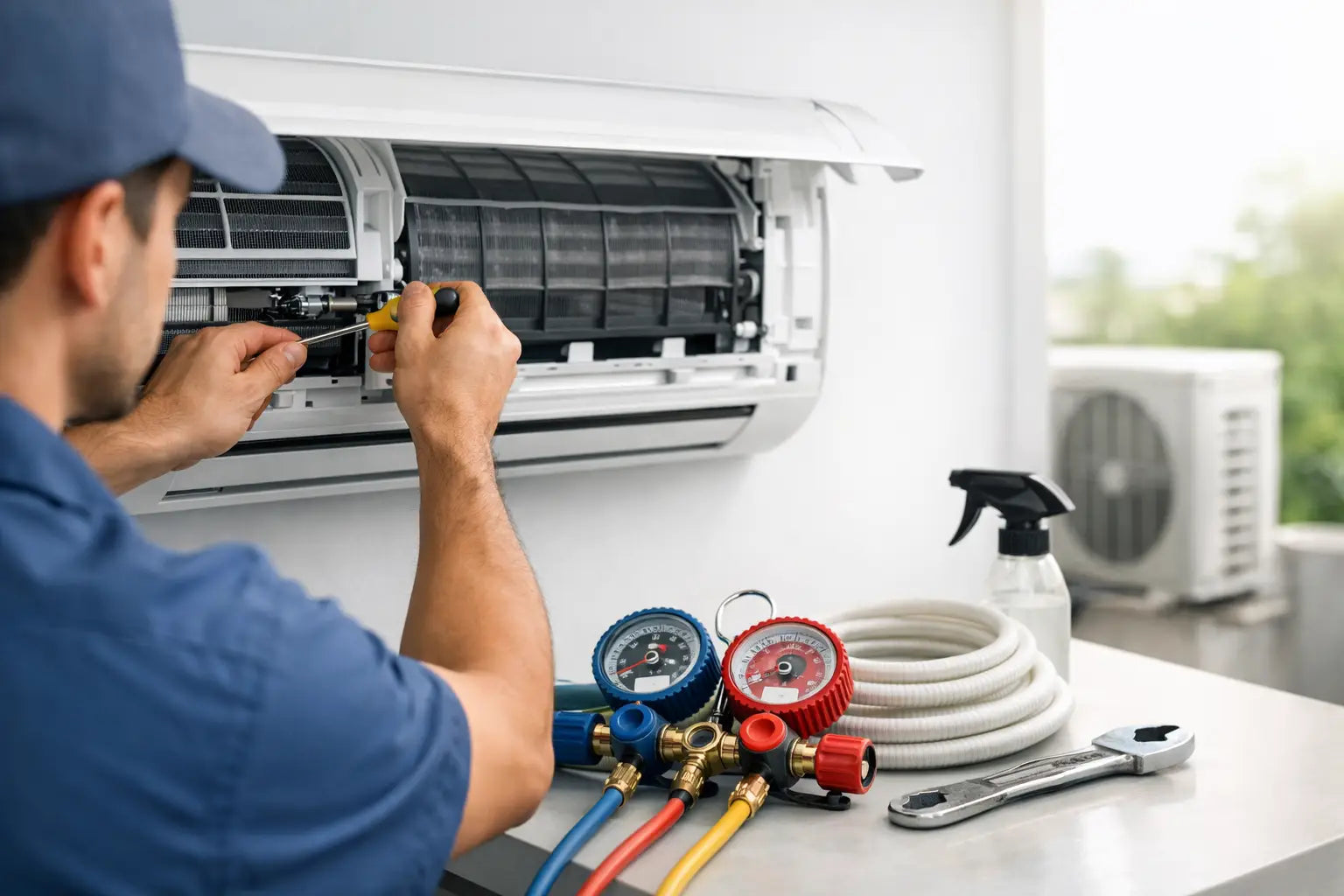
Routine professional maintenance is where long-term system value is protected. A proper service visit should go beyond a quick wash. It should include checking filters, coils, drainage, electrical connections, operating pressure where relevant, and overall cooling performance.
How often should servicing be done? It depends on usage. Light residential use may need less frequent servicing than a heavily used family home, while offices, shops, and food businesses generally need a more structured schedule. The right interval is not about picking the cheapest plan. It is about preventing downtime and preserving system health.
For systems that are older, heavily used, or showing recurring problems, deeper cleaning may be required. Chemical cleaning can help in certain cases, but it is not something every unit needs on a routine basis. Used unnecessarily, it adds cost without solving the root issue. Used at the right time, it can restore performance meaningfully. That is why honest diagnosis matters.
Pay attention to installation quality, not just maintenance
Some recurring aircon issues are maintenance-related. Others start on day one with poor installation. Weak insulation, undersized or low-grade piping, bad drainage routing, loose trunking work, and poor system commissioning can all create long-term problems that no amount of routine cleaning will fully correct.
This is especially relevant when customers compare aircon packages based only on upfront price. A cheaper install can become an expensive ownership experience if workmanship is poor. Proper materials and correct installation practices affect cooling stability, condensation control, and service life. Maintenance works best when it is supporting a system that was installed correctly in the first place.
That is why many customers now look beyond unit brand alone and ask harder questions about piping grade, insulation standards, cable quality, and whether the installation team is managed properly. It is a practical mindset, not an upsell mindset.
Use your thermostat and operating habits wisely
Aircon maintenance is not only physical servicing. Daily usage habits also affect wear. Setting the temperature extremely low does not cool the room instantly. It just makes the system run longer. A moderate, consistent setting is usually better for comfort and efficiency.
If your unit has fan, dry, or timer functions, use them with purpose. Dry mode can help in humid conditions, but it is not always the best choice for every room. Timers can reduce unnecessary overnight runtime. Some homes benefit from turning the unit off earlier and using the fan mode briefly to reduce moisture. It depends on the room, the occupancy pattern, and the system type.
Know when repair is smarter than repeated servicing
Maintenance is essential, but it is not a cure-all. If a unit keeps leaking, loses cooling repeatedly, trips power, or needs frequent gas top-ups, there may be a deeper issue such as a refrigerant leak, electrical fault, failing motor, or damaged board. In these cases, repeated cleaning alone is not the answer.
A reliable aircon partner should tell you when servicing is enough and when repair or part replacement is the more sensible route. Transparency matters here. Customers do not just want the lowest immediate bill. They want to avoid paying again and again for the same unresolved problem.
For homeowners and businesses who value long-term reliability, that distinction is critical. A workmanship-focused company like Commercestar Engineering understands that maintenance should support dependable performance, not mask underlying defects for one more month.
The best aircon maintenance tips are the ones you can sustain
The most effective maintenance routine is usually not complicated. Clean the filter regularly, watch for leaks and odors, keep airflow clear, and service the system on a schedule that matches actual usage. Then pair that routine with proper diagnosis when something feels off.
Air conditioning should feel consistent, quiet, and predictable. When it does, you barely think about it. That is usually the clearest sign the system is being cared for properly.