Commercial Aircon Replacement Guide for Businesses
A failed air-conditioning system rarely arrives at a convenient time. It shows up during a packed lunch service, an important client meeting, or the hottest part of the afternoon when staff and customers are least willing to tolerate discomfort. This commercial aircon replacement guide helps business operators make a planned decision before repeated breakdowns turn into lost revenue, unhappy occupants, and rushed installation work.
For offices, retail stores, restaurants, and industrial spaces, replacing commercial air conditioning is not simply a matter of buying a new unit. The right outcome depends on correct cooling capacity, piping condition, electrical readiness, installation quality, and a realistic plan to keep the business operating during the changeover.
When Commercial Aircon Replacement Is the Better Choice
Repair remains sensible when a system is relatively new, the fault is isolated, and its cooling performance is otherwise stable. A worn capacitor, drainage issue, faulty sensor, or damaged fan component does not automatically justify a full replacement.
The calculation changes when repair calls become frequent or expensive. If the system struggles to hold temperature, leaks refrigerant repeatedly, makes excessive noise, trips power, or requires parts that are difficult to source, continuing to repair it may only delay a larger expense. Older systems can also consume more electricity while delivering less consistent cooling.
Look beyond the cost of the latest repair. Consider how much downtime has affected staff productivity, customer comfort, stock quality, equipment, or food preparation. For an F&B operation, poor cooling may affect the entire dining experience. For a server room or medical space, temperature instability can become an operational risk rather than an inconvenience.
A site assessment should establish whether the existing system has enough life left to justify repair. It should also identify whether poor cooling comes from the equipment itself or from installation-related problems such as undersized piping, degraded insulation, poor drainage slope, restricted airflow, or an overloaded electrical circuit.
Start With the Building, Not the Aircon Brand
A commercial replacement should be planned around how the space is actually used. Two offices with the same floor area may need very different systems if one has west-facing glass, high occupant density, computers running all day, or frequent door traffic. A retail shop with strong display lighting and an open entrance faces a different heat load from a private clinic with enclosed consultation rooms.
The first step is a proper cooling-load review. This considers floor area, ceiling height, heat from people and equipment, sunlight exposure, room layout, fresh-air requirements, operating hours, and the heat generated by kitchens or machinery. Choosing a larger unit without this review is not always safer. An oversized system can cycle on and off too often, reduce humidity control, and waste energy. An undersized system runs continuously and still leaves hot zones.
System design matters just as much. A single-split arrangement may suit a smaller independent space, while multi-split, VRF, or ducted solutions can make more sense for larger premises with several zones. The best choice depends on the number of rooms, the need for individual temperature control, available outdoor-unit space, and future expansion plans.
It is also worth checking whether the existing layout still serves the business. A renovated office, expanded dining area, new partition wall, or relocated cashier counter can change airflow patterns completely. Replacing like for like may be convenient, but it can preserve the same comfort problems that caused complaints in the first place.
Plan for Maintenance Access
Commercial units should be positioned for service, not only for appearance. Technicians need safe access to filters, drain lines, electrical components, fan coils, and outdoor condensers. A concealed unit installed without access panels may look neat on opening day, but routine maintenance becomes slower, more disruptive, and more costly.
Outdoor units also need adequate ventilation and clearance. Crowded condenser areas trap heat and reduce efficiency. Before replacement, confirm that the equipment location can support the new system's size, weight, airflow, and service requirements.
Inspect Piping, Wiring, and Drainage Before Reusing Them
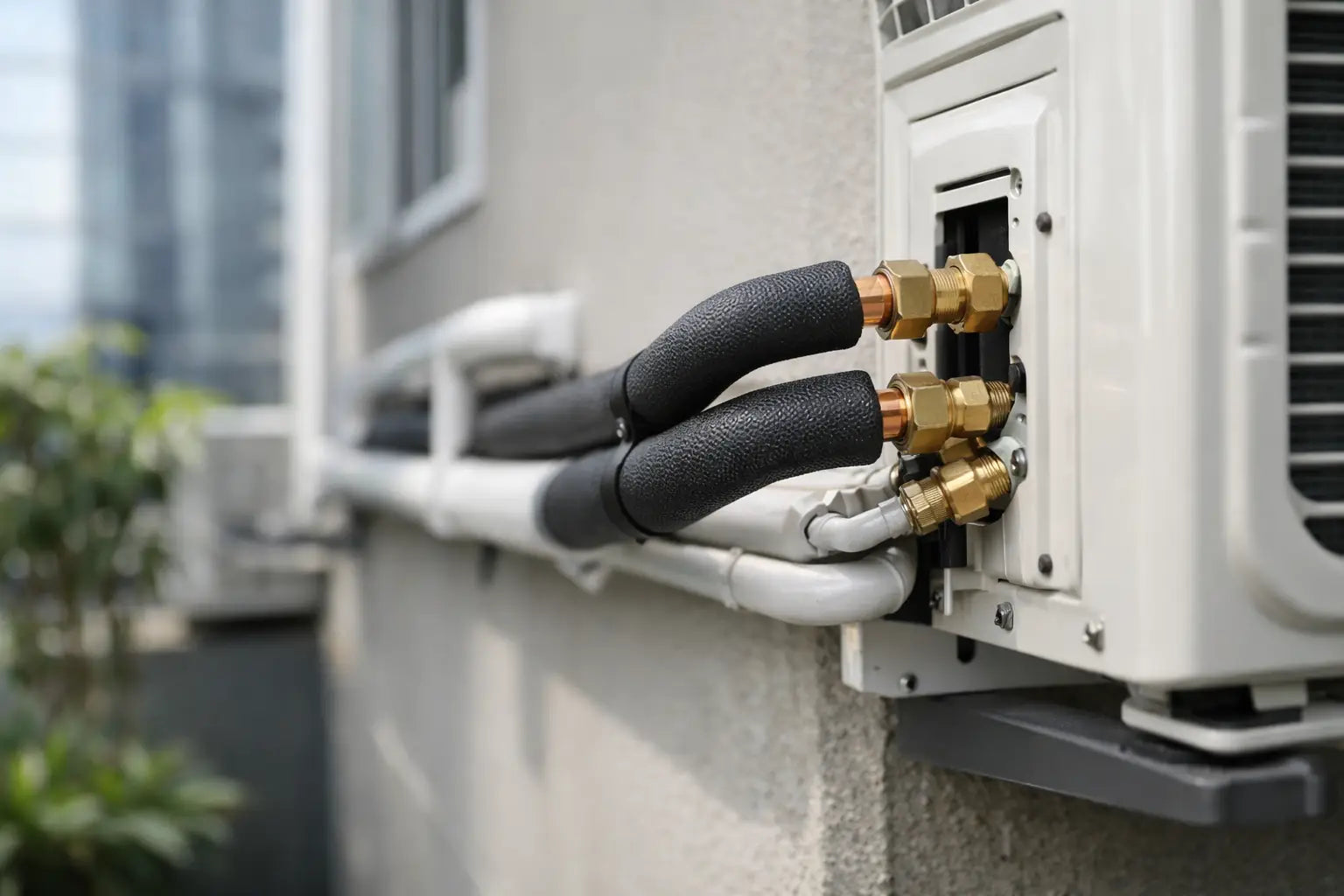
Reusing existing pipework can reduce disruption and installation cost, but only if the materials are genuinely suitable. It should never be treated as an automatic shortcut. Old copper piping may have corrosion, contamination, poor brazed joints, incorrect sizing, or insulation that has hardened and deteriorated over time.
A professional installer should inspect the full route, pressure-test where appropriate, and verify compatibility with the selected system. If replacement is needed, this is the time to improve the installation rather than conceal a weak point behind a new unit.
For long-term performance, pay attention to the quality of the materials specified. Thicker copper piping provides better durability during installation and service work. High-grade closed-cell insulation helps reduce condensation and energy loss, especially where piping passes through warm ceiling voids or exposed areas. Proper cable sizing, protected trunking, and neat finishing are equally important for safety and appearance.
Drainage deserves the same level of attention. Water leaks can damage ceilings, walls, inventory, and electrical fittings. The drain route needs correct slope, secure connections, suitable insulation where required, and a discharge point that will not create a nuisance for neighboring tenants or customers. In some spaces, a drain pump may be necessary, but it should be selected and installed with future servicing in mind.
Build a Changeover Plan Around Business Hours
Commercial replacement work should be coordinated with the business, not treated as a standard residential appointment. Discuss delivery access, building management rules, freight elevator bookings, noise restrictions, work permits, and disposal arrangements before installation day.
For customer-facing businesses, it may be possible to replace systems after hours, in stages, or during lower-traffic periods. A large office may keep unaffected zones operating while work is completed floor by floor. Restaurants and retail stores may require careful dust protection and a clear plan for moving furniture, stock, or equipment.
A good contractor will explain what must be shut down, which areas will be temporarily unavailable, and how long commissioning will take. Ask whether the quoted scope includes removal of old equipment, patching or finishing around pipe routes, testing of drainage, electrical checks, and cleanup. Transparent scope prevents surprise charges and avoids the awkward situation where a new system is installed but unfinished works remain visible.
Compare Proposals on More Than Equipment Price
A low equipment price can look attractive until essential work is added later. When comparing commercial quotations, check the complete installation scope, not just the model number and cooling capacity.
A detailed proposal should state the number and type of indoor and outdoor units, piping lengths included, insulation specification, cable work, drainage provisions, trunking or box-up requirements, electrical upgrades, lifting or access charges, removal of old units, and warranty terms. If any item is provisional, ask what could change the final price.
It is also useful to ask who will perform the installation. A managed in-house team provides clearer accountability for workmanship, scheduling, and post-installation support than a loosely coordinated chain of subcontractors. For businesses, that accountability matters when a problem needs attention quickly.
Commercestar Engineering approaches commercial replacement with this focus on workmanship: suitable system planning, premium installation materials, neat execution, and a service structure that supports the system after handover. The goal is not merely to restore cold air, but to install a setup that can perform reliably under daily business demands.
Commission the System Properly Before Sign-Off
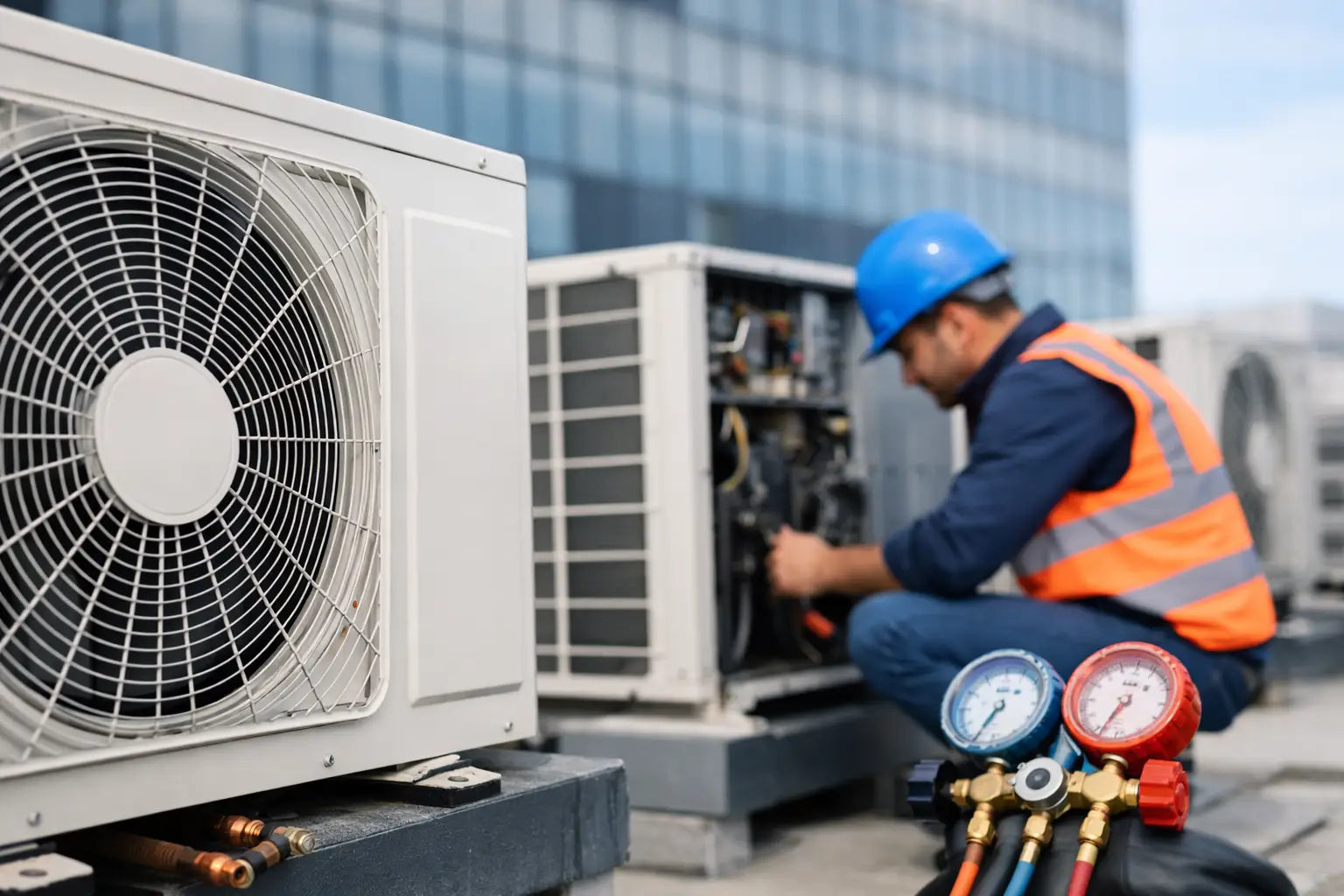
Installation is not complete when the units first turn on. Commissioning verifies that the system is operating as designed. This includes checking cooling performance, refrigerant pressures, electrical readings, condensate drainage, airflow, thermostat response, and communication between indoor and outdoor units.
Walk through every zone with the installer before sign-off. Confirm that air is reaching the intended areas, drains are flowing correctly, controls are understood, and outdoor units are free from unusual vibration or noise. If there are areas with uneven cooling, raise them immediately while the site team and equipment are still in place.
Keep records of model numbers, warranty details, installation dates, and maintenance recommendations. These details help when planning service visits, ordering parts, managing leases, or handing the premises over to a new operator.
Protect the New Investment With Planned Maintenance
Commercial air conditioning works hard in Singapore's heat and humidity. Filters collect dust, drain pans develop buildup, coils lose efficiency, and minor faults can become larger failures if they are ignored. A new system is more efficient, but it is not maintenance-free.
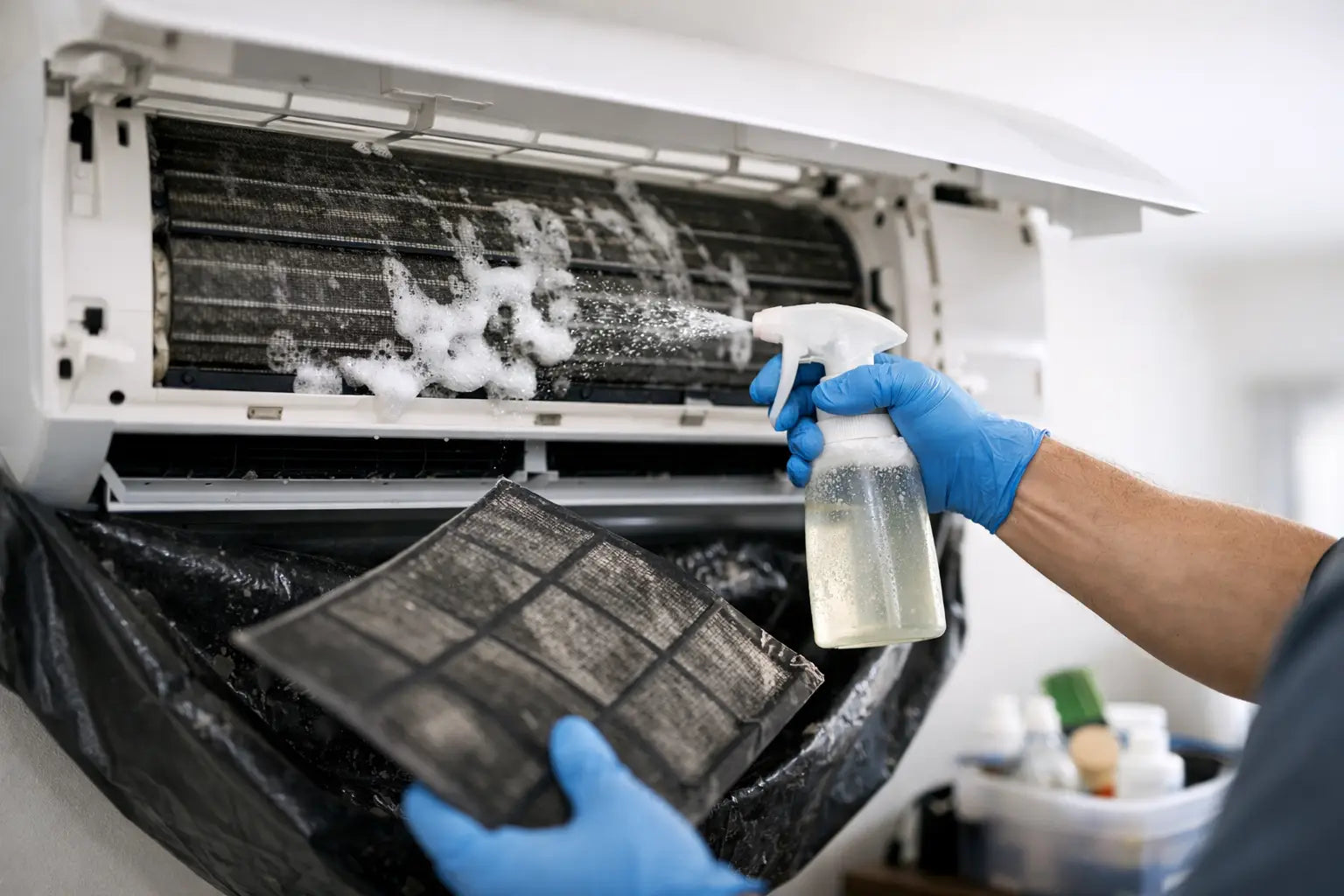
Maintenance frequency depends on operating hours, occupancy, and the environment. A lightly used office may need a different schedule from a restaurant, salon, retail store, or industrial facility with high dust and heat exposure. Regular servicing should include filter cleaning, coil inspection, drainage checks, electrical review, and a close look at refrigerant performance.
The strongest replacement decision is one that gives your business fewer surprises after installation. Choose equipment that suits the space, insist on materials and workmanship that will hold up, and schedule the work before the old system decides the timing for you.