Commercial HVAC That Keeps Business Moving
A commercial HVAC system is easy to overlook when it is doing its job. Customers stay comfortable, employees can focus, equipment operates within safe temperatures, and the space feels ready for business. When it fails, the impact is immediate: complaints rise, productivity drops, inventory may be at risk, and an unexpected repair can disrupt an entire day.
For business owners and facility managers, the goal is not simply to buy the biggest air-conditioning unit at the lowest price. It is to create a cooling and ventilation setup that suits the building, operating hours, heat load, budget, and long-term maintenance needs. Good planning and workmanship make that possible.
What Commercial HVAC Actually Covers
Commercial HVAC refers to the heating, ventilation, and air-conditioning equipment used in workplaces and business premises. Depending on the property, this may include split systems, multi-split systems, variable refrigerant flow systems, ducted units, ceiling cassettes, ventilation fans, outdoor condensers, controls, refrigerant piping, drainage lines, and electrical connections.
A small retail unit may need only a few properly sized split systems. A busy restaurant has a more demanding equation because kitchen heat, customer traffic, and ventilation all affect cooling performance. Offices need consistent comfort across meeting rooms, open work areas, and server spaces. Warehouses and industrial properties may prioritize equipment protection, ventilation, and durability over the close temperature control expected in a customer-facing space.
That is why commercial air-conditioning should be treated as an engineering decision, not a quick product purchase. The same unit can perform very differently depending on sizing, pipe routing, insulation, drainage, controls, and installation quality.
Why Correct System Design Matters
An undersized system runs for long periods without achieving the desired temperature. It may appear to be working, but it is under constant strain, uses more energy, and can wear out sooner. An oversized system creates a different problem: it may cool the room too quickly, cycle on and off repeatedly, and provide inconsistent humidity control.
Sizing should account for more than floor area. A proper assessment considers ceiling height, window exposure, insulation, occupancy, lighting, computers, cooking equipment, operating schedules, and the heat generated by machinery. A west-facing storefront with full-height glass has very different cooling needs from an interior office suite of the same size.
Air distribution matters too. A unit installed in the wrong location can blow directly onto employees while leaving another area warm. In a restaurant or retail setting, poorly placed indoor units can create uncomfortable drafts for guests. Ducted systems and ceiling cassettes can provide a cleaner look and wider coverage, but they require sufficient ceiling space, access for servicing, and careful condensate drainage planning.
The right design balances comfort, aesthetics, service access, and operating cost. It depends on the space, so a one-size-fits-all package is rarely the best commercial HVAC answer.
Installation Materials Are Part of Performance
The visible air-conditioning units are only part of the system. The components behind ceilings, inside trunking, and along external walls have a direct effect on reliability.
Refrigerant piping must be correctly sized, properly joined, pressure-tested, and insulated. Poor-quality insulation or sloppy joint work can lead to condensation, energy loss, water damage, and refrigerant leaks. Drainage piping needs the correct gradient and secure connections so condensate flows away reliably rather than backing up into ceilings or indoor units.
Electrical cabling, isolators, supports, and vibration control also deserve attention. These details are often where low-cost installations cut corners, even though they determine whether the system remains neat, safe, and serviceable years later. Premium installation materials cost more upfront, but they can reduce preventable repairs and protect the appearance of a finished business space.
Choosing the Right Commercial HVAC Configuration
There is no single best system for every property. The practical choice depends on the size of the project, how spaces are used, and how much independent control each area needs.
Split systems are often a sensible option for small offices, retail stores, clinics, and individual rooms. They are familiar, straightforward to service, and can be cost-effective when the number of indoor units is limited. Their trade-off is that a larger site may end up with too many outdoor condensers and more visible piping.
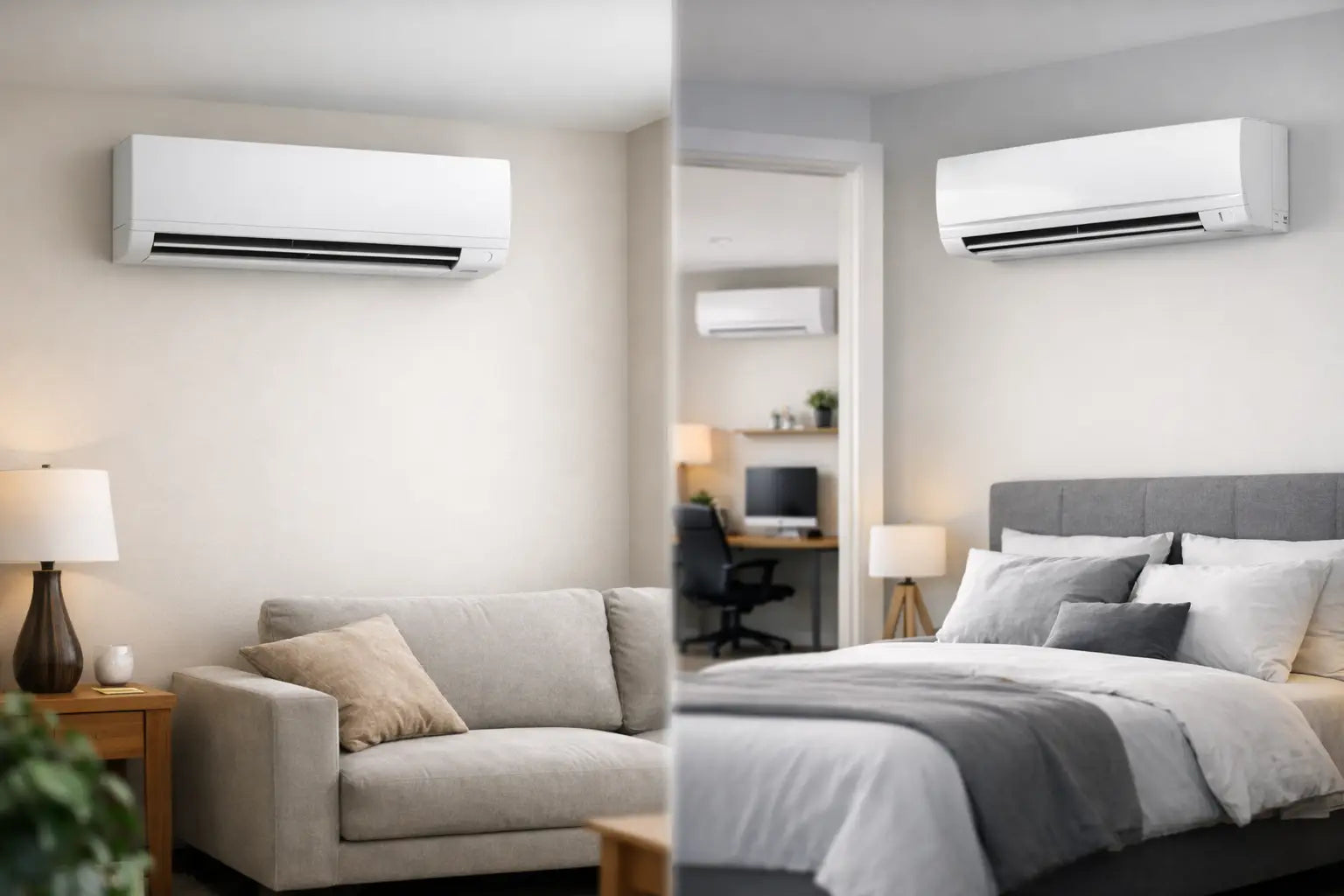
Multi-split systems allow several indoor units to connect to one outdoor unit. This can help where exterior space is limited and different rooms need separate temperature settings. However, the system must be carefully designed, as the connected units share outdoor capacity.
VRF or VRV systems are commonly considered for larger offices, multi-room commercial spaces, and properties with varied operating patterns. They offer flexible zoning and efficient part-load performance, but they carry a higher initial cost and require experienced design, installation, and maintenance support. They make the most sense when their control and efficiency benefits match the scale of the building.
Ducted systems can be attractive for premium offices, boutiques, and hospitality spaces where a discreet finish is important. They need thoughtful planning from the start. Once ceilings are closed, access panels, duct routes, filters, and drainage points become much harder to correct.
Maintenance Is How You Protect the Investment
Commercial systems operate harder than residential units. Long opening hours, frequent door traffic, high occupancy, dust, grease, and humidity all place added demand on air-conditioning equipment. Waiting until a unit stops cooling is usually the most expensive maintenance strategy.
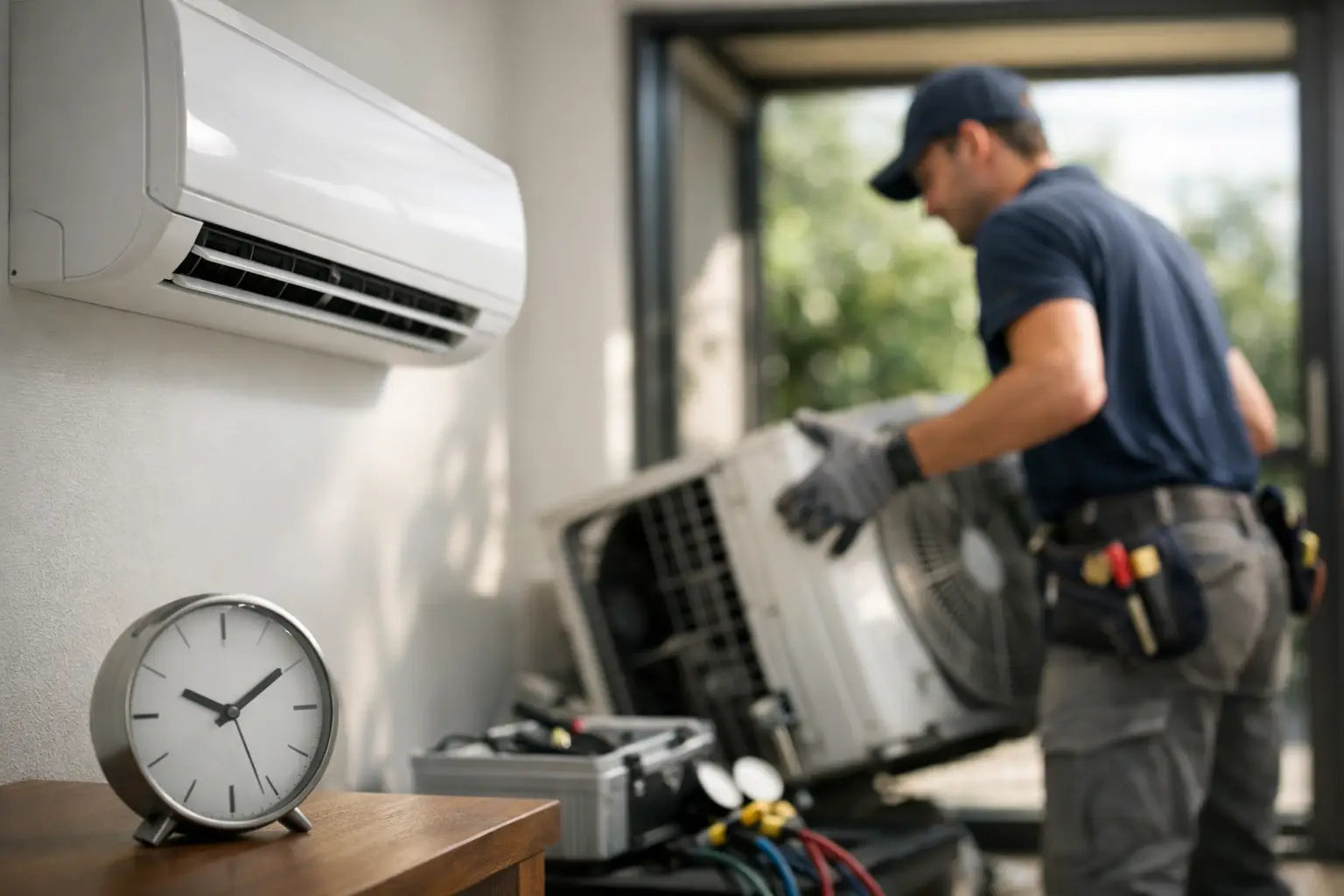
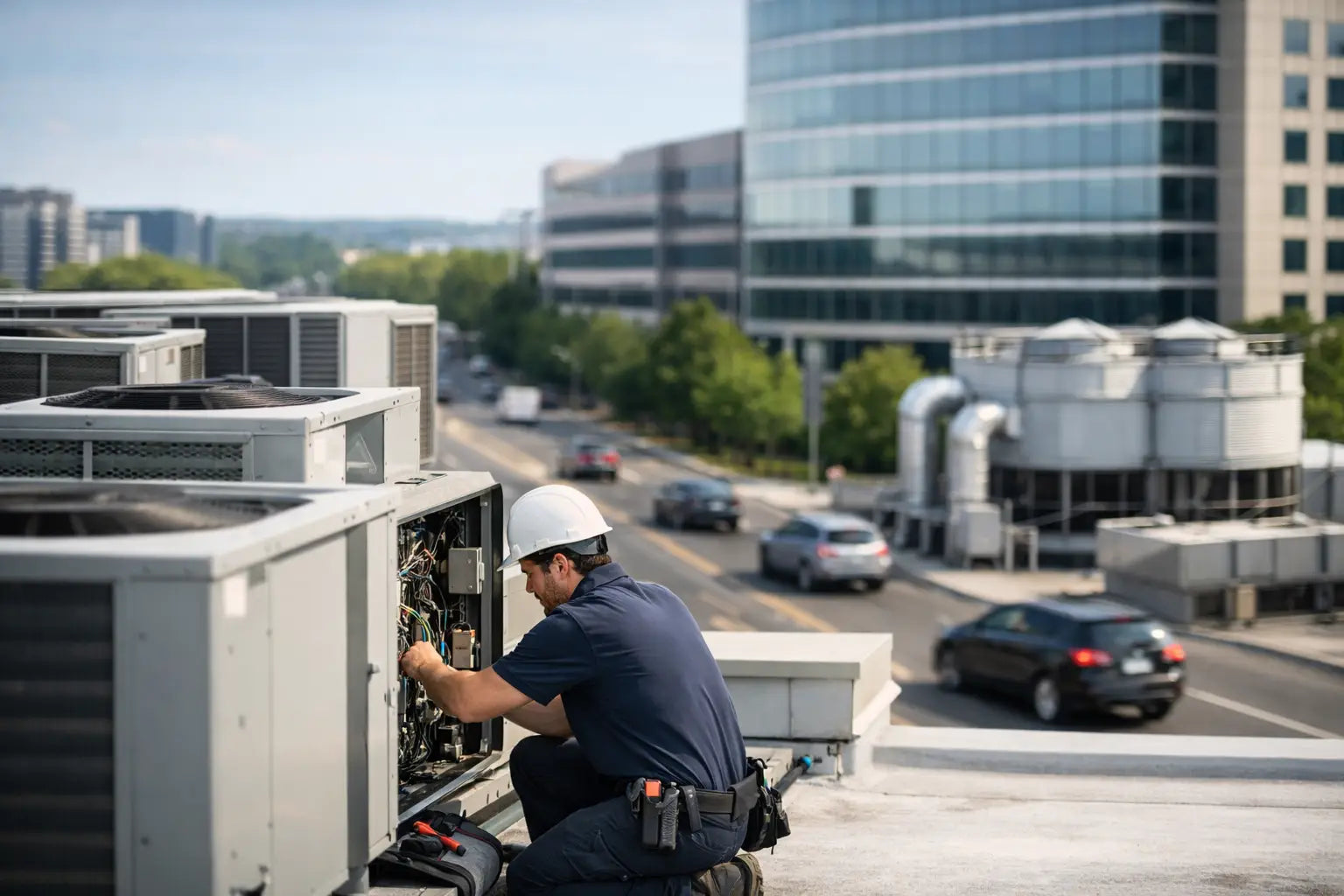
A planned maintenance program helps identify small issues before they become disruptions. Technicians can clean filters and coils, check refrigerant pressures, inspect drainage, test electrical components, tighten connections, assess fan performance, and look for early signs of leakage or abnormal noise. The exact frequency depends on the environment. A lightly used office may need less frequent attention than a busy food-service operation or workshop.
Regular servicing also supports indoor air quality. Dirty filters and coils restrict airflow, force the system to work harder, and can contribute to odors. In customer-facing spaces, that is more than a comfort issue. It affects how people experience the business.
Keep service records for each unit, including installation dates, repair history, recurring faults, and major parts replaced. This gives facility managers a clearer basis for deciding whether to repair, overhaul, or replace aging equipment.
Signs Your System Needs Attention
Do not wait for a total breakdown if the system is showing early warning signs. Uneven temperatures, weak airflow, water dripping from indoor units, repeated tripped breakers, unusual odors, rattling sounds, and rising utility bills all deserve investigation.
A refrigerant leak, for example, is not solved by repeatedly topping up gas. The leak source must be found and repaired, then the system should be properly tested before refrigerant is added. Likewise, recurring water leaks are often linked to blocked drainage, poor pipe gradients, damaged insulation, or installation defects. Treating only the visible symptom can lead to another disruption later.
Responsive repair support matters, but prevention is better. A dependable contractor should communicate clearly about the fault, explain the recommended work, and provide transparent pricing before major repairs begin.
Plan for Access, Growth, and Business Continuity
The best time to make a commercial HVAC system serviceable is before installation. Outdoor units need safe access. Ceiling-mounted equipment needs adequate access panels. Drainage and piping routes should be documented. Electrical isolation should be clearly arranged for technicians and safe for occupants.
It is also worth considering future growth. If you expect to add workstations, extend operating hours, install heat-producing equipment, or reconfigure rooms, tell your air-conditioning provider during planning. Building in reasonable capacity or allowing for expansion can be more economical than reworking a finished system later.
For occupied premises, installation scheduling is equally important. Retailers may need work completed before opening hours. Offices may need phased installation to avoid interrupting teams. Food businesses need careful coordination around hygiene, equipment, and customer service. A professional installation team plans the work around the business, keeps the site orderly, and communicates clearly when shutdowns are necessary.
A well-managed commercial HVAC project is not just about colder air. It is about giving your business a reliable environment where people can work, shop, dine, and operate without thinking about the temperature. Choose a system and installation partner that treats the hidden details with the same care as the equipment everyone can see.