Single Split vs Multi Split for Your Space
A new air conditioner is easy to compare by brand, capacity, and price. The harder decision is system design. In the single split vs multi split question, the right answer affects your upfront cost, how your home looks outside, future repair options, and how comfortably each room is cooled.
For homeowners and business operators, this is not simply a choice between one outdoor unit and several. It is a decision about daily use, installation conditions, and long-term serviceability. A well-planned system should fit the space, provide dependable cooling where it is needed, and allow technicians to maintain it properly years after installation.
What Is a Single Split System?
A single split system pairs one indoor fan coil with one outdoor condenser. A bedroom, small office, retail back room, or server room may have its own dedicated outdoor unit and indoor unit. If three rooms need air conditioning, a single-split arrangement uses three outdoor units.
The main strength is independence. Each room has its own refrigeration circuit, controls, and outdoor condenser. If one unit develops a fault, the other rooms can generally continue operating. This makes troubleshooting more straightforward and can reduce the impact of a repair on the rest of the property.
Single splits are also often a practical option when rooms are used very differently. For example, a home office may run air conditioning throughout the day while bedrooms operate only at night. In a commercial setting, an equipment room may require consistent cooling even when the main office is closed.
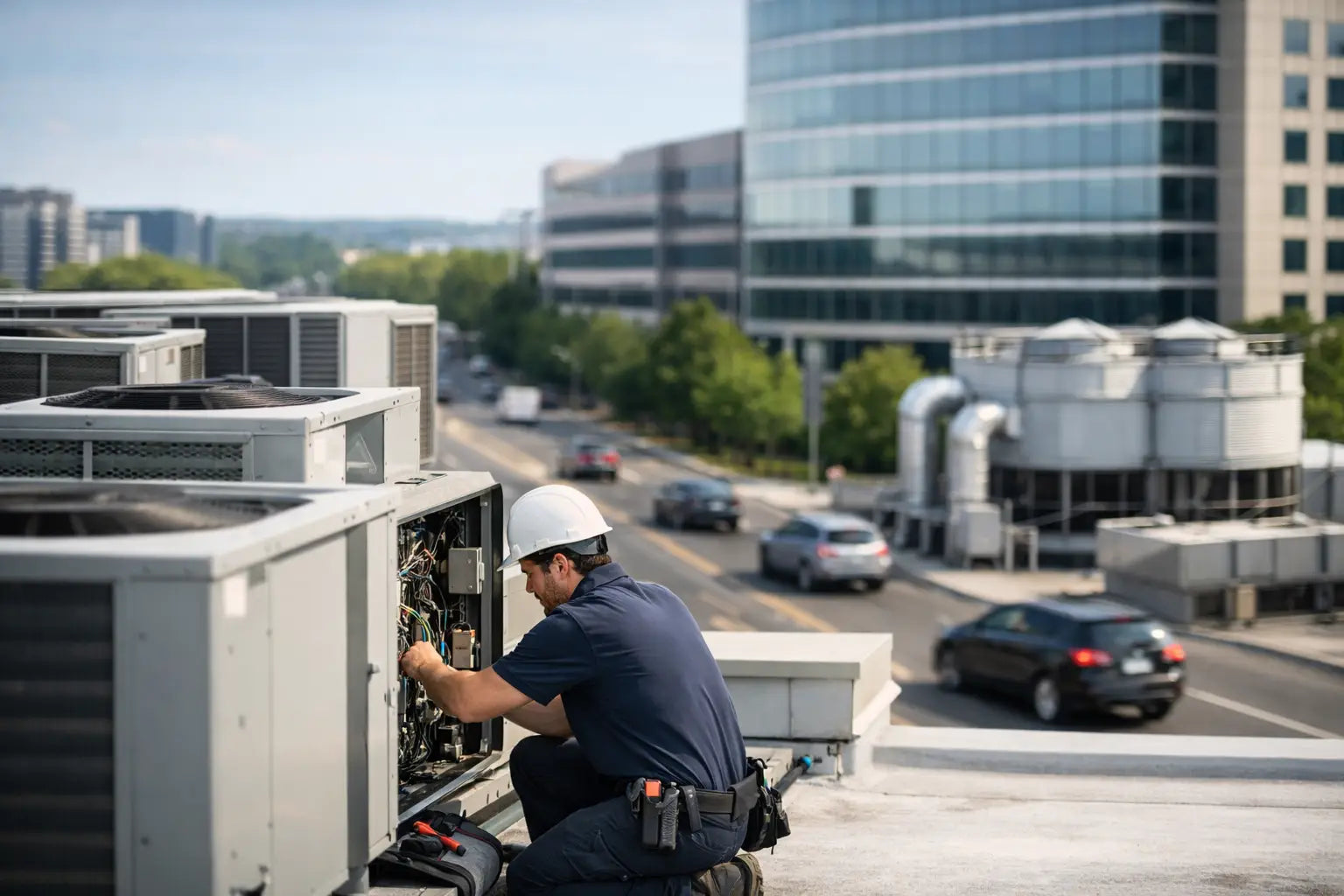
The trade-off is outdoor space. Multiple condensers require adequate ledge, wall, roof, or ground space, as well as proper airflow clearance and access for servicing. In apartments, condominiums, and managed commercial buildings, building rules may limit how many condensers can be installed or where they can be placed.
What Is a Multi Split System?
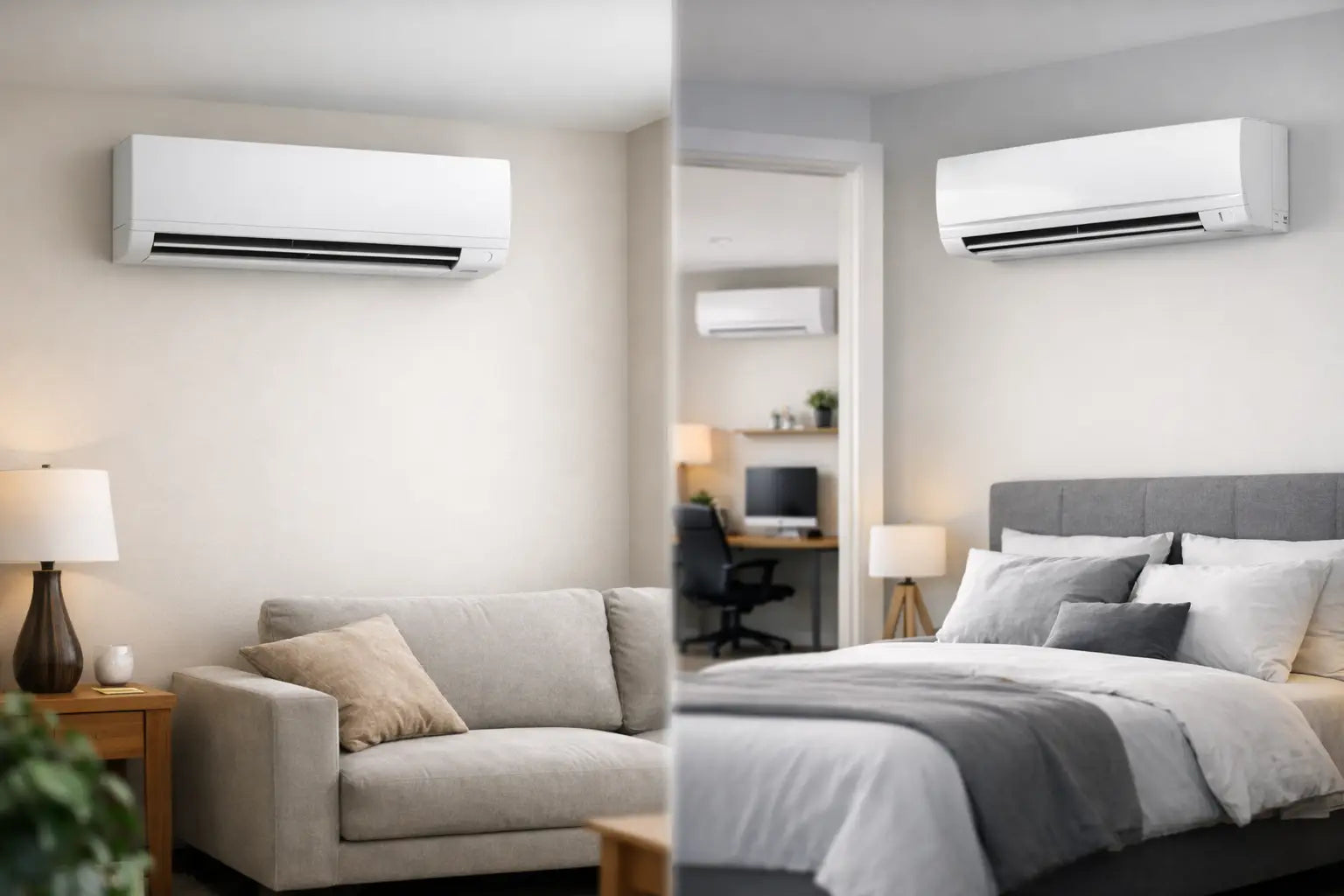
A multi split system connects two or more indoor fan coils to one outdoor condenser. A typical residential configuration may serve three bedrooms and a living room from one outdoor unit, provided the selected condenser has the correct capacity and compatible connections.
This design is popular where outdoor-unit space is limited or where a cleaner exterior appearance matters. Rather than lining up several condensers, the property uses one properly sized outdoor unit. It can be an efficient, orderly solution for many apartments and smaller offices.
Each indoor unit still has its own remote control and can usually be switched on or off independently. That means an unused bedroom does not need to be cooled simply because the living room is running. However, all fan coils share one condenser, so the system must be selected with realistic usage patterns in mind.
A multi split system is not automatically the lower-cost choice. It may save space and reduce the number of outdoor units, but its condenser, branch piping, installation planning, and future repair requirements can be more complex. The best value comes from matching the system to how the occupants actually use the rooms.
Single Split vs Multi Split: The Key Differences
The most visible difference is the number of outdoor units, but several practical factors deserve equal attention.
Reliability and fault isolation
With single splits, a problem is usually isolated to one room. A faulty condenser serving the master bedroom does not normally stop cooling in the other bedrooms. This is valuable for businesses that cannot afford to lose cooling in a critical area, as well as households that prefer greater redundancy.
With a multi split, the shared condenser is a central point in the system. If it requires a major repair, every indoor unit connected to it may be affected. Quality equipment, correct installation, and regular maintenance reduce this risk, but they do not change the basic shared-system design.
Outdoor space and visual impact
A multi split is usually the stronger choice when outdoor space is tightly controlled. One condenser can serve several rooms without crowding a service ledge or exterior wall. This is often a deciding factor for condos, apartments, and properties with strict management requirements.
Single splits need more physical space, more electrical isolation points, and more outdoor-unit access. Where sufficient space exists, that arrangement can still be highly practical. The location must allow heat to dissipate properly, rather than trapping hot air around the condensers and reducing performance.
Energy use
Neither system wins in every situation. Energy consumption depends on the equipment efficiency rating, cooling capacity, room insulation, thermostat settings, maintenance condition, and operating habits.
A multi split can make sense when only one or two rooms are cooled at a time because individual fan coils can be operated as needed. But if many rooms often run simultaneously at high demand, the outdoor unit must be sized and configured to support that load. An undersized or poorly matched system may struggle to maintain comfort and can operate less efficiently.
Single splits give each room a dedicated condenser, which can be beneficial when a particular room has unusually heavy usage. The better approach is to assess the real heat load of each space rather than relying only on room count or a quick rule of thumb.
Installation complexity
A multi split installation requires careful piping design because multiple indoor units connect back to one outdoor condenser. Pipe lengths, elevation differences, drainage routes, electrical wiring, refrigerant charging, and manufacturer limits all need to be checked. Neat trunking or box-up work also matters, especially in finished homes and customer-facing commercial spaces.
Single splits use separate runs for each pair of indoor and outdoor units. The layout can be simpler for each individual unit, though the total project may involve more piping routes and outdoor hardware. In either design, installation materials should not be treated as an afterthought. Insulation quality, copper-pipe thickness, cable specification, drainage slope, and pressure testing all influence whether the system stays reliable.
Upfront and long-term costs
A single split may be economical for one room or for properties that are expanding cooling in stages. You can install a dedicated system where it is needed first, then add others later if outdoor space permits.
A multi split may offer better overall practicality when several rooms need cooling and only one condenser location is available. Still, the initial quote should be reviewed beyond the headline price. Ask what is included for piping length, insulation, drainage, electrical work, mounting, trunking, and any required finishing. Low installation pricing can become expensive if material quality or workmanship is compromised.
Long-term cost also includes maintenance. Indoor fan coils need regular cleaning, drain lines need to remain clear, and outdoor condensers need adequate airflow. A system that is easy for technicians to access is generally easier to keep in good condition.
How to Choose the Right Setup
Start with the property constraints. How many rooms need cooling? Is there space and approval for multiple outdoor condensers? Are rooms used at the same time, or does usage change throughout the day? These answers narrow the choice quickly.
A single split setup is often worth considering when you have enough outdoor space, need maximum independence between rooms, or have a room with critical cooling needs. It can also suit a home where only one or two spaces require air conditioning.
A multi split setup is often the better fit when several rooms need cooling but the property permits only one outdoor unit location. It is particularly attractive for homeowners who want a more streamlined exterior layout and individual control for each room.
For a larger office, restaurant, retail outlet, or industrial space, the decision may extend beyond both standard options. Load requirements, operating hours, ventilation, equipment heat, zoning, and ceiling conditions may point to a different commercial air-conditioning design. A proper site assessment is more dependable than selecting a system from square footage alone.
Why Installation Quality Matters as Much as System Type
Even the best air conditioner cannot compensate for poor piping, weak insulation, incorrect drainage, or careless commissioning. Refrigerant leaks, water dripping, uneven cooling, and repeated error codes are often installation or maintenance issues rather than a simple brand problem.
A professional installer should assess the proposed pipe route, protect the copper piping with quality insulation, secure cables and drainage correctly, pressure-test the system, and commission each unit before handover. For concealed or boxed-up piping, planning is especially important because repairs become more disruptive once finishes are completed.
Commercestar Engineering approaches system selection as part of the installation plan, not as a separate product purchase. That includes considering the property layout, outdoor-unit limitations, material specifications, and the need for accessible future servicing.
The right choice should make cooling feel uncomplicated after installation. Choose the system that fits your space and operating habits, then give it the workmanship and maintenance support needed to keep it performing well.