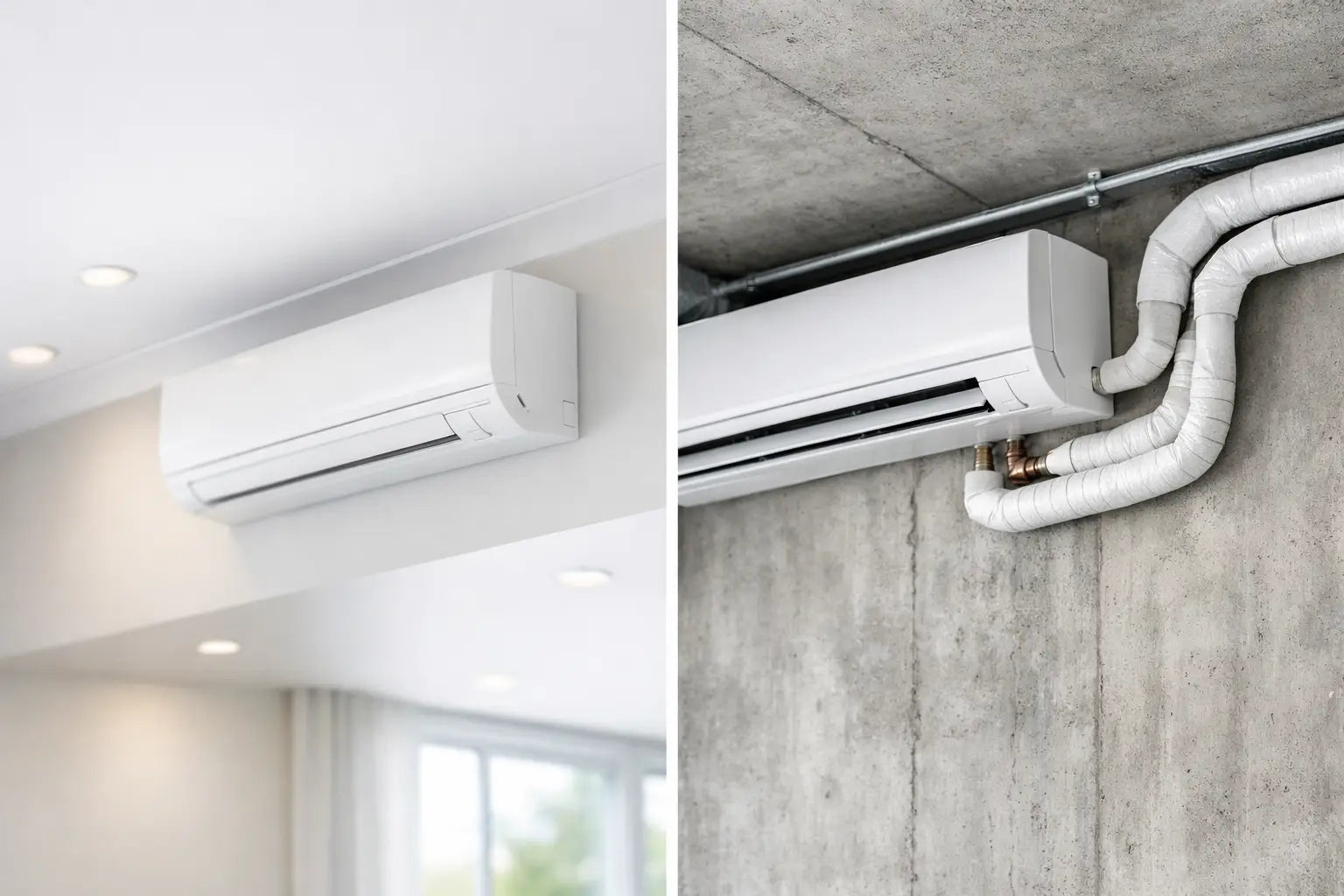
Concealed Versus Exposed Aircon Piping Compared
A new air-conditioning system can look excellent on day one, then lose its clean finish the moment pipework, insulation, and drain lines are left in full view. That is why concealed versus exposed aircon piping is more than a design decision. It affects your installation budget, future access for repairs, wall finishes, and how easily the system can be maintained over the years.
For homeowners, the right choice often depends on whether the property is under renovation, already occupied, or due for a major refresh. For offices, retail spaces, and other commercial premises, access and downtime can matter just as much as appearance. The best result comes from planning the piping route before installation begins, not trying to hide an awkward layout afterward.
What concealed and exposed piping actually mean
Concealed aircon piping runs inside a wall, ceiling void, false ceiling, or purpose-built enclosure that is finished as part of the interior. The refrigerant copper pipes, insulation, electrical cable, and condensate drain line are largely hidden from view. In a properly planned project, only the indoor fan coil unit and discreet service access points remain visible.
Exposed piping runs along the surface of a wall or ceiling. It may be left visible in a utility area, or covered with a PVC trunking box. In many homes, this is the familiar white box-up that routes piping from an indoor unit toward the outdoor condenser. It is not automatically a lower-quality option. Its performance depends on correct pipe sizing, insulation, drainage gradient, secure supports, and careful finishing.
The key distinction is access. Concealed piping prioritizes a cleaner visual result, while exposed piping makes the system easier to inspect, alter, and repair.
Concealed versus exposed aircon piping: the real trade-offs
Appearance and interior design
Concealed piping is the preferred option when a polished, built-in appearance is the priority. It suits new construction, full renovations, BTO apartments before move-in, and higher-end condominium interiors where every visible line has been considered. With proper coordination, piping can run above a false ceiling, inside a bulkhead, or through designated wall routes without disrupting the overall design.
That clean look comes with a condition: the route must be thoughtfully planned. Air-conditioning pipes cannot simply be placed anywhere inside a wall. The installer must avoid structural elements, electrical services, plumbing lines, and locations that may make future servicing unnecessarily disruptive. Condensate drains also need a reliable slope so water can flow away naturally.
Exposed piping is more visible, but it does not have to look untidy. A straight route, neat trunking alignment, clean corners, and well-positioned indoor units make a substantial difference. In practical spaces such as kitchens, utility rooms, offices, or older apartments, a tidy box-up can be the sensible choice without sacrificing a professional finish.
Installation cost and renovation work
Exposed piping generally costs less because it requires less renovation coordination. The installer can mount the pipes and trunking on finished surfaces, test the system, and complete the work without opening walls or rebuilding ceilings. This makes it particularly suitable for occupied homes, replacement installations, and projects with a controlled budget.
Concealed piping usually costs more because the air-conditioning installation is only one part of the work. There may be hacking, patching, false-ceiling construction, painting, carpentry, and coordination with the renovation contractor. If the piping route changes midway through the project, the cost and timeline can increase quickly.
For that reason, concealed piping makes the most financial sense when the wall or ceiling is already being opened for renovation. Choosing it purely to hide pipes in a completed home may create more disruption than value. A transparent quotation should separate the air-conditioning scope from any box-up, ceiling, wall-reinstatement, or electrical works, so there are no surprises later.
Maintenance, repairs, and replacement
This is where exposed piping has a clear advantage. If insulation deteriorates, a drain line develops a blockage, or a refrigerant leak needs investigation, technicians can access the route directly. It is also easier to add a new unit, replace aging piping, or modify the layout when a room is repurposed.
Concealed piping can still be maintained well, but it requires good planning from the start. Service access panels should be installed where valves, drain connections, and important joints may need attention. Without access, a small issue can become a larger finishing job because sections of the wall or ceiling may need to be opened.
This does not mean concealed pipework is unreliable. It means workmanship and material choice matter more because the piping is harder to reach after completion. Quality copper piping, durable insulation, properly sealed joints, and correctly supported drain lines reduce the chance of hidden problems. For premium concealed installations, upgraded insulation such as K-FLEX TITAN Class 0 and appropriately specified copper pipe can provide greater confidence in long-term performance.
Condensation and drainage risks
Aircon piping carries cold refrigerant, so insulation is not cosmetic. Poor insulation, gaps at joints, or crushed sections can lead to condensation. In a concealed route, unnoticed sweating can damage ceiling boards, paint, or built-in cabinetry before the issue becomes obvious. In an exposed route, condensation is easier to spot and address, although it can still stain walls or affect the trunking if left unresolved.
Drainage deserves the same attention. Water from the indoor unit must travel through the drain pipe at the correct gradient. A poorly routed concealed drain can create recurring water leaks that are inconvenient to trace. An experienced installer will assess the route, drain point, pipe length, and required fall before committing to a concealed layout.
Do not accept a design that prioritizes hidden pipes while ignoring drainage physics. A visible but correctly sloped drain line is better than a concealed route that invites water problems.
Which option suits your property?
A concealed layout is usually worth considering if you are carrying out a full renovation, installing a false ceiling, or designing a space where visual minimalism is a major priority. It can also be a strong choice for premium residences, meeting rooms, retail interiors, and customer-facing commercial areas where exposed trunking would distract from the finished environment.
Exposed piping is often the better fit for resale homes, occupied apartments, rental properties, server rooms, utility spaces, and businesses that need fast installation with minimal closure time. It is also practical when future changes are likely, such as expanding an office, rearranging partitions, or replacing an older system in stages.
There is also a middle ground. Some sections can be concealed above a ceiling or inside carpentry, while short visible runs are finished with neat trunking. This hybrid approach often gives homeowners a cleaner appearance where it matters most without making every section difficult to access.
Questions to settle before installation
Before choosing a route, ask the installer how the pipes will be accessed if a leak, insulation issue, or drain blockage occurs. Ask where the drain line will discharge, whether the route has enough slope, and whether any joints will be hidden behind permanently sealed finishes. For renovated homes, confirm who is responsible for hacking, patching, painting, and reinstatement if future access is required.
It is also worth checking the materials included in the proposal. Air-conditioning systems are not defined only by the indoor and outdoor units. Copper pipe thickness, insulation quality, cable specification, drain piping, brackets, and installation practices directly influence durability. A low installation price can become expensive if shortcuts lead to leaks, condensation, or premature replacement.
At Commercestar Engineering, installation planning is approached as part of the system, not as an afterthought. The goal is to help customers choose a route that looks neat, performs reliably, and remains practical for the property over time.
A concealed route can give your space a refined finish, while exposed piping can offer valuable flexibility and easier service access. Choose the option that fits your renovation stage, budget, and maintenance expectations, then insist on quality materials and careful installation details that will still matter long after the walls are closed.